AR-assisted field service overlays schematics, live sensor readings and remote-expert annotations onto the technician's view of the equipment through a semi-transparent AR-coated glass combiner. That combiner has to stay readable under workshop light, survive oil, metal swarf and repeated drops, and keep its coating intact across a shift. This guide sets out the tolerances and coating rules optical engineers should put on the drawing for AR glass in field-service duty.
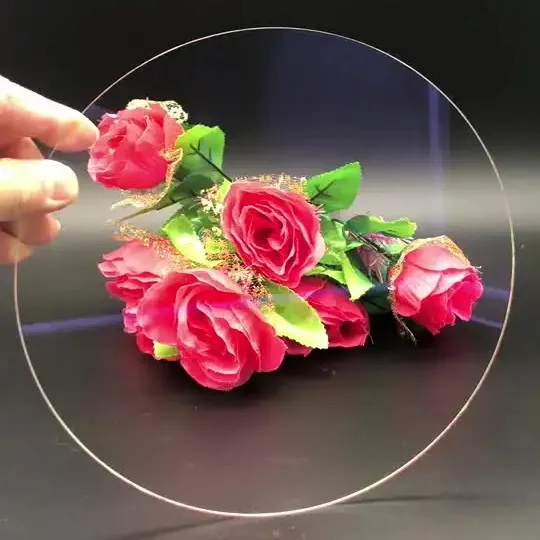
AR Anti-Reflective Glass in AR-Assisted Field Service and Maintenance
In field service the combiner is the optic that both passes the real equipment view and reflects the work instruction overlay, so its AR coating controls how much of the bay reaches the eye and how much glare floods the overlay. The glass has to survive the impact, oil and temperature swings of a working plant while holding a stable low-reflectance surface, because a hazed or degraded combiner turns a safety aid into a distraction. The material and coating choice is therefore as much about durability in use as about the starting transmission.
The tolerances that actually matter
For a combiner the wedge and flatness control ghost and double-image, and surface-form error shifts the reflected overlay relative to the work piece. Planarity is held to a tight fraction of a wave over the clear aperture, and a small intentional wedge is sometimes specified to throw ghosts out of the eye box. Edge chips and coating non-uniformity are controlled because both read as bright or dark patches against a cluttered background. The tolerances that matter are the ones that move the overlay or let the scene through, not the generic catalogue limits.
Design rules that reduce cost
Cost drops when the aperture is no larger than the eye box needs and the coating count matches the band the projector uses rather than a broadband stack the application does not. Specifying a forgiving substrate thickness and a standard aspect ratio lets the part be cut from stock sheet, and calling out the AR band to the projector wavelength rather than the whole visible keeps the deposition short. The cheap combiner is the one whose tolerance budget was written for the actual headset, not copied from a display catalogue.
Coating and deposition considerations
The coating is a dielectric AR stack on the eye side and a partial reflector on the projector side, and both must survive oil mist, impact and the occasional drop to the floor. Dense, well-adhered layers are preferred over soft coatings that abrade or fog, and the reflector band is tuned to the projector colour so the overlay stays bright without tinting the whole view. State the angle of incidence the stack was designed for, because an AR coating tuned at normal incidence performs differently on a tilted combiner in a headset.
How AR coated glass works in practice
In use the combiner passes ambient light to the eye while reflecting the projector image from the partial reflector, and the AR stack keeps the two surfaces from throwing double images. Under bright bay light the front AR coating is what stops the scene from washing out the overlay, so its residual reflection across the projector band is the number that decides readability. A combiner that meets the spec holds that balance through a shift; one that was under-specified starts ghosting or dimming the moment it is worn on the floor.
Requirements specific to AR-Assisted Field Service and Maintenance
Field duty adds oil, metal and drop exposure to the usual optical constraints, so coating durability and contrast in bay light lead the specification. Choose a robust substrate, tune the AR and reflector stacks to the projector band and the combiner angle, and control flatness and wedge for a stable overlay. Qualify the part under a representative shift-and-drop cycle rather than on a bench, because a combiner that looks right static can drift the moment it is worn in a live plant.
- Robust substrate qualified for plant wear
- AR stack tuned to projector band, not full visible
- Partial reflector matched to projector colour
- Flatness and wedge controlled for stable overlay
- Coating adhesion tested against oil and impact
- Angle of incidence stated for coating design
Framework references: surface form, wedge and edge-chip limits per ISO 10110, and coating adhesion and environmental durability per the relevant headset or equipment rule set. Environmental declarations such as RoHS are the supplier's to state against the current official text, not to be assumed for a product worn at a workstation.
Selection data at a glance
| Parameter | Typical value | Notes |
|---|---|---|
| Substrate | Impact- and oil-tolerant glass | Per duty |
| AR coating | Tuned to projector band | Visible |
| Reflector | Partial, projector colour | Overlay |
| Flatness | Tight fraction of wave | Clear aperture |
| Wedge | Controlled, ghosts out | Eye box |
| Durability | Oil and drop tested | Qualified |
Frequently asked questions
Why not just use a brighter projector instead of a special combiner?
Because in a lit bay the problem is the scene flooding the eye, not the overlay being dim. The AR stack is what stops ambient light from washing out the projected image, and without it a brighter projector only competes with a brighter background. The combiner and the projector band have to be specified together.
Does the AR coating need to survive oil and impact?
Yes. A headset runs against machinery and skin, and a soft or poorly adhered coating hazes or delaminates, which reads as a fogged visor. Dense dielectric layers qualified against a representative wear-and-drop cycle are preferred over decorative coatings.
What tolerance matters most for the overlay?
Flatness and wedge, because both move or double the reflected image. A combiner held to a tight fraction of a wave with a controlled small wedge keeps the overlay stable and throws ghosts out of the eye box; a lax one makes the instructions swim against the work piece.
Need a quotation for ar anti-reflective glass?
Send your drawing, target specification or coating requirement and an optical engineer will reply within 24 hours with a price and a lead time.
Request a Quote Email an engineer