In-cabin driver and occupant monitoring uses near-infrared illumination and cameras that look through coated windows, so the optical specification is really two bands at once: a visible anti-reflective requirement for any combiner or cover, and a near-infrared transmission requirement for the illumination and imaging path. This guide sets out the numbers that belong on the drawing, the tolerances that genuinely change cost, and the items routinely left off until first article.
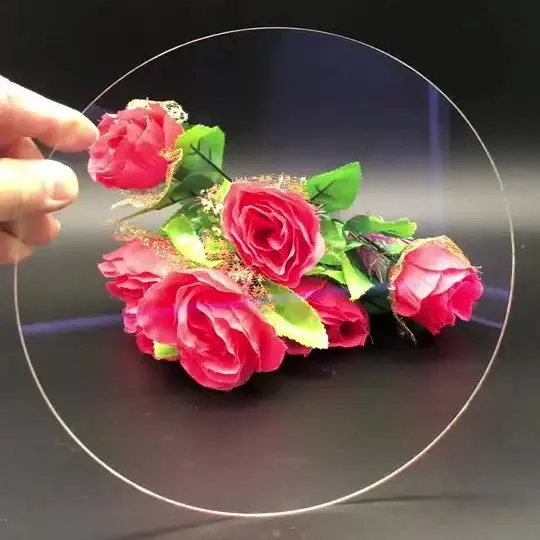
AR Anti-Reflective Glass in Automotive Interior Sensing
Automotive interior sensing covers driver monitoring (DMS) and occupant monitoring (OMS): a near-infrared illuminator, typically at 850 nm or 940 nm, and one or more cameras that view the cabin through a coated window in the instrument cluster, steering column or roof console. That window must pass the NIR band with minimal loss while also presenting a clean visible surface, because the same aperture is usually part of the interior trim. The specification therefore needs an AR stack tuned across both the visible display band and the NIR illumination band, rather than a visible-only coating copied from a consumer cover glass.
The tolerances that actually matter
For interior sensing the useful numbers are NIR transmission at the illuminator wavelength, residual reflectance in the same band, and the visible AR performance wherever a combiner or display sits in the path. Transmission at 850 or 940 nm is the first-article item: every percent lost at the window is illumination the camera must recover with exposure or gain, which raises noise. Mechanically, the tolerances that move cost are surface form (power and irregularity rather than flatness alone), wedge or parallelism on the transmissive window, and chamfer control on thin parts. A 0.7 mm cover that must hold two arcminutes of wedge is a different part from the same cover at ten arcminutes, and the difference shows up as image shift across temperature rather than as a coating failure.
Design rules that reduce cost
Coat the face that sits in the optical path, and coat both faces when the window is double sided in the path, because the second surface returns as much NIR as the first. Keep the design band as wide as the application allows: a coating specified only at 940 nm is cheaper than one balanced across 420-680 nm plus 850/940 nm, but it loses the visible AR the interior needs. Avoid a functional coating on a curved surface unless the curvature is optically required, since deposition uniformity across a curved part drives tooling and yield. Where the part is a simple protective cover rather than an imaging element, an anti-glare etch plus a single visible AR layer is often enough and cheaper to qualify than a dual-band stack.
Coating and deposition considerations
A dual-band AR stack is built from alternating low-index silica and higher-index oxides, deposited in enough layers to flatten reflectance across the visible and to peak transmission at the NIR wavelength. On interior parts the stack must survive the cabin qualification regime: 85/85 humidity, thermal cycling across the full in-car range, and abrasion from cleaning, even if it never sees the salt spray a windshield part does. That pushes the design toward dense oxide layers and a hard top surface. State which face carries the functional layer on the drawing, and confirm the NIR peak is centred on the actual illuminator wavelength, because a coating tuned to 850 nm gives up transmission at 940 nm and vice versa.
How AR coated glass works in practice
An anti-reflective coating reduces the light that bounces off a glass surface instead of passing through it. Uncoated optical glass reflects roughly four percent per surface, so a window in the NIR path returns about eight percent of the illumination as stray light and loses the same at the camera. A multi-layer AR stack brings visible reflectance below half a percent average and lifts NIR transmission toward the high nineties at the design wavelength. In interior sensing the payoff is a cleaner NIR return to the camera and a less reflective visible surface, which is why the band specification belongs next to the tolerances rather than in a separate coating note.
Requirements specific to Automotive Interior Sensing
Interior sensing adds a near-infrared layer that visible-only HUD optics never carry. The illuminator wavelength (850 or 940 nm) must be fixed before the coating is designed, and the window has to hold its transmission and image position across the full cabin temperature range, because DMS/OMS cameras run continuously and any image drift reads as a tracking error. Parts are usually specified against IATF 16949 process controls, with PPAP documentation on the first article, and the visible AR is qualified alongside the NIR band rather than treated as cosmetic.
- Dual-band specification: visible AR plus NIR transmission at the chosen illuminator wavelength
- Surface form and wedge tolerances that hold image position across cabin temperature
- Automotive environmental qualification: 85/85 humidity, thermal cycling, abrasion
- Documented coating face and a PPAP-ready first article
Framework references: ISO 10110 drawings, IATF 16949 process controls and PPAP documentation. The illuminator wavelength (850 or 940 nm) follows the component design; confirm against the current supplier specification rather than assuming a single value.
Selection data at a glance
| Parameter | Typical value | Notes |
|---|---|---|
| NIR transmission | ≥ 90 % at design wavelength (typical) | 850 or 940 nm |
| Visible reflectance | ≤ 0.5 % average, ≤ 1 % peak | 420-680 nm |
| Substrate | ultra-clear float, B270, borosilicate | 0.5-2 mm typical |
| Wedge / parallelism | 2 arcmin achievable, 10 arcmin standard | Holds image position |
| Surface form | PV ≤ 0.5 µm standard, λ/4 on request | Per ISO 10110-5 |
| Environmental | 85/85 humidity, thermal cycling | Automotive grade |
Frequently asked questions
Can one coating serve both the visible combiner and the NIR camera?
Only with a dual-band stack designed for it. A visible-only AR coating gives up NIR transmission, and an NIR-only coating leaves a reflective visible surface. Interior sensing usually needs both, so the coating is specified across the two bands at once rather than added afterwards.
Does the illuminator wavelength change the coating?
Yes. An AR peak centred at 850 nm is not at its best at 940 nm, and the reverse is also true. Fix the illuminator wavelength before the coating is designed, because recentring after first article means a new deposition run.
Why does the image drift in the cabin?
Most drift comes from differential expansion between the window and its carrier across temperature, not from the coating. Specify a low-expansion substrate or a compliant mount, then let wedge and surface form tolerances define how much of that drift reaches the camera image.
Need a quotation for ar anti-reflective glass?
Send your drawing, target specification or coating requirement and an optical engineer will reply within 24 hours with a price and a lead time.
Request a Quote Email an engineer