Downhole and geothermal sensing windows must pass optical signals through high pressure, temperature and corrosive fluid, and the window material decides whether the probe survives the run. Crystal glass sits between ordinary fused silica and single-crystal sapphire on the cost and performance curve, trading some hardness for easier machining and broader optical range. This note lays out the material, coating and tolerance trade-offs optical engineers weigh when specifying a window for a harsh sub-surface environment.
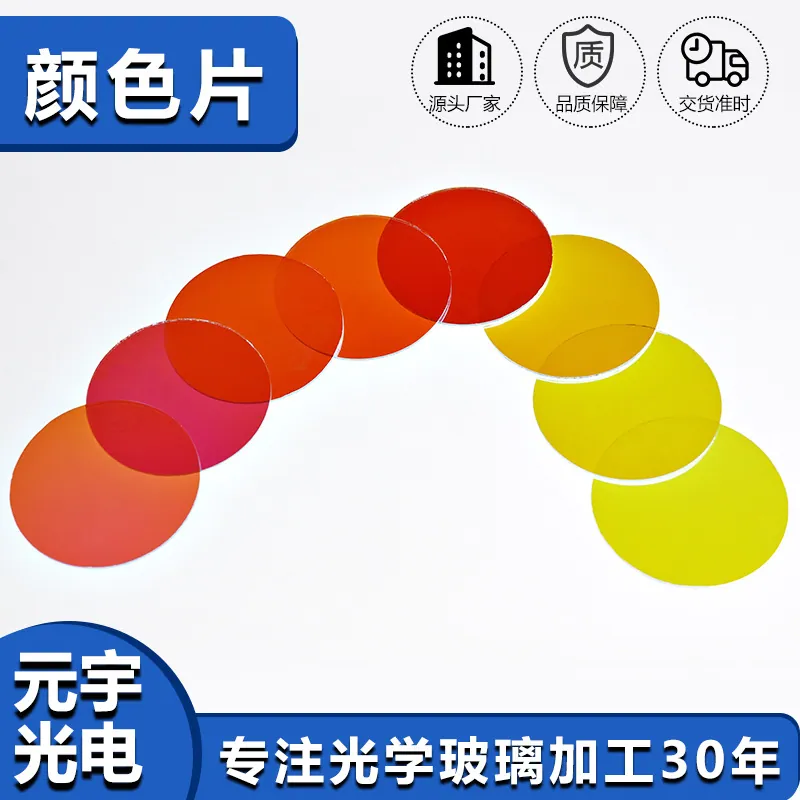
Crystal Glass for Harsh-Environment and Downhole Sensing Windows
Downhole and geothermal sensing windows must pass optical signals through high pressure, temperature and corrosive fluid, and the window material decides whether the probe survives the run. Crystal glass sits between ordinary fused silica and single-crystal sapphire on the cost and performance curve, trading some hardness for easier machining and broader optical range. This note lays out the material, coating and tolerance trade-offs optical engineers weigh when specifying a window for a harsh sub-surface environment.
What drives cost and lead time
Cost is driven by the crystal grade, the blank size and how much of the block becomes swarf. Sapphire and other single crystals are expensive and slow to shape; engineered crystal glasses can be worked with standard optical processes and offered in larger, more uniform blanks, which shortens lead time. Tight parallelism and wedge control on a thick window add polishing passes, so the economical part is the one whose tolerances match the sensing beam rather than a maximal optical spec.
Substrate and material selection
The substrate has to resist the fluid chemistry as much as the pressure. Fused silica handles temperature and is chemically quiet but is relatively soft under abrasive slurry; sapphire is hardest and most scratch resistant but costs more and is birefringent, which matters for polarisation-sensitive sensing. Engineered crystal glass offers a middle path with good chemical resistance and a wide transmission band, chosen when the run needs robustness without sapphire's price or anisotropy.
How it compares with the alternatives
Against fused silica, crystal glass and sapphire win on hardness and pressure rating but lose on ease of fabrication and, for sapphire, on optical isotropy. Against sapphire, crystal glass is cheaper and easier to hold to tight form, at the cost of lower scratch resistance. The right pick depends on whether the limiting failure is abrasion from the fluid, pressure fracture at the seal, or polarisation error in the return signal.
Coating and deposition considerations
Downhole windows often need an AR coating on the optical face and a durable, chemically resistant layer on the fluid side, and the two may differ. State the operating temperature and the fluid pH, because coating adhesion and the seal survive or fail on those numbers. For polarisation-sensitive probes keep the coating symmetric and report any birefringence the substrate introduces, since the downhole path has no margin for signal rotation.
Requirements specific to Crystal Glass for Harsh-Environment and Downhole Sensing Windows
Sub-surface duty subjects the window to pressure, heat, abrasion and corrosive fluid at once, so material resistance and seal integrity lead the specification. Choose the substrate that matches the limiting failure mode, hold form and parallelism to the sensing beam, and specify coatings and seals for the actual temperature and fluid chemistry. A window qualified on a dry bench is not the same as one that survives a corrosive, pressurised run.
- Material matched to limiting failure mode
- Hardness vs fabricability vs anisotropy trade
- Form and parallelism held to sensing beam
- Fluid-side coating chemically resistant
- Seal rated for pressure and temperature
- Birefringence reported for polarisation probes
Framework references: pressure and environmental ratings described against the relevant oilfield or geothermal equipment rule set; surface form and scratch-dig per ISO 10110. Environmental declarations such as RoHS are the supplier's to state against the current official text, not to be assumed for a component placed in a sub-surface probe.
Selection data at a glance
| Parameter | Typical value | Notes |
|---|---|---|
| Material | Matched failure | Run |
| Hardness | Vs cost | Trade |
| Form | Beam limited | Optical |
| Fluid coat | Resistant | Chemistry |
| Seal | Pressure rated | Integrity |
| Birefr. | Reported | Polar |
Frequently asked questions
Is sapphire always the best downhole window?
Not always. Sapphire is the hardest and most pressure capable, but it is costly, slower to fabricate and birefringent, which can rotate a polarisation-sensitive return signal. If abrasion is not the limiting failure, engineered crystal glass or even fused silica may meet the run more economically.
Why does the fluid-side coating differ from the optical AR?
Because the two faces face different enemies: one must maximise transmission at the sensing wavelength, the other must resist corrosion, abrasion and sealing stress. A single coating rarely does both well, so the fluid side is often a durable, chemically resistant layer rather than a low-reflection stack.
What tolerance actually protects the signal?
Parallelism and wedge, because a thick window at an angle bends and displaces the beam and shifts the return spot. Holding form and parallelism to the sensing beam protects alignment; tightening cosmetic surface limits does not.
Need a quotation for optical quartz and crystal glass?
Send your drawing, target specification or coating requirement and an optical engineer will reply within 24 hours with a price and a lead time.
Request a Quote Email an engineer