An optical window in a refinery is a small line item that can hold up a turnaround. Process plants specify glass for sight ports, level gauges, flow cells, UV reactor windows and camera viewports, then discover that the material is on a long lead time, that the surface quality has to survive a cleaning regime nobody documented, and that the qualification cannot be shortened because the process pressure and temperature do not negotiate. This note sets out what actually drives the price and the schedule on these parts, and where the specification has to be more precise than usual.
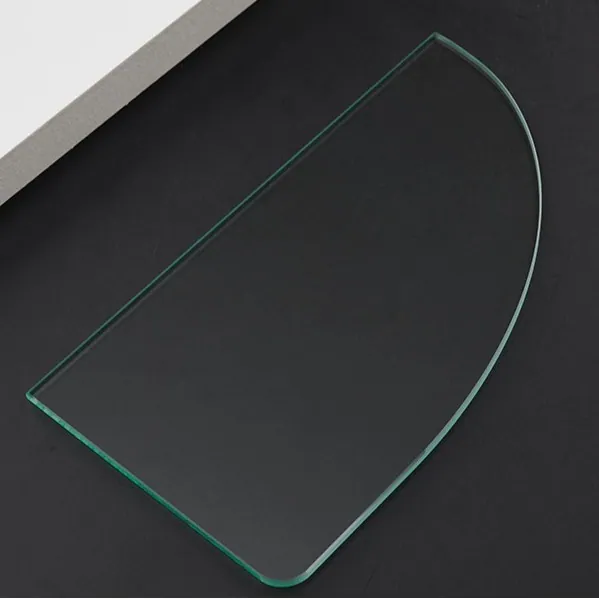
Optical Glass Materials in Petrochemical and Refinery Optics
Refinery and petrochemical optics fall into two very different groups. Sight and level glasses are pressure-bearing viewports that sit directly in the process stream, and they are certified parts with a defined pressure and temperature envelope. Optical instruments in the plant, such as flow cells, UV reactor windows, sample cells, gas analyser cells and camera viewports, sit downstream of conditioning but still face aggressive chemistry, condensation cycling and vibration. The two groups are priced and qualified differently, and mixing them up is the most common cause of a part that arrives correct and cannot be installed. Material choice starts from the medium in contact: water, steam, hydrocarbons, acids or caustic, and whether that contact is continuous or intermittent decides the thickness budget and therefore the lead time.
Substrate and material selection
Borosilicate is the default because it is chemically durable against most process media and cheap relative to anything exotic, and its expansion coefficient is close enough to many stainless grades to keep seal stress manageable. Aluminosilicate and borosilicate variants trade cost against chemical headroom in hydrofluoric acid, strong caustic or hot concentrated alkali, where the choice is not academic. Fused silica appears where ultraviolet transmission or thermal shock matters, most often in UV reactor windows and analyser cells, at a price premium and a longer lead time because it is a different production route. Optical-grade soda-lime and float glass have no place in a wetted part, though they are sometimes specified for an external camera viewport where only weather resistance is needed. Two rules hold across the set. Never let the drawing name a generic material only, because the environmental and pressure requirement has to travel with it. And never assume a low-expansion glass is chemically equivalent to the common grade just because the expansion is lower.
Handling, cleaning and packaging
On plant work the damage happens outside the glass shop. A sight glass that is unloaded from a pallet by hand rather than by a lifting frame gets an edge chip that does not show until it is in the nozzle. Cleaning with a wire brush or a metal scraper leaves a permanently damaged surface that only becomes visible under inspection after installation. Packaging has to survive a yard, a truck and a scaffold, which usually means a rigid crate with foam support and a defined handling instruction on the outside. Specify the acceptance condition for the delivered part, because an inspection done on arrival after a dropped crate measures the yard rather than the supplier. Where the plant's inspection regime requires it, ask for the part to be individually identified with its pressure rating, material identity and heat or batch reference, tied to a certificate. Transport and handling are where a large share of the real cost hides, and they are almost never in the original quote.
The tolerances that actually matter
For a pressure-bearing viewport, the controlling items are outside the optical specification entirely: diameter and thickness for the retaining ring, edge finish and edge chip limit because the seat is a hard mechanical interface, and dimensional form rather than flatness because the seal runs on the periphery. Optical quality matters for the transmissive part, where the figure has to hold for the gauge level to be read and the surface quality controls how much stray light and how much chemical attack the surface collects. Wedge is relevant where a sight indicator must stay aligned in a bracket. For a downstream optical cell, the tolerances are the familiar ones: surface figure, surface quality and wedge to the drawing standard. The practical point is to state which group a part belongs to, because a part quoted to optical tolerances and delivered with a perfect surface but a non-compliant edge will be rejected at the seat, not at the inspection bench.
What drives cost and lead time
Four items drive cost. Material grade is the first and the largest where a specific chemical compatibility is required, since a small number of formulations are available at the required size. Thickness is the second, because most optical glass is drawn or cast in limited sizes and anything thicker than standard means a longer lead time and often a lapped blank. Size and shape are the third: a large-diameter part or anything with drilled ports or a complex outline moves from catalogue to custom tooling. Certification and documentation are the fourth, and on plant work this is not administrative overhead, since the pressure envelope requires documented proof and a plant's own quality group will review it. Lead time is driven by the material and thickness before it is driven by the polishing, which is why the useful question to ask a supplier is whether the required blank is in stock. Cost control therefore comes from designing to an available blank, standardising diameters across the plant, keeping visible parts free of cosmetic precision, and accepting a generic certificate where a specific one would duplicate an existing qualification.
Requirements specific to Petrochemical and Refinery Optics
Refinery and petrochemical applications combine pressure-bearing geometry, a defined chemical medium, a cleaning regime and a certification path, so the drawing has to carry the material identity, the pressure and temperature envelope, the edge and seat requirements and the surface quality in one place. Separate pressure-bearing viewports from downstream optical cells in the specification, because they carry different qualification burdens. Design to a blank size the supplier holds in stock rather than to an ideal diameter, state the chemical medium and concentration explicitly rather than saying corrosion resistant, and agree the acceptance condition for the delivered part so inspection measures the supplier's work rather than the yard. Require batch traceability tied to the material certificate, and confirm any conformity or pressure-related declaration against the current official text for the jurisdiction where the equipment will operate.
- Material identity, chemical medium and concentration stated explicitly on the drawing
- Pressure and temperature envelope plus edge/seat requirements treated as controlled items
- Edge chip limit and seat finish specified as hard mechanical requirements, not optical ones
- Diameter and thickness designed to an in-stock blank size to protect lead time
- Batch traceability tied to the material certificate, with the acceptance condition defined
Framework references: ISO 10110 for surface figure, surface quality and edge-chip limits on optical parts. Pressure equipment requirements depend entirely on the jurisdiction, the fluid group and the equipment category, and must be taken from the current official pressure equipment text and the plant's own engineering standards. RoHS and REACH declarations are the supplier's to state for the actual material and any coating, against the current official text.
Selection data at a glance
| Material | Index (nd) | Typical use | Notes |
|---|---|---|---|
| Material | Borosilicate default | Confirm medium | |
| Thickness | Standard blank preferred | Drives lead time | |
| Edge / seat | Chip limit per drawing | Seal interface | |
| Surface quality | Per ISO 10110-7 | Gauge legibility | |
| Wedge | Where alignment matters | Indicator seating | |
| Traceability | Batch plus certificate | Plant QA review |
Frequently asked questions
Can I use standard optical glass instead of borosilicate in a wetted part?
Only if the medium and temperature justify it and the certification accepts it. Standard optical and soda-lime glasses are not automatically chemically equivalent to borosilicate, and a wetted part carries a pressure envelope as well as an optical one. Specify the material by identity and confirm it against the plant's engineering standard.
Why does a sight glass arrive chipped before installation?
Almost always handling. A viewport is a thin disc in a hard seat, and it is exactly the part that gets dropped, levered into place or brushed clean with a metal tool. Specify a lifting instruction, a rigid crate and an edge chip limit, and accept nothing at the seat that does not meet it.
How can I shorten lead time on a repeat sight glass?
Design to a diameter and thickness that matches a stocked blank, and standardise diameters across the plant so spares share a material and a seat. Most of the schedule on these parts sits in the blank and the certification, not in the polishing.
Need a quotation for optical glass materials?
Send your drawing, target specification or coating requirement and an optical engineer will reply within 24 hours with a price and a lead time.
Request a Quote Email an engineer