Transparent armor stacks glass with polycarbonate and interlayers so a vehicle or enclosure can see out and still stop a threat, and the glass grade at the heart of that stack decides most of the weight, the cost and the lead time. Because a ballistic window is qualified as an assembly, the material choice is negotiated against the threat level, the optical clarity and the size of the aperture. This note explains what actually moves the cost and lead time of glass materials in transparent-armor and ballistic-window programmes.
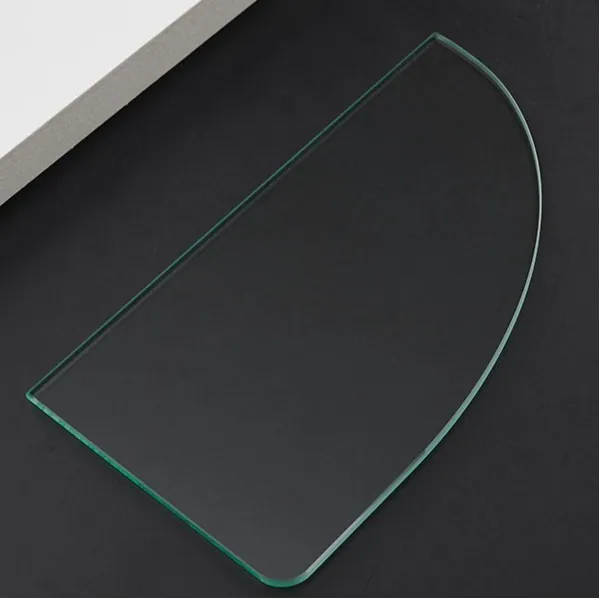
Optical Glass Materials in Transparent Armor and Ballistic Windows
The glass in a transparent-armor stack is the stiff, hard layer that blunts and spreads a projectile while the polycarbonate behind it catches the fragments, so the glass grade sets the areal density and the bulk of the material cost. The material has to be optically clear across the aperture and chemically stable through the laminate process, because a flaw in the glass becomes a dead spot in the view or a weakness in the stack. The choice is a negotiation between threat level, weight and cost, not a single best glass.
Substrate and material selection
Selection starts from the threat level and the aperture size, then picks a glass grade whose hardness and density meet the areal-density budget without exceeding the vehicle's weight limit. Higher-threat stacks need thicker or denser glass or an added ceramic layer, each of which pushes cost and weight, and the optical grade is chosen to keep the view clear across the whole pane. The material is matched to the certified threat, because over-specifying wastes weight and under-specifying fails qualification.
Handling, cleaning and packaging
Ballistic glass is heavy, brittle and easily edge-damaged, so handling and packaging dominate both scrap rate and lead time in a programme. Edges are protected through every move, cleaning is done without abrading the surfaces that become the optical faces, and the pack is built to survive transit and storage without stressing the laminate. Most programme delays trace to a chipped edge or a contaminated interface caught at incoming inspection, not to the melt.
The tolerances that actually matter
For a ballistic pane the optical clarity across the full aperture and the edge integrity matter more than tight thickness on the centre, because a clouded region or a cracked edge fails the view or the qualification. Flatness matters where the pane seats in a frame and where distortion at the edge would bother the occupant, and the interlayer bond is controlled because a poor bond is a delamination path. The tolerances that matter are the ones tied to the certified view and the certified stop, not the generic optical limits.
What drives cost and lead time
Cost and lead time are driven by the threat level and aperture size first, then by the glass grade, the number of laminate layers and the certification and traceability overhead the programme requires. A higher threat adds glass and interlayers and lengthens qualification; a one-off size adds tooling and setup. The dominant cost lever is rework from handling damage, so investing in handling and packaging up front is cheaper than a cheap pane that fails incoming inspection.
Requirements specific to Transparent Armor and Ballistic Windows
Armor duty makes threat level and aperture the cost drivers, so size the glass grade and layer count to the certified threat with the areal-density budget in view, and protect the edges through every handling step because that is where scrap and delay actually come from. Control optical clarity across the whole pane and the interlayer bond for the certified view and stop, and budget for certification and traceability rather than treating them as extras. A pane qualified as an assembly is cheaper than a cheap pane that fails qualification.
- Glass grade sized to certified threat
- Areal density kept in budget
- Edge protection through handling
- Optical clarity across full aperture
- Interlayer bond controlled
- Certification and traceability budgeted
Framework references: surface quality, flatness and edge-chip limits per ISO 10110, and laminate and ballistic qualification per the relevant defence or vehicle rule set (e.g., the applicable ballistic standard's current official text). Environmental declarations such as RoHS are the supplier's to state against the current official text, not to be assumed for an armored component.
Selection data at a glance
| Material | Index (nd) | Typical use | Notes |
|---|---|---|---|
| Glass grade | To threat level | Weight | |
| Layers | Glass + interlayer | Stop | |
| Edge | Protected handling | Scrap | |
| Optics | Clear full pane | View | |
| Bond | Controlled | No delam | |
| Cert | Traceability built in | Programme |
Frequently asked questions
Why does the glass grade drive most of the cost?
Because the glass is the heavy, hard layer that does the stopping, so its grade and thickness set the areal density and the bulk of the material cost. A higher threat needs more or denser glass or an added ceramic layer, and each step adds weight, cost and qualification time.
What causes the most programme delay?
Handling and packaging damage: a chipped edge or a contaminated interface caught at incoming inspection stalls the build far more often than the melt or the laminate itself. Investing in protected handling and clean packing up front removes most of that delay.
Which tolerance matters most for qualification?
Optical clarity across the entire aperture and edge integrity, because a clouded region fails the view and a cracked edge fails the stop. Thickness at the centre is less critical than a flaw-free, bondable edge and a pane that stays clear corner to corner.
Need a quotation for optical glass materials?
Send your drawing, target specification or coating requirement and an optical engineer will reply within 24 hours with a price and a lead time.
Request a Quote Email an engineer