Diagnostic and lab glass parts push laser cutting toward smaller kerf, burr-free edges and biocompatible finishing, and the trend is to treat the edge and the cleaning validation as part of the device rather than an afterthought. This note covers what is changing in sourcing and what actually moves cost.
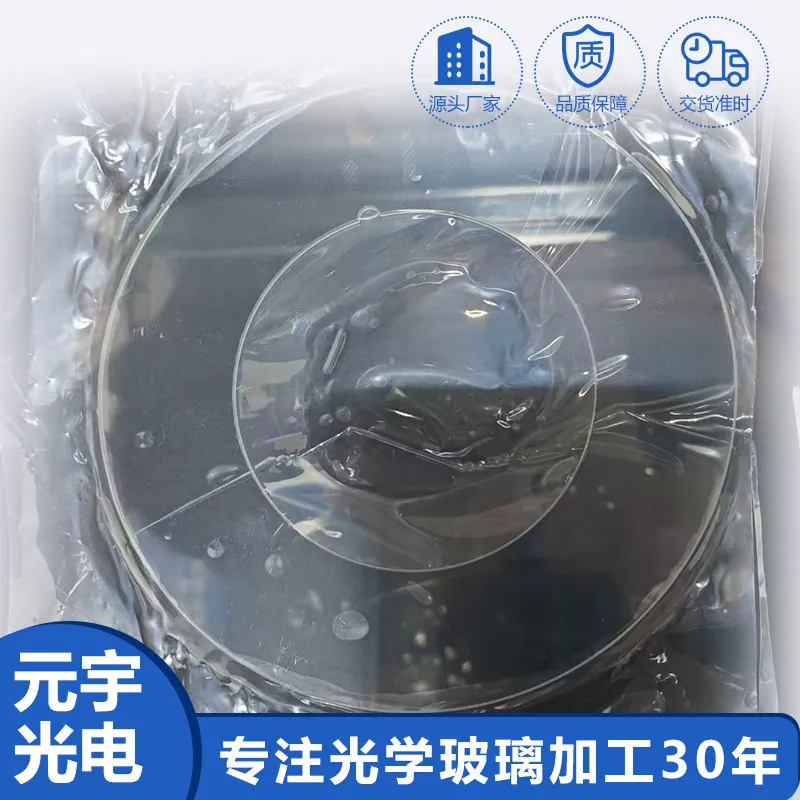
Laser Cutting of Glass in Medical and Diagnostic Devices
Medical and diagnostic glass parts, from cuvettes and covers to microfluidic-adjacent substrates, need edges that will not shed particles or harbour residue, because the part touches a sample or a patient pathway. Laser cutting ablates or cleaves the glass with minimal heat, which gives a smoother, burr-free edge than mechanical methods and avoids the micro-cracks that weaken a ground part. The trend is toward treating the edge quality and the post-process cleaning as device specifications rather than shop-floor defaults.
What drives cost and lead time
Cost scales with the laser process (picosecond or femtosecond sources cost more than longer pulses), the edge-quality requirement, the taper tolerance, the batch size and the post-process cleaning and inspection. A validated wash and a particle check add steps that mechanical cutting does not, and the metrology that proves edge quality is the schedule driver on a regulated programme.
How laser cutting of glass works in practice
A focused laser removes or weakens the glass along a path so it separates with little heat-affected zone, which is why the edge is smoother and the part stronger than one sawn or ground. The trade is process sensitivity: the kerf width and taper depend on pulse parameters and focus, so the process is qualified once and then held, rather than re-optimised per batch. Where the edge is not functionally critical, a looser taper budget keeps cost down.
Design rules that reduce cost
Cost comes down by standardising thickness, avoiding ultra-tight radii that need slow scanning, allowing a taper budget wherever the edge is not functional, and panelising parts so a batch is cut in one setup. Specifying an edge only where the function needs it avoids paying for a precision finish on a hidden face, and a standard blank is far cheaper than a custom one.
Standards, documentation and traceability
For a regulated device the documentation covers the edge quality against the scratch-dig scale, the dimensional tolerance, a cleanliness and biocompatibility note, batch records and a cleaning validation for medical use. Traceability matters because a device audit expects to reproduce the edge and the wash, so the process parameters and the cleaning lot are part of the record, not a bench memory.
Requirements specific to Medical and Diagnostic Devices
Medical and diagnostic use adds a biocompatible edge finish and a cleaning validation to the usual cutting requirements, plus tight dimensional tolerance and particle-free edges. Require batch records for the regulated device and confirm the cleaning solvent and residue limits with quality, because the edge is only as good as the wash that follows it.
- Burr-free, smooth edge for biocompatibility
- Dimensional tolerance held in batch
- Cleaning validated for medical use
- Batch records and edge-quality specification
Framework references: ISO 10110 for edge-chip and surface-quality limits. Medical cleaning and residue validation follow the device's regulatory file, and the limits should be confirmed with quality rather than assumed from a generic cleanliness claim.
Selection data at a glance
| Parameter | Typical capability | Notes |
|---|---|---|
| Kerf | Tens of µm typical | Process-dependent |
| Edge | Burr-free, smooth | Biocompatible |
| Thickness | Standardise | Cost lever |
| Taper | Budget allowed | Functional only |
| Cleanliness | Validated wash | Medical |
| Records | Batch plus FAI | Regulated |
Frequently asked questions
Laser or mechanical cutting for medical glass?
Laser gives a burr-free, stronger edge with less chipping at the cost of a more sensitive process; mechanical is cheaper per part but risks micro-cracks and particles.
Is a smooth edge enough for biocompatibility?
The edge plus a validated cleaning step. Confirm the residue limits with quality, because a clean-looking edge can still carry process contaminants.
Can I specify very tight radii?
Possible, but it costs more in scan time and process control. Allow the most generous radii the function allows to keep cost and lead time reasonable.
Need a quotation for laser cutting of glass?
Send your drawing, target specification or coating requirement and an optical engineer will reply within 24 hours with a price and a lead time.
Request a Quote Email an engineer