Wildlife and remote camera traps are left in the field for weeks or months with no one to wipe the lens, so the protective window is doing a harder job than in any indoor installation. Rain, condensation, pollen, insect marks and the occasional animal nudge all land on that first surface, and the design trend is toward windows that survive unattended deployment rather than windows that simply pass light.
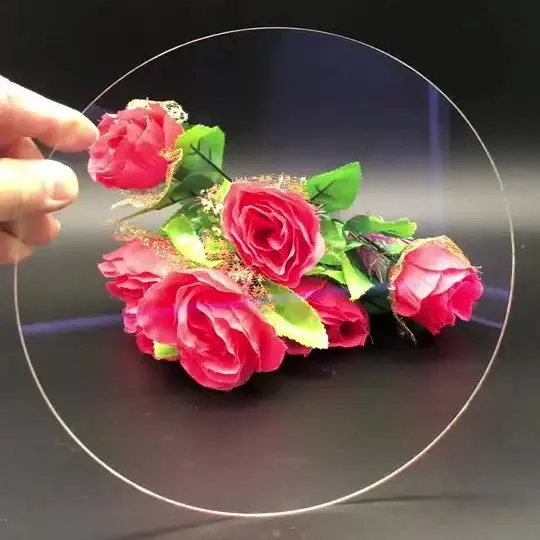
Lens Protection Windows in Wildlife and Remote Camera Traps
On a camera trap the window is the first optical surface and the only one the environment touches. Its job is to keep rain, dust, sap and insects off the lens while adding as little reflection and haze as possible, but unlike a factory camera it cannot be cleaned on a schedule. That means the window has to resist fouling, shed water and avoid fogging on its own, because a trapped droplet or a film of pollen can blank an entire deployment. The window is therefore specified for unattended survival first and for optical perfection second, which is a different priority order from most inspection cameras.
How lens protection windows works in practice
In practice the window seals the camera housing and faces outward through a flush or slightly recessed port. A flush window sheds rain and resists animal contact better than a proud one, but it is harder to keep condensation-free because air cannot circulate behind it. The coating faces outward and carries the weather load, while the inner face stays protected by the sealed cavity. Because the camera may trigger on thermal or motion cues, the window also has to stay optically quiet across the band the sensor uses, including the near-IR that many traps employ at night, so a coating tuned only to the visible would be the wrong choice.
Design rules that reduce cost
Cost is reduced by matching the window to a stock size and by accepting a durable single-layer or hydrophobic coat rather than a soft broadband stack that will not survive field wiping. A standard circular or rectangular blank that drops into an existing housing port avoids custom tooling, and a simple chamfered edge is cheaper than a fully figured one while still sealing. Holding parallelism loosely saves a metrology pass where the trap has focus authority, and standardising one window across a fleet of traps turns a custom part into a catalogue item. The cheapest robust window is the one designed to be swapped in the field with a standard seal, not the one specified to the tightest figure.
Standards, documentation and traceability
For a fleet of traps the documentation keeps field service sane. Each window type should ship with a spectral-transmission target covering the visible and the near-IR band the trap uses, a statement of the coating's hydrophobic and anti-fog behaviour, and a cleaning and compatibility note for the solvent approved in the field. Batch traceability matters because a deployment that fails mid-season should be reproducible: the replacement window has to match the original, not just the nominal spec. The coating's environmental rating and its shift with temperature should be on file so the trap's night-time focus can be predicted across the seasons it will sit outside.
What drives cost and lead time
Cost and lead time are driven by the coating and the size. A hydrophobic and anti-fog durable coat costs more than a bare or single-layer window but pays back across the deployment by cutting the number of blank frames. Large custom ports cost more and wait longer than stock sizes, and any requirement for a measured spectral curve per pane extends the schedule. Hardness and cleanability rating against the field solvent add a small cost that is repaid by a longer service interval. The reliable way to cut both price and wait is to fix the window to a stock blank with a standard durable coating and to avoid bespoke sizes across the fleet.
How it compares with the alternatives
Against running with no window, a protection window trades a little reflection for a large cut in lens cleaning and in the risk of a scratch that forces a housing strip-down in the field. Against a mechanical shutter or a wiper, the window gets dirty but is far cheaper to replace than a lens and can often be swapped without recovering the trap. A coated polymer is lighter and impact-resistant but scratches and fogs, which slowly blinds the camera in a way that looks like a sensor fault. Glass with a hard hydrophobic coat outlasts bare glass in a wet, biofouling environment by a wide margin, and the coating must be agreed against the cleaning solvent actually used in the field rather than a generic durability claim.
Requirements specific to Wildlife and Remote Camera Traps
A trail or remote camera trap adds rain, condensation, biofouling and animal contact in unattended deployments to the usual window requirements. Specify a durable hydrophobic and anti-fog coat rated for the near-IR band the trap uses at night, choose a stock blank that drops into the existing port, and design the window to be swapped in the field with a standard seal. Require a spectral target across the visible and near-IR, the coating's environmental rating and batch traceability so a mid-season replacement still matches the original and the deployment stays reproducible.
- Durable hydrophobic and anti-fog coat for unattended use
- Coating covers visible and near-IR night band
- Stock blank that drops into the existing port
- Field-swappable with a standard seal
- Spectral target and batch traceability on file
Framework references: surface figure and surface-quality tolerances for optical windows are generally stated in ISO 10110; hydrophobic and anti-fog performance claims should be confirmed against the current issue of that standard and against the field's own cleaning and environmental specification rather than a supplier's marketing grade.
Selection data at a glance
| Parameter | Typical value | Notes |
|---|---|---|
| Window role | Only exposed surface | Unattended weeks |
| Coating | Hydrophobic + anti-fog | Sheds rain, no fog |
| Band | Visible + near-IR | Night triggers |
| Size | Stock blank, flush port | Avoids tooling |
| Service | Field-swappable seal | Mid-season fix |
| Docs | Spectral + batch trace | Reproducible |
Frequently asked questions
Why do my camera-trap images go blank after rain?
Usually a droplet or a film of pollen sits on the window and the trap cannot be wiped in the field. A hydrophobic and anti-fog coat that sheds water and resists fogging is the practical fix, paired with a flush port that rain runs off rather than a proud one that traps droplets.
Should the window coating be tuned only to visible light?
No, if the trap uses near-IR for night triggers. A coating tuned only to the visible would hurt the night band, so specify the spectral target across both the visible and the near-IR the sensor actually uses.
Is a polymer window good enough for a trail camera?
Lighter and impact-resistant, but polymers scratch and fog, which slowly blinds the camera in a way that looks like a sensor fault. Glass with a hard hydrophobic coat outlasts it in a wet, biofouling environment by a wide margin and is usually the better field choice.
Need a quotation for lens protection windows?
Send your drawing, target specification or coating requirement and an optical engineer will reply within 24 hours with a price and a lead time.
Request a Quote Email an engineer