A part that measures correctly in the lab and fails in service is almost always a qualification gap rather than a manufacturing defect. This article sets out how AR coated glass is inspected and qualified for medical and life-science instruments, which standards apply, which tests reveal real weaknesses, and what documentation should travel with a shipment.
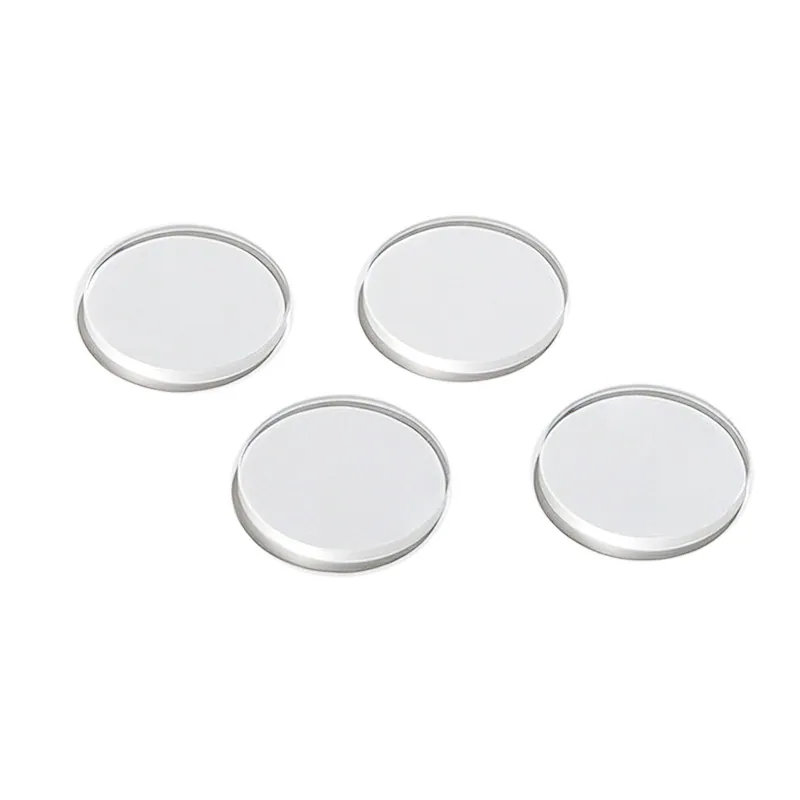
AR Anti-Reflective Glass in Medical and Life-Science Instruments
In medical and life-science instruments, that translates into a specific set of requirements rather than a general preference for quality. Medical optical components are qualified against cleaning, sterilisation and traceability requirements that have nothing to do with optics. A window must survive repeated disinfection without hazing, a filter must hold its wavelength through autoclave cycles, and every part must be traceable to its material lot for regulatory purposes.
Inspection and measurement
The primary measurement is spectral reflectance and transmission across the specified band, ideally at several points across the aperture so that thickness uniformity is verified as well as average performance. Haze is measured on a haze meter and matters more than most specifications acknowledge: a coating with excellent reflectance and 1 percent haze will be rejected by the user, because haze is visible at almost any viewing angle. Durability is verified through abrasion, tape adhesion and humidity tests, often against MIL-C-48497 or an equivalent customer standard. In Medical and Life-Science Instruments, the incoming inspection that pays for itself is a simple reflection color check under a defined light source, which catches color casts before the glass is bonded into an assembly that cannot be reworked.
Standards, documentation and traceability
AR coated glass is qualified through optical performance specifications plus durability and compliance documentation. Optical acceptance is defined by reflectance, transmission and haze targets over a stated band, with a defined measurement geometry. Durability commonly follows MIL-C-48497 for abrasion, adhesion and humidity, with additional customer-specific tests for outdoor exposure or cleaning regimes. Environmental compliance is documented with RoHS and REACH declarations. In Medical and Life-Science Instruments, the standards that most often delay a shipment are the customer's own: a specific cleaning chemical resistance list, a required surface energy for bonding, or an anti-static requirement expressed in surface resistance.
Common failure modes and how they show up
AR coatings fail in four recognisable ways. Abrasion removes the outermost layer and produces a faint haze that is only visible in glancing light. Delamination appears first at edges and apertures, usually after humidity exposure, and indicates insufficient adhesion preparation or an incompatible cleaning chemistry. Color shift under humidity points to a porous coating deposited without ion assistance. Edge corrosion, more common on laminated or busbar-equipped parts, starts at an exposed edge and creeps inward. In Medical and Life-Science Instruments, the practical response is to inspect the failure location: an edge-originated defect is almost always an assembly or cleaning issue, whereas a uniform change across the aperture is a coating process issue.
Handling, cleaning and packaging
Anti-reflective coatings are thin - a few hundred nanometers - and although a hard oxide stack is robust, the surface should still be treated as an optical surface. Clean with a soft, lint-free cloth and an approved solution, never dry, and avoid abrasive cleaners, ammonia-based products and abrasive pads that will cut through the outer layer. Handle by the edge. Storage and shipping use interleaved separators so that coated faces never touch. Where the part is laminated or bonded, specify an adhesive that does not outgas and a cure that does not exceed the coating's temperature limit. In Medical and Life-Science Instruments, the most common field complaint - a cloudy patch - almost always traces back to a cleaning cloth or a solvent introduced after delivery rather than to the coating itself.
What drives cost and lead time
The cost of an AR coating scales with the number of layers, the area coated and whether one or both faces are treated. A four-layer broadband stack on one face is the economical baseline; pushing average reflectance below 0.2 percent, extending the band, or adding hydrophobic and anti-static functionality each add layers and raise the sensitivity of the run. Coating both faces roughly doubles the process cost but usually costs less than two single-sided parts. Patterned coatings, apertures and masked areas add a lithography or masking step whose cost is dominated by the mask. In Medical and Life-Science Instruments, the cheapest improvement is almost always to coat the second surface, since an uncoated rear face often contributes more reflected light than the front coating removes.
Requirements specific to Medical and Life-Science Instruments
In medical and life-science instruments, that translates into a specific set of requirements rather than a general preference for quality. Medical optical components are qualified against cleaning, sterilisation and traceability requirements that have nothing to do with optics. A window must survive repeated disinfection without hazing, a filter must hold its wavelength through autoclave cycles, and every part must be traceable to its material lot for regulatory purposes.
- Autoclave and disinfectant resistance
- Batch traceability to material lot
- Tight wavelength control for diagnostic channels
- Low autofluorescence for fluorescence instruments
ISO 13485 quality systems, ISO 10993 biocompatibility where the part contacts tissue, plus FDA and EU MDR documentation expectations for the finished device.
Selection data at a glance
| Parameter | Typical value | Notes |
|---|---|---|
| Reflectance per surface | R ≤ 0.5 % average, R ≤ 0.2 % achievable | 420-680 nm |
| Transmission gain | up to 99 % single side, > 99 % both sides | Versus 92 % uncoated B270 |
| Band options | 400-700, 400-1100, 900-1700 nm, dual band | Broadband or tuned |
| Substrate | B270, ultra-clear, borosilicate, quartz, acrylic | 0.5-12 mm |
| Haze | ≤ 0.3 %, typically ≤ 0.1 % | Haze meter |
| Abrasion | pencil hardness 9H, steel wool 0000 pass | Hard oxide stacks |
| Adhesion | tape test 4B or better | Cross-hatch |
| Environmental | 85/85 humidity, salt spray, UV stable | Outdoor grades available |
| Coating pattern | full face, aperture only, or masked | Margin 0.5-1 mm typical |
Frequently asked questions
What reflectance can an AR coating actually reach?
Under 0.5 percent average per surface is routine, and under 0.2 percent is achievable across the visible band with a multilayer stack. Total transmission above 99 percent is possible when both faces are coated.
Should I coat one side or both?
Both, whenever the budget allows. The uncoated rear surface usually reflects as much light as the front coating removes, so leaving it bare gives up most of the benefit and often introduces visible ghosting.
How durable is the coating on a touch screen?
Hard oxide stacks pass a 9H pencil test and 0000 steel wool abrasion, and top layers can be added for fingerprint resistance. Durability under daily fingerprint oil exposure is normally limited by the cleaning method, not the coating.
Need a quotation for ar anti-reflective glass?
Send your drawing, target specification or coating requirement and an optical engineer will reply within 24 hours with a price and a lead time.
Request a Quote Email an engineer