Modern rolling stock puts a lot of the driver and passenger experience behind glass: the cab HMI and traction display, saloon information screens, and door and status indicators. Each of those sits behind a window that has to pass the display light with low loss, reject cabin and daylight reflections, and survive years of vibration, humidity and cleaning. This article works through the material, coating and tolerance trade-offs that decide whether a display window reads cleanly in service.
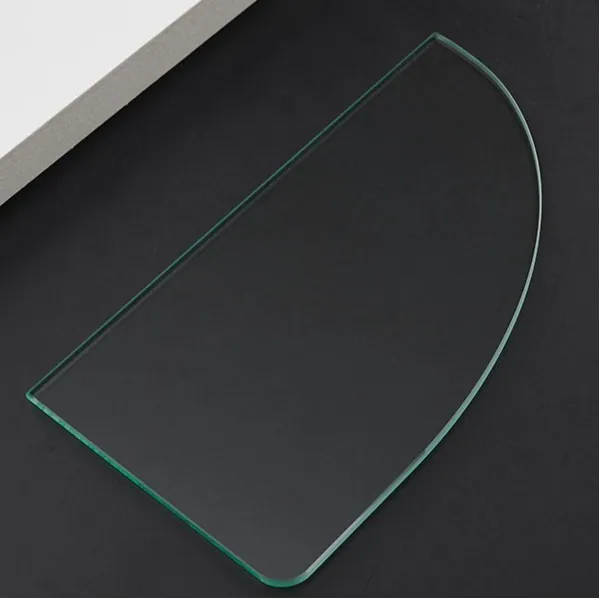
AR Anti-Reflective Glass in Railway and Rolling-Stock Cab Displays
A cab display window is a flat optic in front of an LCD, OLED or projected surface. In daylight the dominant problem is not the display's own brightness but the reflections of cabin lights, the sun and the driver's own face superimposed on the image. An uncoated glass panel reflects roughly four percent of incident light per surface, and those ghosts are what make a display unreadable at grazing angles. The window therefore needs broadband visible AR on the display-facing side at minimum, and usually on both faces when the panel is viewed from a wide cone. Large cab panels also introduce a flatness question: a gently curved or warped sheet turns a uniform reflection into a smeared highlight that the AR stack cannot fully cancel. The substrate choice, coating band and the mechanical envelope of the panel together set how aggressive the AR design needs to be.
How it compares with the alternatives
The baseline is bare toughened or tempered glass, which is cheap and durable but leaves the four-percent ghosts. A single-layer magnesium fluoride coating roughly halves that but is narrowband and ages poorly on large parts. Multilayer magnetron-sputtered AR across 420-700 nm is the workhorse for readability and is what most transport displays specify. Anti-glare etched glass scatters reflections into a soft haze and helps in very bright cab light, but it lowers contrast and is a poor fit for high-resolution map and video content. Conductive coatings such as ITO can be layered when a touch or heater function is required, at the cost of higher reflection and a slight tint that must be compensated in the AR design. The decision is mostly about which failure mode dominates: ghosting, haze, or touch/heater function.
Coating and deposition considerations
Sputtered multilayer AR gives the best uniformity on large, thin panels and survives repeated cleaning, which matters because cab glass gets wiped often. Evaporated stacks are cheaper for small volumes but can show thickness drift across a big sheet. The design band should cover the display's emission plus the cabin-light spectrum; if the cab uses warm-white lighting the AR can be weighted toward longer visible wavelengths. Where a night-vision or NVIS-compatible overlay is specified, the coating must also manage the 600-900 nm region without introducing a green leak. Adhesion and abrasion resistance should be treated as a qualification item, not a datasheet footnote: panels are cleaned with solvents and pads, and a coating that pits or delaminates reads immediately as a display defect.
What drives cost and lead time
Substrate size is the first cost lever. A large cab panel needs a coating chamber and a tempering line sized for it, and chamber capacity is the usual bottleneck rather than the glass itself. Multilayer count, edge treatment and any conductive layer add steps. Lot qualification against a railway environmental specification (temperature swing, humidity, vibration) adds lead time because samples must be run through the cycling and salt-mist regimes before release. Standard AR curves on stock substrate sizes ship far faster than a bespoke band or a custom panel geometry. If the program can accept an existing coating recipe on a standard thickness, lead time collapses to cutting and edge work rather than a new coating campaign.
Substrate and material selection
Soda-lime tempered glass is the default for cost and impact resistance, and it is adequate where the display sits behind a sealed bezel with modest thermal load. Borosilicate or alumino-silicate chemistries earn their premium where the panel spans a wide temperature range or must resist thermal shock near heaters and defrosters. Chemically strengthened thin glass is an option for very large, light cab panels but complicates edge finishing. Expansion matching to the display bezel and the mounting frame prevents the panel from bowing as the cab heats and cools; a mismatch shows up later as a soft reflection that drifts across the screen. Transmission in the visible should be specified as an average over the display band rather than a single point, because that average is what the eye integrates.
Requirements specific to Railway and Rolling-Stock Cab Displays
Rolling-stock windows live under a railway environmental regime rather than an automotive one: wider temperature swings, sustained vibration and shock, and frequent cleaning with aggressive agents. A relevant framework is EN 50155 for electronic equipment on rolling stock, which sets the temperature, humidity, vibration and EMC envelope that the whole display assembly, glass included, is qualified against; confirm the current edition and the specific class applicable to the vehicle. The coating must hold adhesion through thermal cycling and through the cleaning solvents used in depots, and the panel must stay readable under direct sun on the cab front. Where a NVIS-compatible night mode is required, the coating and any filter layer must be validated against the applicable night-vision compatibility specification rather than assumed. Edge sealing and bezel design should prevent capillary ingress of cleaning fluid at the glass edge.
- Broadband visible AR (roughly 420-700 nm) on both faces for wide-cone readability
- Substrate sized to the coating chamber; large cab panels are the lead-time driver
- Soda-lime tempered for cost; borosilicate where thermal shock is severe
- Coating qualified for vibration, humidity and depot cleaning solvents
- Flatness and bezel expansion match to avoid drifting reflection highlights
Framework references: EN 50155 for rolling-stock electronic equipment environment, and night-vision compatibility specifications where a NVIS mode is required. Coating durability (thermal cycling, humidity, abrasion, solvent resistance) follows the applicable railway qualification file; confirm against the current official text rather than a single value. Cosmetic limits can be expressed under ISO 10110-7 as a framework.
Selection data at a glance
| Parameter | Typical value | Notes |
|---|---|---|
| Visible transmission | over 92 % average (typical) | 420-700 nm |
| Average reflectance | under 1.5 % both faces | visible band |
| Substrate | soda-lime tempered or borosilicate | per thermal load |
| Temperature envelope | wide swing, vehicle class dependent | EN 50155 frame |
| Cleaning resistance | hold adhesion through solvents | depot regime |
Frequently asked questions
Does a cab display window need AR on both faces?
For a panel viewed across a wide cone, yes. A single-face coating leaves the exposed-surface ghost, which is exactly the reflection that washes out a map or video at grazing cab angles. Single-face AR may be enough for a sealed, near-normal-view indicator, but the viewing geometry decides, not the part size.
Is anti-glare etched glass a good substitute for AR?
It helps in very bright cab light by scattering reflections into a soft haze, but it lowers contrast and softens high-resolution content. It is best used where readability in direct sun outweighs image sharpness, and it is usually combined with AR rather than replacing it.
Why is a large panel more expensive than a small one?
Coating chamber and tempering line capacity scale with part size, and large thin sheets need careful handling and flatness control. The glass itself is a small part of the cost; the qualified coating campaign and the environmental qualification samples dominate.
Need a quotation for ar anti-reflective glass?
Send your drawing, target specification or coating requirement and an optical engineer will reply within 24 hours with a price and a lead time.
Request a Quote Email an engineer