Every AR glasses programme eventually collides with the same fact: about sixty percent of adults need prescription correction, and nobody will wear a heavy, awkward insert all day. The industry's converging answer is to laminate the correction directly onto the waveguide's front glass — a thin Rx lens bonded to the optics, invisibly, permanently. It sounds like a packaging detail. It is actually a new optical component, with its own material science, its own process discipline, and its own quiet crop of suppliers.
Why lamination won over inserts and free-form frames
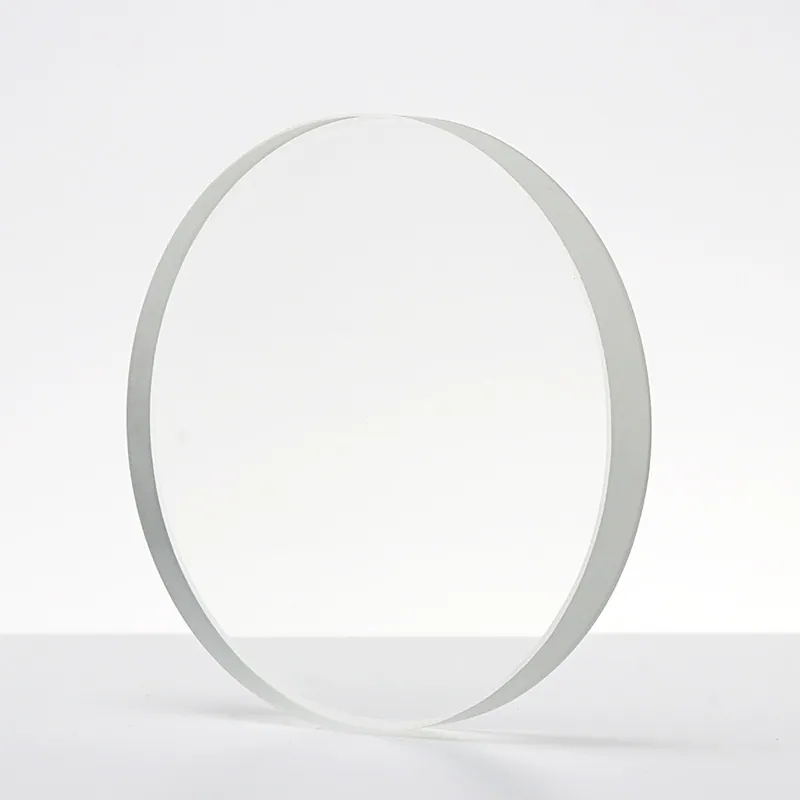
Insert lenses — clip-on Rx carriers behind the display optics — were the first answer and remain the cheapest. But they add weight at the worst place, fog between surfaces, and double reflections in a device already fighting ghost images. Grinding the waveguide glass itself to a prescription is optically elegant and commercially hopeless: waveguides are precious, low-yield parts, and machining them per prescription wrecks the economics. Lamination sits in between: the waveguide stays untouched, and a thin, pre-manufactured Rx lens — often a 0.5 to 1.5 millimetre wafer with the correction as a surface figure or a liquid-crystal layer — is bonded in front of it.
The optical demands are brutal for such a plain-looking part. The laminated lens must be optically flat or figured to sub-wavefront tolerances, because every deviation adds to the see-through path and distorts the real world the wearer looks at. It must not scatter — AR waveguides already generate their own rainbow artifacts, and a hazy bond line turns them into fog. And its transmission and tint must match the design's photometric assumptions exactly, because dimming layers and combiners were tuned assuming a specific see-through budget.
The adhesive is the component
Bonding makes or breaks the assembly. The adhesive layer must be optically clear, low-birefringence, void-free, thin enough to keep the package slim and compliant enough to survive drops without cracking either glass. UV-cured liquid adhesives and optical adhesive films both compete: liquids give thickness control at the periphery and require careful degassing; films give uniform thickness and cleanliness but demand pressure-bonding equipment that squeezes without stressing. The failure modes are familiar to anyone who has watched laminated display stacks: bubbles at the periphery, delamination from thermal cycling, adhesive bleed onto the waveguide's active area, and — the subtle one — stress birefringence in the bond line that shows up in polarized see-through testing.
Thermal mismatch dominates the reliability conversation. Rx lens materials — Trivex-type, polycarbonate, thin glass — expand differently from the waveguide's glass, and a bond that survives a bench will creep through thousands of thermal cycles on a face next to skin warmth. Field-grade assemblies now specify cycle testing from cold to skin temperature, humidity exposure, and drop tests with the laminated stack mounted as it would be in the frame.
What the new component supply chain looks like
Prescription lamination has created a small industry: optical shops that take lens blanks, figure the Rx surface, coat for the see-through budget and bond to customer-supplied waveguides or to front glass specified by the AR OEM. The interesting buyers' questions are new:
- Wavefront contribution of the finished laminate, measured on the actual stack — not the lens alone.
- Bond-line birefringence and bubble statistics, reported per process batch.
- Adhesive system documentation: cure chemistry, outgassing, thermal-cycle data, and rework policy.
- Dispensing logistics: prescriptions are individual, so the manufacturing model is closer to lens labs than to component plants — ask about turnaround and yield per prescription.
- Coating compatibility: anti-reflection stacks applied across the bond interface must adhere to two different materials.
Why this niche matters
Prescription lamination sits exactly where consumer comfort meets optical precision: a sub-millimetre bond that has to be invisible, durable and individually figured. As AR glasses move from developers to general consumers, lamination capacity — not waveguide capacity — may set the ceiling on custom-fit shipments. The suppliers already fluent in glass bonding, coating and low-stress assembly are the ones positioned to take it, and the component they deliver deserves to be specified like the optics it protects, not like packaging.
Product page: thin optical glass for bonded assemblies — specifications, coating options and lead times.