An interferometer is a machine that converts a change in optical path length into a signal, which means every material choice has to be judged on how little it changes rather than how much it transmits. In precision and gravitational-wave optics that shifts the weight of the decision onto homogeneity, thermal behaviour and coating durability, and it makes the trade between fused silica and crystal alternatives a genuine engineering argument rather than a shopping one. This note walks through where each material wins and where the expensive option earns its cost.
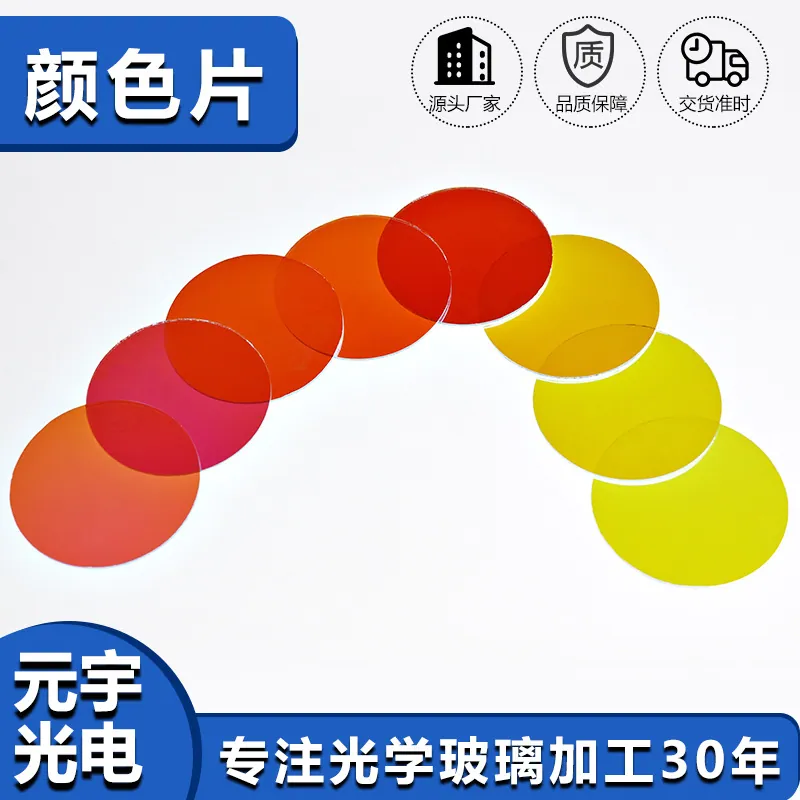
Optical Quartz and Crystal Glass in Gravitational-Wave and Precision Interferometry
Two families of instruments sit under this heading. Gravitational-wave detectors are large laser interferometers in which light circulates in a vacuum arm several kilometres long, and the optics are not chosen for transmission at all but for how little they scatter, absorb or thermally distort the beam. Precision interferometers, covering everything from coordinate metrology to optical coherence tomography reference arms, are smaller but share the same sensitivity: the instrument measures displacement, so the material must not change its dimensions or its index with temperature, humidity or time. In both cases the substrate is a long-term stability component. A part that measures perfectly on the bench can still be the wrong choice if its homogeneity or its coating drifts over a decade of service, which is why the trade-off discussion belongs at the material stage rather than at the polishing stage.
What drives cost and lead time
Cost is dominated by size, homogeneity class and coating, in that order. Homogeneous fused silica in small blanks is commodity-priced and available; the same material in larger apertures with tighter class, or in a shaped form such as a prism or a laser-quality blank, moves up quickly, and the queue for large homogeneous billets is often the longest part of the schedule. Crystal growth is slower still: a boule is grown, annealed and then cut, so a crystal option typically sits behind a fused-silica option by weeks on a standard lead time, and considerably longer for a specific orientation. Coating is the third driver. In this application the coating has to be extremely low-loss and extremely stable, and the process that achieves that is a specialist one, so a change of coating supplier can dominate the schedule. Freight and handling of large, heavy optical workpieces add a further cost that is often forgotten in comparison exercises, particularly when the blank has to cross a border twice.
Substrate and material selection
Fused silica wins on three properties that matter here: it transmits from the ultraviolet through the near-infrared with essentially no absorption, it has a low and stable thermal expansion over a wide range, and it is available in high homogeneity at sizes that fit a long arm. It also has a very low thermal conductivity for a glass, which helps a thick optic stay thermally uniform. Crystal materials, meaning single-crystal quartz and the optical single crystals used for nonlinear and birefringent functions, are the choice when a specific optical effect is needed: birefringence for polarisation control, or a nonlinear coefficient for frequency conversion. The cost is anisotropy, which for an interferometer is both useful and awkward, since the same effect that gives polarisation control produces an axis-dependent optical path that must be accounted for in the alignment. Sapphire is the usual alternative for thermal and mechanical stiffness, and it wins where mechanical resonance matters more than transmission or where the coating has to survive ablation, at the price of higher index, higher reflection and a much higher material price.
How it compares with the alternatives
The comparison that decides most designs is fused silica against fused silica of a better class. A higher-homogeneity blank buys less wavefront error after polishing and less thermal lensing under a real beam, and for a detector where the budget is in nanometres it is usually worth it. Where the budget is in scattering rather than in figure, a different material wins: fused silica still scatters from residual absorption and from surface features, so a coating with extremely low absorption and an extremely smooth surface matters more than the bulk class. Metal mirrors beat both on broadband and on damage tolerance, and lose on low scattering and on thermal stability. The genuinely wrong choice in this application is a substrate chosen for transmission alone, because transmission is the one property an interferometer has in abundance. Judging the material on how little it changes, over the temperature range and the service life, is what the application actually rewards.
Coating and deposition considerations
Coating is where precision interferometry parts are won or lost. A dielectric reflector intended to be stable for years needs dense, low-porosity layers deposited under a controlled environment, with the number of layers kept as low as the reflectivity budget allows, since every layer adds absorption. Where the requirement is low total loss rather than high reflectivity, a single-layer metallic coating may beat a multilayer dielectric on stability even if its absorption is nominally worse. Adhesion matters more than in most optical work because the coating is usually protected only by the coating itself: a pinhole or a weak interface becomes a scattering site, and the part is very likely to be handled repeatedly during installation. Ask for absorption and loss data on the actual coating, for a witness sample held at the coating facility for a period, and for a written statement of the surface preparation that preceded deposition. Do not accept a coating specification expressed only as reflectance.
Requirements specific to Gravitational-Wave and Precision Interferometry
Precision and gravitational-wave interferometry require stability rather than transmission: the instrument measures path length, so material homogeneity, thermal behaviour, long-term drift and coating loss determine the achievable sensitivity. Specify absorption and coating loss alongside reflectance, require coating data measured on the actual part with a witness coupon held at the facility, and state the service environment including vacuum, bake-out temperature and vibration. For large or shaped blanks, agree the homogeneity class, the thermal expansion range and the delivery condition early, since these dominate lead time on this application more than on catalogue parts. Any export or import control on blank geometry or coating chemistry should be checked against current official rules before the design is frozen.
- Absorption and coating loss specified alongside reflectance, not reflectance alone
- Homogeneity class and thermal expansion range stated for the actual blank size
- Coating qualified with a witness coupon held at the coating facility
- Long-term drift and service environment (vacuum, bake-out, vibration) in the qualification
- Geometry and coating chemistry checked against export or import controls early
Framework references: ISO 10110 for surface figure, surface quality and wedge on finished optics. Surface roughness and coating durability are usually specified in the terms of the relevant optics standard in force for the programme; confirm against the current official text and the instrument's own environmental file rather than assuming a single convention. Materials that are controlled for export or import must be checked against the current official lists for the jurisdictions involved.
Selection data at a glance
| Parameter | Typical value | Notes |
|---|---|---|
| Homogeneity | Per programme class | Drives wavefront |
| Transmission | Broadband, low absorption | Secondary to stability |
| Thermal expansion | Low and stable over range | Thermal lensing |
| Coating loss | Specified, not implied | Absorption budget |
| Figure / wedge | Per ISO 10110 | Alignment budget |
| Traceability | Batch plus witness coupon | Long-term drift |
Frequently asked questions
Is higher-homogeneity fused silica always worth the premium?
Only when the budget is in figure or thermal lensing. If the limit is set by scattering, absorption or coating loss, a better bulk class buys little and a smoother surface or a lower-loss coating buys a lot. Match the material improvement to whichever term is actually in the budget.
Why would a crystal be chosen over fused silica here?
When the instrument needs an optical effect a glass cannot give, such as birefringence for polarisation control or a nonlinear coefficient for frequency conversion. The gain is the effect; the cost is axis-dependent behaviour and a much longer lead time, so it is a functional decision rather than a quality upgrade.
Do coating specifications need absorption data?
Yes. A coating specified only by reflectance can be arbitrarily lossy while still meeting the reflectance figure, and in an interferometer the loss is spent directly out of the detection budget. Ask for loss or absorption on the actual coating, with a witness coupon held for comparison.
Need a quotation for optical quartz and crystal glass?
Send your drawing, target specification or coating requirement and an optical engineer will reply within 24 hours with a price and a lead time.
Request a Quote Email an engineer