Requirements in scientific and laboratory instrumentation have been shifting - thinner parts, wider bands, harsher environments - and those shifts change what quartz and crystal glass suppliers are being asked to hold. This article reviews where the demand is heading, what it means for specifications, and how to structure sourcing so that a design is not locked to a single process.
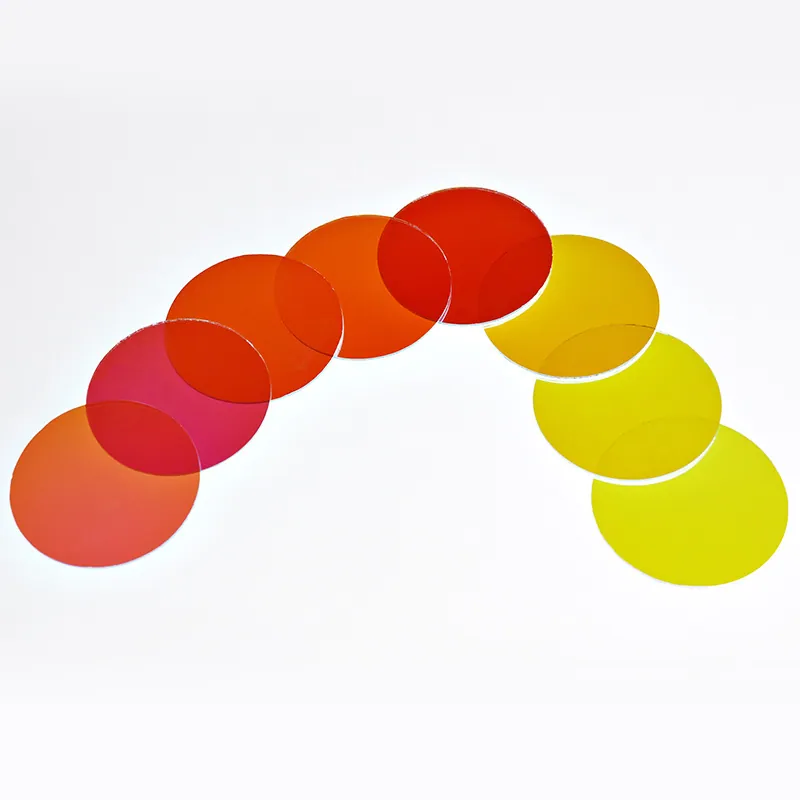
Optical Quartz and Crystal Glass in Scientific and Laboratory Instrumentation
In scientific and laboratory instrumentation, that translates into a specific set of requirements rather than a general preference for quality. Laboratory instruments are judged on reproducibility, so their optics must be documented and their performance must not drift between measurement campaigns. Many instruments are calibrated against a reference path, which means a small change in a window or filter shifts every reading rather than producing an obvious failure.
Design rules that reduce cost
Designing with quartz means exploiting its properties without paying for them twice. Use it where the UV transmission, the low expansion or the high damage threshold is actually required, and use ordinary optical glass elsewhere; a hybrid assembly that uses a quartz window and a borosilicate mounting ring has to account for the expansion mismatch, which is significant even though quartz itself moves very little. Keep edges chamfered and avoid clamping directly on an optical face. Avoid specifying both a very thin part and a very tight flatness unless the mounting will support it. For polarisation work, state the axis orientation on the drawing. In Scientific and Laboratory Instrumentation, a short design review before the first cut usually removes one of the tight tolerances entirely, which is the cheapest possible redesign.
Standards, documentation and traceability
Quartz optics are specified through the same drawing standards as other elements, ISO 10110 and ISO 12123, with additional material specifications covering OH content, bubble class and homogeneity. Laser applications reference damage threshold test standards and often require witness-sample data. Cleanliness specifications become important for semiconductor-adjacent parts, where particle count per unit area is controlled and documented. Environmental compliance is covered by RoHS and REACH declarations. In Scientific and Laboratory Instrumentation, the documentation that most often determines whether a part can be released is traceability back to the material lot, because a homogeneity or inclusion problem discovered during assembly can only be contained if the affected parts can be identified.
What drives cost and lead time
Quartz costs more than optical glass at every stage. The raw material is several times the price of BK7, and it polishes far more slowly because of its hardness, so a deep-UV grade window can cost five to ten times an equivalent borosilicate part. Grade selection drives the price more than size does: low-OH material and low-bubble, high-homogeneity grades carry large premiums. Flatness and surface quality follow the usual pattern, with each step tighter adding a finishing operation. In Scientific and Laboratory Instrumentation, the sensible approach is to buy the cheapest quartz that satisfies the transmission requirement and to specify deep-UV grade only where the band actually needs it, since most parts specified as deep UV never see light below 350 nm.
How quartz and crystal glass works in practice
Quartz and crystal glass cover two related but distinct materials. Fused silica is synthetic, amorphous silicon dioxide, made by melting or by chemical vapor deposition, and it is the material of choice whenever a part must work below about 250 nm, survive high laser energy or tolerate rapid temperature change. Crystalline quartz is the natural or grown crystal, valued for its piezoelectric behavior and used in frequency control, polarisation optics and where its specific optical activity matters. Both share a very low coefficient of thermal expansion, about one seventeenth that of soda-lime glass, which is why a quartz window can survive a temperature gradient that would crack ordinary glass. In Scientific and Laboratory Instrumentation, that thermal stability combined with deep UV transmission is usually the reason quartz is specified rather than a cheaper optical glass.
Requirements specific to Scientific and Laboratory Instrumentation
In scientific and laboratory instrumentation, that translates into a specific set of requirements rather than a general preference for quality. Laboratory instruments are judged on reproducibility, so their optics must be documented and their performance must not drift between measurement campaigns. Many instruments are calibrated against a reference path, which means a small change in a window or filter shifts every reading rather than producing an obvious failure.
- Documented and stable transmission curves
- Batch-to-batch consistency for calibration validity
- Chemical resistance to laboratory solvents
- Precision surface quality for interferometric paths
ISO/IEC 17025 context for testing laboratories, ISO 10110 drawings, and full material and coating documentation.
Selection data at a glance
| Parameter | Typical value | Notes |
|---|---|---|
| Transmission band | 185-2500 nm (fused silica) | Deep UV to near IR |
| Refractive index | 1.458 (fused silica) | Low and highly uniform |
| CTE | 0.55 × 10⁻⁶ /K | Thermal shock resistant |
| OH content | < 10 ppm low-OH, > 200 ppm high-OH | Selected by UV or IR use |
| Birefringence | < 5 nm/cm (fused) | Crystalline quartz is anisotropic by nature |
| Flatness | λ/4 to λ/10 | Quartz wafers to λ/20 |
| Scratch-dig | 40-20 standard, 20-10 precision | ISO 10110-7 |
| Thickness range | 0.1-30 mm | Wafers from 0.1 mm |
| Edge finish | ground, chamfered or fine-lapped | Chips ≤ 0.05 mm |
Frequently asked questions
Can quartz be coated for laser applications?
Yes, and the coating usually matters more than the substrate. Damage threshold is specified at the operating wavelength and pulse duration, and is verified on witness samples from the same material lot.
How flat can a quartz window be made?
Lambda/4 to λ/10 at 633 nm is routine, and quartz wafers can be polished to λ/20. Because quartz is stiff and low-expansion, the figure is stable, but it must be specified whether flatness is required free-standing or mounted.
Do you supply quartz wafers as well as windows?
Yes, from 0.1 mm upwards, with total thickness variation and warp controlled for vacuum-chuck processing, and with edge profiles selected for automated handling equipment.
Need a quotation for optical quartz and crystal glass?
Send your drawing, target specification or coating requirement and an optical engineer will reply within 24 hours with a price and a lead time.
Request a Quote Email an engineer