Two quotations for the same optical glass materials part in architectural and appliance glass can differ by a factor of three, and the reason is rarely the material. This article breaks down the real cost drivers - tolerance, finishing operations, inspection level and batch size - and shows which specification changes save money and which only look as though they should.
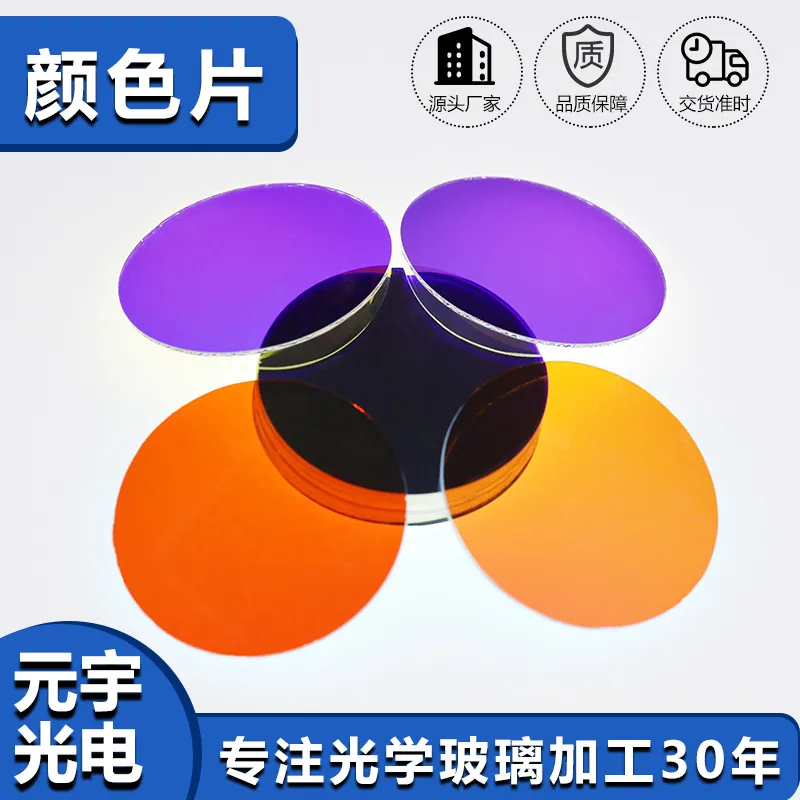
Optical Glass Materials in Architectural and Appliance Glass
In architectural and appliance glass, that translates into a specific set of requirements rather than a general preference for quality. Architectural and appliance applications bring optical coatings into contact with the general public, which changes the requirements: coatings must be hard enough for daily cleaning, color neutral when the customer is looking through them, and large enough to coat uniformly. Cost per square meter dominates, and service life is measured in decades.
Handling, cleaning and packaging
Glass is a brittle material with a very high theoretical strength and a much lower practical one, because every cut edge and every surface scratch is a stress concentrator. Thin sheets below 1 mm warp under their own weight and must be supported flat; ultra-thin stock below 0.3 mm is usually supplied and processed on a carrier. Storage matters too: sheets left in a humid room can develop surface haze, and stacked sheets abrade each other unless interleaved. For coated parts, the rule is absolute - never touch the coated face, and never stack two coated faces together. In Architectural and Appliance Glass, the handling specification is worth writing down explicitly, including the packaging standard and the cleaning chemicals permitted during assembly, because damage that occurs after delivery is usually the customer's process, not the supplier's.
The tolerances that actually matter
Glass is bought and sold against a handful of numbers that should always appear on the purchase order. Refractive index tolerance and homogeneity decide how much the wavefront will be distorted, typically quoted as an index variation across a melt. Bubble and inclusion class limits the size and count of internal defects, which matters in imaging and in laser paths where a bubble becomes a damage site. Striae grade controls the residual cord lines that cause local index variation. For sheet and wafer stock the mechanical numbers matter just as much: thickness tolerance, total thickness variation, warp and surface roughness. In Architectural and Appliance Glass, the two attributes most often omitted from a specification and most often responsible for a rejected batch are warp after thermal processing and edge quality of the cut blank.
What drives cost and lead time
Material cost is not linear in performance, and the jumps are large. Moving from soda-lime to BK7 roughly doubles the substrate bill; moving to borosilicate or Eagle XG roughly doubles it again; fused silica and quartz are several times BK7; sapphire can be an order of magnitude above soda-lime for the same blank size. Those multipliers matter far less than the processing they imply, though. Harder materials grind and polish more slowly, sapphire requires diamond tooling, and quartz demands longer coating cycles - so the true cost difference between two material options is usually two to three times the raw material delta. In Architectural and Appliance Glass, the cheapest decision is normally to use the least exotic material that meets the transmission and thermal requirement, and to spend the saved budget on tighter inspection instead.
Substrate and material selection
The practical menu is shorter than the catalogs suggest. B270 and soda-lime cover most visible-light parts and polish quickly at low cost. BK7 brings better homogeneity and lower bubble content for imaging paths where wavefront matters. Borosilicate 3.3 and alkali-free grades such as Eagle XG add low thermal expansion and are the standard choice for thin sheets and for parts that must stay flat through a coating or a soldering process. Fused silica and quartz cover UV and high-energy applications because they combine deep-UV transmission with a very high laser damage threshold. Sapphire sits at the other end: it is nearly scratch-proof, works out to the mid infrared and conducts heat, but it is anisotropic, expensive and slow to machine. Blue glass is a special case, an absorptive material that removes near-infrared while passing visible light.
Inspection and measurement
Incoming material inspection is cheaper than outgoing rework. A glass lot should be verified for index or at least for the certificate values, thickness and TTV across the sheet, warp, and the visible defect class. Where the part is used in an imaging or laser path, an interferometric check on a witness sample from the same lot catches inhomogeneity before a hundred parts are cut from it. After processing, the same measurements are repeated on the finished part plus surface quality and coating performance. In Architectural and Appliance Glass, the shipment documentation that matters most is traceability: the melt or lot number behind the parts, so that if a defect appears months later the affected batch can be identified without recalling everything produced in the same period.
Requirements specific to Architectural and Appliance Glass
In architectural and appliance glass, that translates into a specific set of requirements rather than a general preference for quality. Architectural and appliance applications bring optical coatings into contact with the general public, which changes the requirements: coatings must be hard enough for daily cleaning, color neutral when the customer is looking through them, and large enough to coat uniformly. Cost per square meter dominates, and service life is measured in decades.
- Large-area coating uniformity
- Neutral residual color for architectural appearance
- Hard, cleanable surface for public environments
- Decade-scale humidity and UV stability
EN 1096 context for coated architectural glass, safety glazing considerations, and RoHS and REACH declarations.
Selection data at a glance
| Material | Index (nd) | Typical use | Notes |
|---|---|---|---|
| B270 / soda-lime | 1.523 | Cover glass, filters, lighting | Lowest cost, quick polishing |
| BK7 (N-BK7) | 1.517 | General optics, windows | Excellent homogeneity, low bubble |
| Borosilicate 3.3 | 1.471 | Heat-resistant windows, thin glass | CTE 3.3 ppm/K |
| Eagle XG | 1.510 | Display, thin-sheet optics | Alkali-free, very low warpage |
| Fused silica / quartz | 1.458 | UV, laser, high-temperature | Deep UV transmission, high damage threshold |
| Sapphire | 1.768 | Scratch-proof windows, IR | Mohs 9, anisotropic machining |
| Blue glass (BG-type) | 1.52 - 1.55 | IR-cut for cameras | Absorptive NIR, color correction |
| Glass wafer | varies | Sensors, packaging | 0.1-1 mm, low TTV |
Frequently asked questions
How much does material choice affect lead time?
Soda-lime, B270 and standard borosilicate ship from stock in days. Fused silica, quartz and sapphire are frequently made to order, and their slower grinding and polishing rates add days to weeks on top of the material lead time.
Do you supply material certificates?
Yes. Certificates for index, transmission, expansion and defect class accompany the shipment, along with the melt or lot identification that allows full traceability of the finished parts.
Is fused silica the same as quartz?
Not quite. Fused silica is synthetic, amorphous SiO2 and is the preferred choice for UV and laser optics because of its homogeneity and low impurity level. Quartz is the natural crystalline counterpart, used where its specific optical or thermal properties are needed.
Need a quotation for optical glass materials?
Send your drawing, target specification or coating requirement and an optical engineer will reply within 24 hours with a price and a lead time.
Request a Quote Email an engineer