Dental scanners, curing lights and orthodontic imaging equipment all rely on glass that transmits well, holds its index through sterilization, and can be documented as safe where it contacts the patient or the impression. Sourcing has shifted toward low-iron, high-abrasion-resistant and easy-to-sterilize substrates, with tighter material certification. This note covers the trends, the documentation that matters, and the trade-offs that actually move cost and lead time.
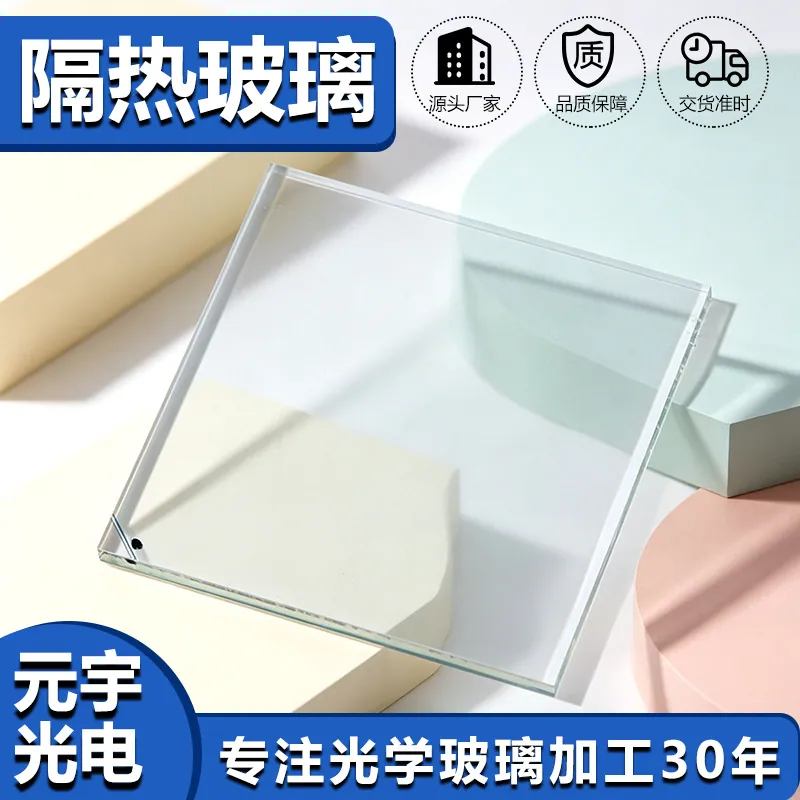
Optical Glass Materials in Dental and Orthodontic Optics
In dental and orthodontic equipment the glass appears in scanner windows, intra-oral camera optics, curing-light guides and the reference artefacts used to calibrate a scan. Unlike industrial optics the material may sit in a patient-contact path or be repeatedly autoclaved, so the choice is as much about documentation and durability as about pure optical quality. The trend is toward fewer, well-characterised glass types with full material certification rather than a long list of exotic variants.
Standards, documentation and traceability
Where the glass is in a patient-contact or patient-proximity path, biocompatibility documentation is the first gate, typically addressed through a framework such as ISO 10993 for the material and any applicable device rule set, with lot-level traceability back to the melt. A material certificate that states composition, index and absence of restricted substances supports both the regulatory file and the procurement audit. Suppliers should state RoHS and REACH status against the current official text rather than a generic claim.
What drives cost and lead time
Cost and lead time are driven by melt quality, index and Abbe consistency across lots, any special tint or fluorescence target, and the sterilization-resistance qualification the part must pass. Low-iron melts cost more than standard crown but remove the green edge that hurts short-wavelength transmission, and a stable index across batches avoids recalibrating the scanner. Minimum order quantities on a specialty melt can dominate lead time more than the machining itself.
How optical glass materials works in practice
Optical glass is supplied in crown and flint families whose index and dispersion are controlled at the melt. For dental use the practical levers are low iron for high transmission, a stable index for repeatable optics, and a colour and fluorescence signature that does not interfere with the imaging or curing wavelength. The material is then shaped by cold processing and, where needed, coated, so the raw glass quality sets the ceiling on the finished part.
Design rules that reduce cost
Two rules remove most avoidable cost. The first is to standardise on a small set of qualified glass types across a product family instead of a different melt per part, which keeps volume up and qualification cost down. The second is to specify a realistic index tolerance and a standard blank size rather than a boutique spec that forces a custom melt. Avoid exotic tints unless the imaging band truly needs them, and design the coating to suit a standard substrate rather than the other way around.
How it compares with the alternatives
Against polymer, glass wins on scratch resistance, thermal stability and long-term index stability but loses on impact toughness and weight. Against sapphire, glass wins on cost and machinability but loses on surface hardness. Against specialty crystal, glass wins on availability and price but may not reach the same transmission or birefringence behaviour. For most dental and ortho optics the deciding factors are certification, sterilization resistance and stable index, which points to a qualified optical glass rather than a more exotic material.
Requirements specific to Dental and Orthodontic Optics
Dental and orthodontic applications add biocompatibility documentation, sterilization-cycling resistance and low fluorescence to the usual material choice. Require a material certificate and lot traceability, confirm the sterilization regime the part must survive, and specify low-fluorescence glass so the imaging or curing wavelength is not disturbed. Keep the qualified glass list short to protect lead time and cost, and capture RoHS and REACH status from the supplier against the current official text.
- Biocompatibility documentation per applicable framework
- Lot traceability back to the melt
- Sterilization-cycling resistance specified
- Low-fluorescence glass for clean imaging
- Short qualified-glass list to protect cost and lead time
Framework references: biocompatibility is generally addressed through ISO 10993 and the applicable device rule set, with material certification supporting the file; optical and dimensional tolerances follow ISO 10110. RoHS and REACH declarations are the supplier's to state against the current official text, not to be assumed. Specific device classifications should be confirmed with the notified body or regulator in force.
Selection data at a glance
| Material | Index (nd) | Typical use | Notes |
|---|---|---|---|
| Transmission | Low-iron for high | Short-wave band | |
| Index | Stable across lots | Scan repeatability | |
| Biocompatibility | Per framework | ISO 10993 family | |
| Sterilization | Autoclave cycling | Surface and edge | |
| Traceability | Lot to melt | Audit support | |
| Fluoresence | Low, specified | Imaging clean |
Frequently asked questions
Does dental glass need a special biocompatibility certificate?
Where the glass is in a patient-contact or patient-proximity path, yes, the material needs to be documented under the applicable framework such as ISO 10993, with lot-level traceability back to the melt. The exact classification depends on the device and the rule set in force, so the regulatory file should be confirmed with the relevant body.
Why specify low-fluorescence glass for dental optics?
Because fluorescence at the imaging or curing wavelength adds a background that reduces contrast and can shift a measurement. Low-fluorescence glass keeps the signal clean, which matters more in intra-oral imaging and curing than in most industrial optics.
Is sapphire worth it over optical glass for scanner windows?
Only at wear points that see repeated insertion and cleaning, where sapphire's hardness pays off. For most scanner windows a qualified optical glass meets the sterilization and index needs at a far lower cost, with sapphire reserved for the few surfaces that truly need it.
Need a quotation for optical glass materials?
Send your drawing, target specification or coating requirement and an optical engineer will reply within 24 hours with a price and a lead time.
Request a Quote Email an engineer