Display and cover glass sits between the user and the device, so the material choice is a balance between surviving daily abuse and passing the light the screen produces. Alkali-aluminosilicate, sapphire and optical glass each occupy a different point in that balance, and the right choice depends on where the part sits in the stack and what it has to withstand.
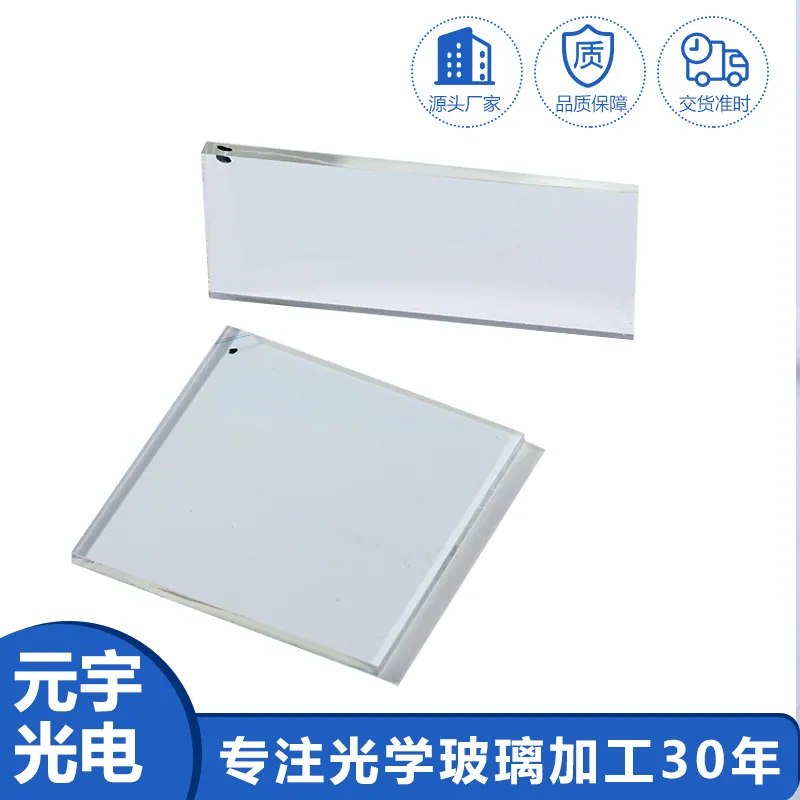
Optical Glass Materials in Display and Cover Glass
In a display or touch stack the outermost pane is the part that meets keys, faces and the environment, while inner panes and sensor covers care more about optical clarity than about impact. The material therefore has two jobs that pull in different directions: be hard enough to resist the scratches of daily use, and be clear and neutral enough that the image underneath is not tinted or dimmed. The comparison is not about which material is best in isolation but about which trade-off matches the position in the stack and the expected abuse.
The tolerances that actually matter
The tolerances that decide the result are surface hardness and scratch resistance, transmission and colour neutrality across the visible band, and the thickness and flatness the stack can accommodate. Hardness sets how the pane looks after months of use; transmission and neutrality set how the display reads. Flatness matters where the cover also acts as a touch surface or sits over a tightly spaced sensor array, because a bow introduces parallax or focus error. For an inner cover the figure can be looser, while for the outer pane the surface quality and edge finish dominate because that is what the user sees and feels.
How it compares with the alternatives
Alkali-aluminosilicate glass is the common outer cover: hard, chemically strengthenable, neutral in colour and inexpensive, but it still scratches under sharp grit. Sapphire is far harder and almost scratchproof, but it is expensive, harder to make large, and its crystal nature gives it a slight birefringence and a different colour cast that has to be designed around. Optical glass offers the best neutrality and figure for inner covers and sensor windows, but it is softer and less impact-resistant than the strengthened silicates, so it is rarely the outer pane. The practical choice is sapphire only where scratch resistance justifies the cost, silicate where abuse and price both matter, and optical glass where clarity and figure outweigh toughness.
Substrate and material selection
Selection starts from position in the stack. The outer cover is almost always a strengthened alkali-aluminosilicate chosen for hardness and cost, sometimes with an anti-reflective or anti-fingerprint coating on the outer face. A camera or sensor window buried in the stack is better served by optical glass for its neutrality and figure, since it sees no abuse. Sapphire is reserved for small, exposed, high-wear spots such as sensor lenses or watch crystals where the scratch resistance is worth the price. The decision is a joint one between the mechanical environment and the optical budget, because a harder material is not automatically the better one once colour cast and cost enter.
What drives cost and lead time
Cost is driven by material and by the strengthening and coating steps. Sapphire dominates on price because of crystal growth and the difficulty of making it large and thin; alkali-aluminosilicate is cheap in volume but the ion-exchange strengthening adds a controlled, time-based process. Optical glass is mid-priced but its cost rises with the figure and surface grade required. Lead time follows the same path: sapphire waits on boule growth and slicing, silicate on the strengthening queue, and optical glass on the polishing and coating metrology. Standard sizes and standard coatings are the reliable way to cut both, while a bespoke neutral-coat or an unusual thickness adds weeks.
Requirements specific to Display and Cover Glass
A display or cover-glass stack adds daily-abuse survival, colour neutrality and stack position to the usual material comparison. Pick the material by where it sits: a strengthened alkali-aluminosilicate for the outer pane where abuse and price both matter, optical glass for inner sensor covers where neutrality and figure dominate, and sapphire only for small high-wear spots where scratch resistance justifies the cost. Hold the surface hardness, transmission and flatness to the stack's real needs, and choose standard sizes and coatings to keep cost and lead time under control.
- Material chosen by stack position, not by hardness alone
- Silicate outer pane for abuse and cost balance
- Optical glass for inner covers needing neutrality
- Sapphire only for small high-wear exposed spots
- Standard sizes and coatings to control cost and lead
Framework references: optical and surface-quality tolerances for glass components are generally stated in ISO 10110; hardness and abrasion expectations for cover materials are commonly described by established surface-durability test methods rather than a single universal standard, and the relevant method should be confirmed against the device's own qualification plan.
Selection data at a glance
| Material | Index (nd) | Typical use | Notes |
|---|---|---|---|
| Material | Silicate / sapphire / optical | Abuse vs clarity | |
| Hardness | Set by position | Daily scratch life | |
| Neutrality | Optical glass best | Image colour | |
| Cost | Sapphire highest | Growth + slicing | |
| Lead time | Strengthening or growth | Queue driven | |
| Size | Standard first | Controls both |
Frequently asked questions
Is sapphire worth it for a phone cover?
Rarely for a full-size cover, because sapphire is expensive, hard to make large and carries a slight colour cast and birefringence. It earns its place on small, exposed, high-wear spots such as sensor lenses or watch crystals where scratch resistance justifies the price.
Why not use optical glass as the outer pane?
Because it is softer and less impact-resistant than strengthened alkali-aluminosilicate, so it scratches and cracks under daily abuse even though its optical neutrality is excellent. Optical glass is better used for inner sensor covers where it sees no wear.
What actually makes cover glass expensive?
The material and the post-processing. Sapphire waits on crystal growth; silicate waits on the ion-exchange strengthening queue; optical glass waits on polishing and coating metrology. Standard sizes and standard coatings are the reliable way to cut both cost and lead time.
Need a quotation for optical glass materials?
Send your drawing, target specification or coating requirement and an optical engineer will reply within 24 hours with a price and a lead time.
Request a Quote Email an engineer