Thermal-comfort and occupancy sensors read the long-wave infrared emitted by people and surfaces to control HVAC and lighting, and the IR filter at the detector is the element that selects the thermal band while rejecting visible and near-IR background that would otherwise bury the signal. The filter has to hold a tight band and deep out-of-band blocking without adding loss or wavefront error to the beam, because any spectral or angle error degrades the sensed signal. This guide sets out the tolerances and coating rules optical engineers should put on the drawing for IR filters used in thermal-comfort and occupancy sensing in buildings.
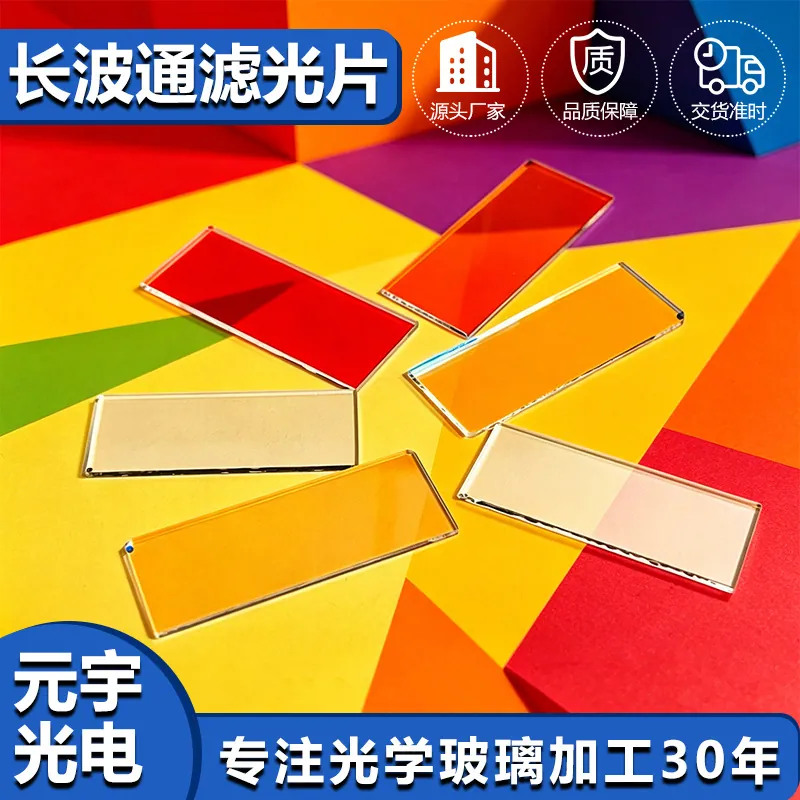
IR Filters for Thermal-Comfort and Occupancy Sensing in Buildings
Thermal-comfort and occupancy sensors read the long-wave infrared emitted by people and surfaces to control HVAC and lighting, and the IR filter at the detector is the element that selects the thermal band while rejecting visible and near-IR background that would otherwise bury the signal. The filter has to hold a tight band and deep out-of-band blocking without adding loss or wavefront error to the beam, because any spectral or angle error degrades the sensed signal. This guide sets out the tolerances and coating rules optical engineers should put on the drawing for IR filters used in thermal-comfort and occupancy sensing in buildings.
The tolerances that actually matter
For a comfort or occupancy detector the centre wavelength, half-power bandwidth and out-of-band blocking decide whether the detector sees the thermal signal or the background, and coating uniformity keeps the band stable across the aperture. Surface flatness and transmitted-wavefront error matter where the filter sits in a focusing or collimating path, and a wedge or tilt that walks the beam off the pyroelectric or thermopile element is a real failure. The tolerances that matter are the ones that move the sensed signal or the detection margin, not the generic catalogue limits.
Design rules that reduce cost
Cost drops when the bandwidth is specified no tighter than the sensor needs and the blocking is called out only where the background actually lands, rather than broadband across the whole IR. A single bandpass stack at the thermal window is cheaper than a multi-notch design, and a standard aperture cut from stock coating runs faster than a custom size. The cheap filter is the one whose tolerance budget was written for the actual sensor, not copied from a generic IR catalogue.
Coating and deposition considerations
The coating is a multilayer dielectric stack tuned to the thermal infrared window the detector uses, commonly the long-wave atmospheric band, and it must hold its band across the operating temperature, because a building sensor sees day-night and seasonal thermal swing. Dense, stress-controlled layers are preferred so the band does not drift and the blocking stays deep, and the stack is designed for the actual angle of incidence in the detector. State the design wavelength, the angle and the temperature range, because a coating tuned at normal incidence and room temperature behaves differently in the field. Note the substrate material's own long-wave transmittance limits when specifying.
How IR filters works in practice
In use the filter passes the thermal band to the detector while rejecting the solar and visible background that would otherwise raise the noise floor and break the occupancy call. A tight, uniform band with deep out-of-band blocking is the number that decides the detection margin, so the component is qualified against the sensor's field of view and the expected background rather than a generic transmission figure. A filter that meets the spec holds that margin through a temperature swing; one that was under-specified starts losing sensitivity the moment sunlight or a hot object enters the scene.
Requirements specific to IR Filters for Thermal-Comfort and Occupancy Sensing in Buildings
Building duty puts the IR filter between a weak thermal signal and a strong visible and solar background under wide temperature swing, so band stability and deep out-of-band blocking lead the specification. Choose a bandpass at the detector's thermal window, tune it for the detector's angle of incidence and operating temperature, and control flatness and wavefront for a clean beam path. Qualify the part against the sensor's field of view and background rather than a generic transmission number, because a filter that looks right on a sample can still collapse the detection margin in service.
- Centre wavelength matched to detector thermal window
- Bandwidth no tighter than the sensor needs
- Deep out-of-band blocking against visible and solar background
- Band stable across building operating temperature swing
- Flatness and wavefront controlled for the beam path
- Design angle of incidence and temperature stated
Framework references: surface form, parallelism, scratch-dig and coating uniformity per ISO 10110, and environmental durability per the relevant instrument or equipment rule set. Environmental declarations such as RoHS are the supplier's to state against the current official text, not to be assumed for a component used in optical instruments.
Selection data at a glance
| Parameter | Typical value | Notes |
|---|---|---|
| Parameter | Why it matters | How to specify |
| Centre lambda | Signal selection | Matched to detector |
| Bandwidth | Loss vs margin | Sensor budget |
| Blocking | Background rejection | Deep OOB |
| Temp. stability | Day-night drift | Rated range |
| Wavefront | Beam integrity | TF error |
Frequently asked questions
Why is out-of-band blocking more important than peak transmission here?
Because the detector sits in a building with sunlight and hot objects as background: a filter with high in-band transmission but weak out-of-band blocking just lets more background reach the element and raises the noise floor. Deep blocking across the relevant bands is what protects the detection margin.
Should the filter cover the whole IR spectrum?
No. Specify the narrow thermal band and blocking only where the background actually lands. Calling for broadband blocking across the entire IR only adds coating layers and cost; match the filter to the detector's wavelength and the expected background.
What tolerance matters most for the sensor?
Centre wavelength and out-of-band blocking, because both decide whether the detector sees the thermal signal or the background. A filter whose band drifts with temperature or whose blocking is shallow will erode the margin even if its in-band transmission looks good on a sample.
Need a quotation for ir filters?
Send your drawing, target specification or coating requirement and an optical engineer will reply within 24 hours with a price and a lead time.
Request a Quote Email an engineer