Laser Cutting of Glass covers a wider range of options than most drawings imply, and the differences between them decide both performance and price. This article compares the practical choices available for solar and photovoltaic manufacturing - substrate, coating process, thickness and tolerance - and shows where each trade-off pays off and where it does not.
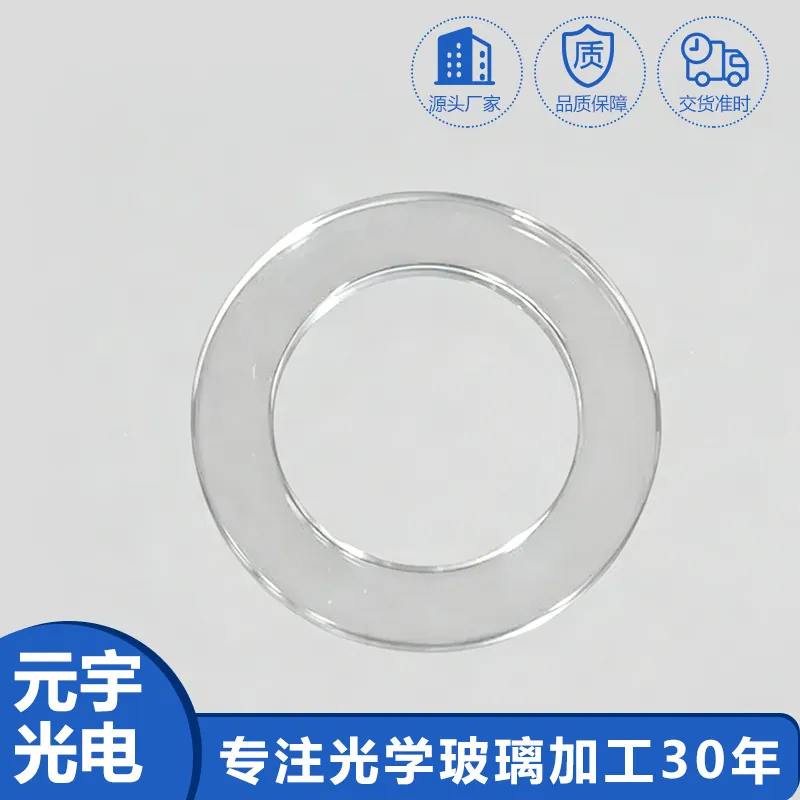
Laser Cutting of Glass in Solar and Photovoltaic Manufacturing
In solar and photovoltaic manufacturing, that translates into a specific set of requirements rather than a general preference for quality. Solar manufacturing combines very large glass areas with aggressive cost targets and 25-year outdoor exposure. Coatings are used to raise transmission and reduce soiling, while glass is used as tooling and protection in the production equipment itself. Durability under ultraviolet, humidity and thermal cycling is the entry ticket.
What drives cost and lead time
Laser cutting has essentially no tooling cost and a moderate per-part cost, which makes it ideal for prototypes, low volumes and complex outlines that would otherwise need a mold or a machined profile. The per-part cost scales with the total cut length, the thickness and the number of passes, so a large outline with many holes costs more than a simple rectangle of the same area. Ultrafast processing is slower and more capital-intensive than CO2, so it carries a higher rate per meter cut, offset by the elimination of a finishing step. In Solar and Photovoltaic Manufacturing, the economic crossover usually appears when the number of parts is large enough that hard tooling would amortise, or when the edge specification is loose enough that thermal cutting plus grinding is cheaper.
Substrate and material selection
Different glasses cut differently. Soda-lime and B270 cut easily by any method and are the least sensitive to thermal effects. Borosilicate, because of its low expansion, is more tolerant of CO2 cutting than ordinary glass and is often cut thermally without cracking. Fused silica and quartz absorb less in the visible and are usually processed with ultrafast lasers or with CO2 radiation at the surface. Chemically strengthened glass is the difficult case: the compressive surface layer must be penetrated without relaxing it, which is where filamentation cutting has an advantage over thermal methods, since it introduces far less heat. In Solar and Photovoltaic Manufacturing, the material often dictates the process more than the geometry does, and specifying a chemically strengthened substrate after the cutting process has been selected is a common and expensive mistake.
How it compares with the alternatives
Machining and grinding produce a chamfered, polished edge that is durable and easy to handle, at the cost of tooling and higher per-part prices for complex outlines. Waterjet cutting handles thick material and any outline without heat, but leaves a frosted, tapered edge that always needs finishing. Dicing saws are efficient for straight cuts on wafers and square parts. Laser cutting wins on complex geometry, on very thin material and on parts that must avoid mechanical contact - tempered glass, chemically strengthened covers, wafers and thin filter glass. In Solar and Photovoltaic Manufacturing, the decision usually follows the outline: rectangles and circles go to conventional machining, while complex contours, small holes and fragile thin sheets go to the laser.
Coating and deposition considerations
Cutting and coating interact in two directions. First, a laser-cut edge must be clean and free of contamination before coating, because a cracked or heat-damaged edge will outgas in the chamber and produce coating defects around the perimeter. Second, if the part is coated before cutting, most laser processes will damage the coating near the cut line, so coated-then-cut is generally limited to processes where the coating is removed from the cut zone and the edge is subsequently cleaned. For Solar and Photovoltaic Manufacturing, the reliable sequence is cut first, finish the edge, clean, then coat - and to state in the drawing that the coating covers the optical aperture only, leaving any cut edge bare so that edge preparation is not compromised.
Requirements specific to Solar and Photovoltaic Manufacturing
In solar and photovoltaic manufacturing, that translates into a specific set of requirements rather than a general preference for quality. Solar manufacturing combines very large glass areas with aggressive cost targets and 25-year outdoor exposure. Coatings are used to raise transmission and reduce soiling, while glass is used as tooling and protection in the production equipment itself. Durability under ultraviolet, humidity and thermal cycling is the entry ticket.
- Twenty-five year UV and humidity stability
- Very large coated areas with uniform performance
- Hydrophobic or easy-clean surface behavior
- Cost per square meter under pressure
IEC 61215 and IEC 61730 context for module durability, plus RoHS and REACH declarations for the coated glass.
Selection data at a glance
| Parameter | Typical capability | Notes |
|---|---|---|
| Cutting methods | CO2 thermal, ultrafast filamentation, scribe and break | Selected by thickness and edge spec |
| Kerf width | 20 - 100 micrometers (ultrafast) | CO2 is wider, water-assisted narrower |
| Edge quality | no micro-cracks with ultrafast, Ra < 1 micrometer | Thermal methods leave a heat-affected zone |
| Thickness range | 0.05-20 mm | Ultrafast preferred below 1 mm |
| Outline tolerance | ±0.05 mm typical, ±0.02 mm on small parts | Complex contours without tooling |
| Edge chips | ≤ 0.02 mm with ultrafast | CO2 needs post-processing |
| Taper | < 5 micrometers per 100 micrometers of depth | Ultrafast, low-taper |
| Set-up cost | none - no hard tooling | Economical from one piece |
| Ideal for | thin glass, tempered glass, complex outlines, wafers | Also drills holes and slots |
Frequently asked questions
Can you cut chemically strengthened glass?
Yes, and ultrafast filamentation is the preferred method because it introduces very little heat and preserves the compressive surface layer better than thermal cutting. Cutting before strengthening is the more robust sequence when the geometry allows.
How accurate is laser cutting compared with machining?
Outline tolerance of plus or minus 0.05 mm is routine and plus or minus 0.02 mm is achievable on small parts, with the significant advantage of no hard tooling. The trade is edge quality: a machined edge can be chamfered and polished, a laser-cut edge is as cut.
Can laser cutting drill holes as well as outlines?
Yes. Holes, slots and internal apertures are all produced in the same pass, with the smallest practical diameter determined by thickness and by the process chosen. Complex internal geometry is one of the main reasons to use a laser.
Need a quotation for laser cutting of glass?
Send your drawing, target specification or coating requirement and an optical engineer will reply within 24 hours with a price and a lead time.
Request a Quote Email an engineer