Astronomical instruments place the protective window where the sky meets the optics, and in that position it has to survive dew, frost, thermal cycling and drifting stray light without adding scatter or a focus shift. Specifying the window is therefore a balance between substrate homogeneity, coating durability and the flatness the optical train can tolerate, and the choices differ from the sealed, climate-controlled cases found in other industries.
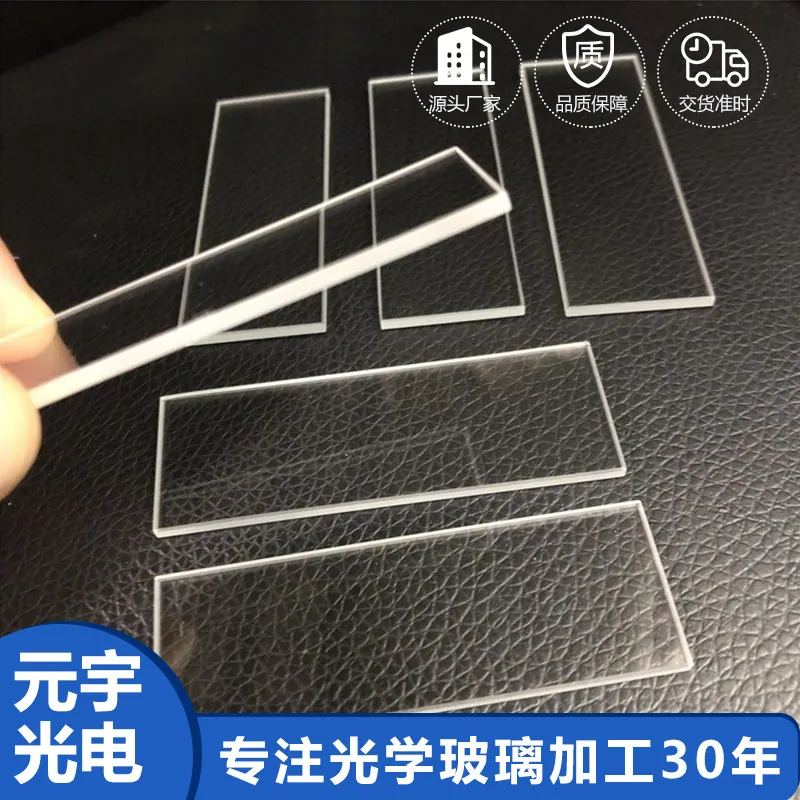
Lens Protection Windows in Astronomical and Telescope Optics
On a telescope or camera enclosure the protective window is the first optical surface the incoming beam crosses, sitting ahead of the corrector plate, the filter wheel or the sensor. Its job is to keep dust, moisture and insects out of the sealed optical cavity while contributing as little reflection, haze and wavefront error as possible. Because the window usually sits in a converging or near-collimated beam, any local bow or wedge turns into a small focus shift or a fixed ghost rather than a cosmetic defect. In a remote observatory the window is also the part that gets cleaned least often, so the specification has to assume long intervals between service and a real exposure to condensation and pollen.
How lens protection windows works in practice
In practice the window is mounted at the front aperture and held by a cell that must not over-constrain it as temperatures swing from day to night. A window that is clamped rigidly onto a metal cell will be bent by the differential expansion between glass and housing, and that bending shows up as astigmatism at the sensor. The coating faces outward to the sky, so it carries the dew and the cleaning load, while the inner face is protected by the sealed cavity. The window is therefore specified as a real optical element: its transmitted wavefront, its surface quality and its coating performance all feed directly into image contrast and the limiting magnitude the system can reach.
The tolerances that actually matter
The tolerances that actually move the needle are flatness, parallelism and surface quality. Flatness governs how much the window distorts the wavefront before it reaches the corrector; for most telescope apertures a few fringes across the clear aperture is the working target, tighter only where the window sits in a fast beam. Parallelism controls wedge, which steers the image and is worth holding when the downstream optics have no refocusing margin. Surface quality, stated as scratch-dig, sets the scatter floor that the coating cannot fix, so a hard-coated window on a heavily scratched substrate still blooms around bright stars. Thickness is a stiffness and thermal-mass choice more than an optical one, balanced against the weight the mount must carry.
Design rules that reduce cost
Cost is reduced mostly by staying on standard diameters and edge geometries already in the shop's tooling, and by accepting a single-face polish where the optical path permits it. A window that matches an existing stock blank avoids the long lead and the cost of generating a custom disc, and a simple ground edge with a light chamfer is cheaper than a fully figured and beveled one while still sealing well. Holding parallelism to a looser value saves a second metrology pass where the mount has focus authority, and ordering the coating in a standard broadband band avoids a bespoke stack. The cheapest robust window is the one whose size, edge and coating are already catalogue items rather than one-off specs.
Coating and deposition considerations
The coating has to stay low-reflection across the band the instrument actually uses, from the blue end where atmospheric extinction is steep to the red and near-IR where many sensors are sensitive, while still surviving dew and repeated wiping. A broadband anti-reflection stack performs the low-reflection job but is typically softer than a single hard oxide layer, so on an outdoor window that will be cleaned the durable single layer is often traded in for the soft broadband multilayer. Hydrophobic top layers help shed dew and reduce the cleaning frequency, and an anti-static outer surface keeps pollen and dust from clinging in dry, dusty sites. The stack should be specified against the real cleaning solvent and the real humidity range of the site, not against a generic durability claim.
Substrate and material selection
The substrate choice is driven by thermal expansion, homogeneity and price. Fused silica has the lowest thermal expansion and the best homogeneity, which keeps the window stable through large night-day temperature swings and avoids focus drift, but it is the most expensive option and is usually reserved for the largest or most demanding apertures. A low-expansion borosilicate or a standard optical crown offers a good compromise for mid-size instruments where the thermal load is moderate. Ordinary soda-lime glass is cheapest and acceptable for small, well-ventilated enclosures but its expansion and inclusion content make it a poor fit for precision photometry. The decision is a balance between how much the focus can move across a night and how much the budget allows.
Requirements specific to Astronomical and Telescope Optics
An observatory or telescope window adds dew, frost, thermal cycling and stray light to the usual window requirements. Choose a substrate whose thermal expansion matches the temperature swing the site actually sees, hold flatness and surface quality to the contrast the instrument needs rather than to a generic catalogue grade, and prefer a durable single-layer or hydrophobic coating where the window will be cleaned infrequently. The edge and cell should allow the glass to expand without bending, and the practical step is to confirm the surface-figure and cleanliness values against the current issue of the standard that governs optical drawings rather than against a supplier's marketing grade.
- Substrate chosen against the site's night-day temperature swing
- Flatness and parallelism held to the optical train's real margin
- Durable single-layer or hydrophobic coat where cleaning is infrequent
- Cell designed so the glass expands without bending
- Surface quality specified against the scatter floor the coating cannot fix
Framework references: surface figure, surface quality and tolerance drawing practice are generally stated in ISO 10110; the cleanliness and handling expectations for optical surfaces are commonly described in the IEST-STD-CC1246 family. Coating durability and environmental performance should be confirmed against the current issue of those documents and against the site's own cleaning and humidity specification rather than taken from a supplier datasheet.
Selection data at a glance
| Parameter | Typical value | Notes |
|---|---|---|
| Substrate | Fused silica / borosilicate / crown | Thermal stability vs cost |
| Flatness | Few fringes across clear aperture | Wavefront before corrector |
| Parallelism | Low wedge where no refocus margin | Avoids image steer |
| Surface quality | Scratch-dig per ISO 10110 | Sets scatter floor |
| Coating | Broadband AR or hard single layer | Reflection vs cleaning life |
| Edge / cell | Free to expand, light chamfer | Avoids bending astigmatism |
Frequently asked questions
Is fused silica worth the cost for a small telescope window?
Only when the night-day temperature swing is large or the photometry is demanding. A borosilicate or crown window is far cheaper and stable enough for most mid-size enclosures, and the money saved is better spent on a better coating or a dew-control system.
Should the window be polished on both faces?
Where the beam is near-collimated and there is no downstream refocus, yes, because a single-face polished part can introduce wedge that steers the image. If the mount has focus authority and the aperture is small, a single polished face can be acceptable at lower cost.
How should a remote observatory window be coated for dew?
A hydrophobic top layer over a durable base stack helps shed condensation and cuts the cleaning frequency, which matters most where the window is serviced rarely. Confirm the stack against the actual cleaning solvent and humidity range rather than a generic outdoor-durability claim.
Need a quotation for lens protection windows?
Send your drawing, target specification or coating requirement and an optical engineer will reply within 24 hours with a price and a lead time.
Request a Quote Email an engineer