ROV, AUV and subsea cameras face pressure, biofouling, salt and scattering, and the trade-offs are between sapphire, fused silica and coated glass on pressure rating, fouling resistance and transmission in turbid water. The choice is rarely about which material is 'best' and almost always about depth and duty cycle.
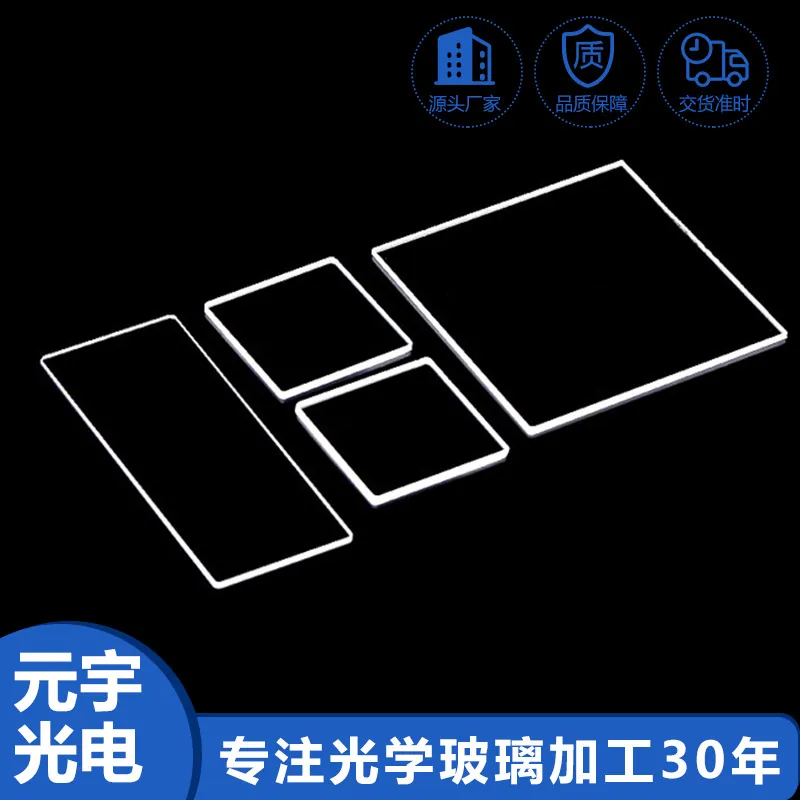
Lens Protection Windows in Underwater and Subsea Optics
A subsea camera window is the only optical surface the ocean touches, and it has to survive pressure at depth, resist biofouling and salt, and still pass light through water that scatters it. Unlike a topside window it cannot be wiped on a schedule, so the material and coating are chosen for unattended survival first and for perfect transmission second. The design question is which compromise between pressure rating and transmission the mission can live with.
What drives cost and lead time
Cost is driven by the material (sapphire is far more expensive than glass), the size and shape, the pressure rating, the anti-fouling and anti-reflective coating, and the metrology and pressure test that prove it. A large sapphire port costs more and waits longer than a coated glass one, and a bespoke shape adds tooling. The pressure test itself is a schedule item that cannot be skipped on a rated part.
Substrate and material selection
Sapphire is the hardest and pressure-capable but costly and birefringent; fused silica transmits broadly and resists pressure well at moderate depth but yields to sapphire at extreme depth; coated optical glass is cheapest but fouls and scratches fastest. The selection follows the operating depth and the abrasion the window will see on the seabed or against a structure.
How it compares with the alternatives
Against running with no window, a protection window trades a little reflection for a large cut in lens cleaning and scratch risk during recovery. Against a mechanical wiper, the window gets dirty but is far cheaper to replace than a lens and can often be swapped without recovering the vehicle. Sapphire resists scratch and pressure best; fused silica gives the best transmission; glass is the budget option that fouls soonest, so the trade is depth against budget against service interval.
Coating and deposition considerations
A flat port adds surface reflection, so an anti-reflective coating recovers transmission that turbid water would otherwise waste, and an anti-fouling or hydrophobic layer slows the marine growth that blinds a deployed camera. The coating must survive pressure cycling and the cleaning the vehicle gets between dives, and the functional face is stated on the drawing because an AR layer on the wrong side does nothing.
Requirements specific to Underwater and Subsea Optics
Subsea use adds a depth-matched pressure rating, an anti-fouling and anti-reflective coating for turbid water, and a hydrophobic surface to shed marine growth to the usual window requirements. Choose sapphire or fused silica by depth and abrasion, require pressure-test records, and document the coating face so a replacement port reproduces the original optical and mechanical behaviour.
- Pressure rating matched to operating depth
- Anti-fouling plus anti-reflective coating for turbid water
- Sapphire or fused silica chosen by depth and abrasion
- Pressure-test records and coating face documented
Framework references: ISO 10110 for surface figure and surface quality. The pressure rating follows the housing's mechanical specification for the operating depth, and an anti-fouling coating's lifespan is service-dependent, so confirm the expected interval with the supplier rather than assuming a fixed life.
Selection data at a glance
| Parameter | Typical value | Notes |
|---|---|---|
| Material | Sapphire / silica / glass | Depth-based |
| Pressure | Depth-rated | Housing spec |
| Coating | AR plus anti-fouling | Turbid water |
| Transmission | Recover port loss | AR needed |
| Fouling | Hydrophobic | Slow growth |
| Test | Pressure records | Reproducible |
Frequently asked questions
Sapphire or fused silica for a subsea window?
Sapphire wins on pressure and scratch resistance but costs more and is birefringent; fused silica gives broader transmission but a lower pressure ceiling. Pick by depth and abrasion.
Why an anti-reflective coating on a flat port?
A flat window reflects a meaningful fraction of light, and in turbid water every percent of transmission counts, so the AR layer recovers signal the water would otherwise scatter away.
Does anti-fouling coating last?
It is service-dependent and slows growth rather than stopping it. Plan for periodic cleaning or replacement on a schedule the supplier helps set.
Need a quotation for lens protection windows?
Send your drawing, target specification or coating requirement and an optical engineer will reply within 24 hours with a price and a lead time.
Request a Quote Email an engineer