Prosthetics and wearable medical devices need small, optically clean glass parts whose visual quality and edge safety decide both comfort and function. Cold processing shapes, edges and polishes these windows and light guides without heat that could stress a biocompatible substrate, but the cost is set less by the geometry than by lot size, surface quality and the cleanliness the medical application demands. This note separates the cost drivers optical engineers should challenge before releasing a wearable-optics drawing.
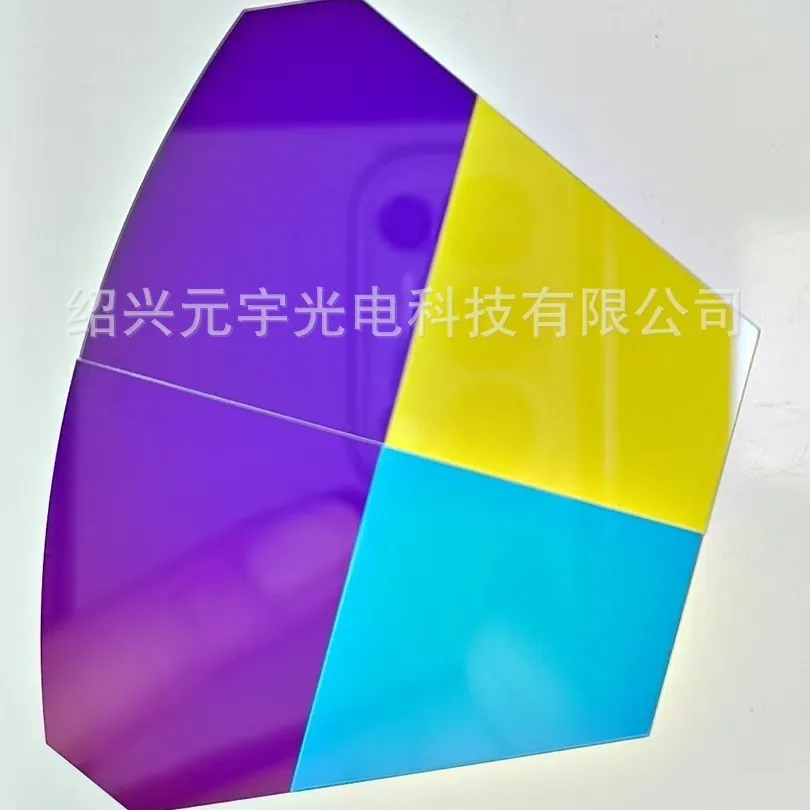
Optical Glass Cold Processing in Prosthetics and Wearable Medical Devices
Prosthetics and wearable medical devices need small, optically clean glass parts whose visual quality and edge safety decide both comfort and function. Cold processing shapes, edges and polishes these windows and light guides without heat that could stress a biocompatible substrate, but the cost is set less by the geometry than by lot size, surface quality and the cleanliness the medical application demands. This note separates the cost drivers optical engineers should challenge before releasing a wearable-optics drawing.
Substrate and material selection
The substrate choice drives everything downstream. A chemically strengthened or biocompatible glass needs gentler, slower processing and careful edge treatment, while a standard optical crown can be cut and polished faster. Material availability in the small formats wearables use also matters: odd sizes mean more kerf loss and longer lead time, so selecting a substrate that is already stocked in thin sheet trims both cost and schedule.
Handling, cleaning and packaging
For a skin-contact or implant-adjacent part, cleaning and packaging are not afterthoughts but a real cost centre. Particle control, traceable cleaning chemistry and individually sealed, contamination-free packaging add steps that a bare industrial window does not need. Designing parts that survive automated handling, rather than hand-finishing each one, is the fastest way to keep this cost from dominating the build.
The tolerances that actually matter
Edge safety and surface quality lead for wearables, because a sharp edge or a subsurface flaw becomes a comfort and failure problem against skin. Optical flatness and wedge matter where the part sits in a viewing or sensing path, but cosmetic surface limits that do not affect function are the easiest to relax. Holding the tolerances that touch the user and the optical path, and loosening the rest, is what keeps the part affordable.
What drives cost and lead time
The dominant driver is small-lot, high-mix fabrication: each variant needs its own fixturing and setup, so per-part cost barely falls with volume unless designs share a common blank. Tight surface quality and medical-grade cleanliness add inspection and rework loops, and custom shapes extend lead time through low-yield steps. The economic build is one where several wearable SKUs are derived from a few standard substrates and the medical requirements are specified precisely, not maximally.
Requirements specific to Cold Processing for Precision Optics in Prosthetics and Wearable Medical Devices
Wearable duty puts the part against skin under sweat, motion and frequent cleaning, so edge safety, surface integrity and biocompatible handling lead the specification. Choose a substrate already stocked in thin sheet, hold the tolerances that touch the user and the optical path, and specify medical-grade cleanliness rather than a generic cosmetic limit. A part drawn to a maximal spec costs far more and ships later than one written to the actual wearable need.
- Substrate stocked in thin sheet to cut kerf and lead
- Edge safety and surface integrity held for skin contact
- Optical flatness held only where in the path
- Medical-grade cleaning specified, not generic
- Common blank shared across wearable SKUs
- Automated handling design to cut finishing cost
Framework references: edge, surface and dimensional tolerances per ISO 10110; biocompatibility and cleanliness assessed against the relevant medical-device rule set. Environmental and material declarations such as RoHS are the supplier's to state against the current official text, not to be assumed for a component used in a medical wearable.
Selection data at a glance
| Parameter | Typical capability | Notes |
|---|---|---|
| Substrate | Thin-sheet stock | Lead |
| Edge | Skin safe | Comfort |
| Surface | Path-limited | Cost |
| Clean | Medical grade | Loop |
| Blank | Shared SKUs | Volume |
| Handle | Automated | Yield |
Frequently asked questions
Why is a wearable optic more expensive than an industrial one?
Because the medical context adds edge safety, surface integrity for skin contact and traceable cleaning and packaging on top of the optical work. A bare industrial window skips all of that, so the same shape costs more once those steps are included.
Does tighter surface quality always help?
No. Surface limits that do not affect the optical path or skin safety only add inspection and rework. Hold the surface where the light actually goes and where the user touches, and relax the rest to protect yield and cost.
How do I shorten lead time on a small wearable run?
Select a substrate already stocked in the thin format you need, derive the SKU from a common blank where possible, and design for automated handling so the build does not depend on manual finishing of each part.
Need a quotation for optical glass cold processing?
Send your drawing, target specification or coating requirement and an optical engineer will reply within 24 hours with a price and a lead time.
Request a Quote Email an engineer