A lens or mirror that flies is held to tolerances and a cleanliness chain that terrestrial optics never see. Vibration launch loads, vacuum, radiation and the impossibility of field service mean the specification has to be written for the environment, not the bench. This guide works through the design rules, coating, processing reality, tolerances and handling that define a flight-ready optical component.
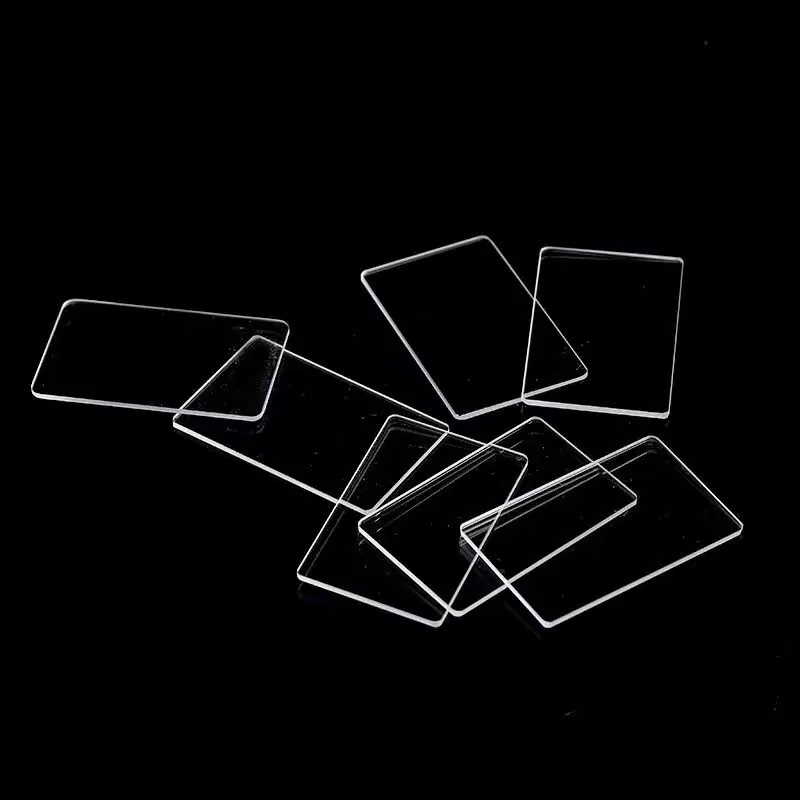
Optical Glass Cold Processing in Space and Satellite Optical Components
Space optics start from the same grinding and polishing steps as any precision optic, but every step is qualified and documented. The component must hold figure through launch vibration, survive vacuum without outgassing, and resist radiation darkening over the mission. Because it cannot be serviced, the specification front-loads the risks: material homogeneity, surface and subsurface damage, and a particulate and molecular contamination chain from the last polish to the flight container. The engineering question is rarely whether a tolerance can be met, but whether meeting it adds flight risk or cost that a slightly relaxed value would avoid.
Design rules that reduce cost
The first saving is to relax cosmetic scratch-dig where it has no optical consequence; a component with a tight form but a pragmatic surface defect spec is far cheaper than one held to a cosmetic extreme everywhere. Minimising aspheric departure and avoiding very deep radii reduces polishing and metrology time. Combining operations, for example figuring and edging in one setup, cuts handling and re-reference error. Where the beam does not fill the aperture, a localised tolerance zone instead of a full-aperture one avoids paying for figure accuracy the system never uses.
Coating and deposition considerations
Flight coatings are qualified for the environment: radiation hardness, adhesion through thermal vacuum cycling, and often a defined total integrated scatter budget. The coating material is chosen for stability under UV and particle flux, and the deposition process is controlled so the layer does not change figure. Where the component sits in a UV or visible science path, coating absorption and non-uniformity become part of the error budget. Cleanliness before coating is non-negotiable, because a contaminant trapped under a flight coating cannot be removed later and can drive delamination during thermal cycling.
How optical glass cold processing works in practice
Rough grinding removes stock and sets the radius, fine grinding prepares the surface for polish, and polishing brings the figure to spec. Deterministic processes such as magnetorheological finishing let tight forms be reached repeatably and with documented removal, which matters for flight traceability. Metrology is continuous: interferometry for figure, profilometry for roughness, and often a subsurface-damage check after the last grind. The difference from commercial work is the documentation of each step and the control of the environment so that the part leaves the process in a known, repeatable state.
The tolerances that actually matter
Surface figure, usually expressed as peak-to-valley against a fraction of a wave at the design wavelength, drives wavefront error. Surface roughness sets scatter, which in a low-background space instrument can be the difference between signal and noise. Radius and centration control the image, while wedge and thickness affect alignment and mechanical fit. Material inhomogeneity, expressed as refractive-index variation and striae, is a hidden contributor to wavefront error that only shows up in the as-built system, so it is specified from the melt, not just the finished part.
Handling, cleaning and packaging
From the last clean to flight, the part lives in a controlled chain: cleanroom handling, low-outgassing wipes and solvents, and double bagging for transport. Particles and molecular films are treated as flight risks because they cannot be cleaned on orbit. Packaging is designed to survive launch shock and to be opened without shedding fibres or generating static that pulls contamination onto the surface. Every transfer is logged so that if a part later fails a contamination check, the chain can be reconstructed.
Requirements specific to Space and Satellite Optical Components
Flight optics are qualified against a space environmental envelope: thermal vacuum, radiation, launch vibration and shock, and a strict contamination budget. A common framework for outgassing is low-outgassing assessment such as ASTM E595, and the component is usually required to be non-magnetic and fully traceable to material and process records. Coatings are selected for radiation hardness and thermal-vacuum stability, and the part is delivered in flight-grade packaging that survives launch and can be opened cleanly. Because the component cannot be serviced on orbit, the specification and the handling chain are written so that the as-built, as-packed part is the flight part with no surprises at integration.
- Figure to a wavefront budget, not a generic lambda fraction
- Specify material homogeneity (Nd variation, striae) from the melt
- Radiation-hard, thermal-vacuum-stable qualified coatings
- Low-outgassing handling chain and flight-grade packaging
- Full process traceability from blank to flight container
Framework references: low-outgassing assessment (for example ASTM E595 as a common framework), space environmental qualification (thermal vacuum, radiation, vibration) per the mission specification, and ISO 10110 drawings for figure, finish and material defects. Confirm the current official text of each applicable standard rather than a single historical value.
Selection data at a glance
| Parameter | Typical capability | Notes |
|---|---|---|
| Surface figure | PV per wavefront budget | design wavelength |
| Roughness | low RMS to cap scatter | low-background use |
| Material Nd variation | tight from melt | striae controlled |
| Outgassing | low per space spec | ASTM E595 frame |
| Traceability | blank to flight | logged chain |
Frequently asked questions
Should every space optic be polished to the tightest cosmetic spec?
No. Cosmetic scratch-dig only matters where it scatters into the beam or shows in an imaged field. Holding it everywhere is expensive and adds handling risk; the pragmatic path is a functional zone spec tied to where light actually travels.
Why is material homogeneity specified from the melt?
Refractive-index variation and striae in the blank become wavefront error that polishing cannot fix. You cannot grind out a bad melt, so the homogeneity is controlled at material selection, not at finishing.
What makes flight packaging different?
It must survive launch shock and be openable in a clean environment without shedding fibres or charging the surface. The package is part of the contamination control chain, not just a box.
Need a quotation for optical glass cold processing?
Send your drawing, target specification or coating requirement and an optical engineer will reply within 24 hours with a price and a lead time.
Request a Quote Email an engineer