UV curing and adhesive bonding both depend on UV-transmitting windows and substrates whose surface and parallelism are held tight, because the dose the adhesive sees and the bond line it forms are set by the glass in front of the lamp. The specification is really about uniform transmission and a parallel, clean face rather than about forming an image a viewer likes. This guide sets out the numbers that belong on the drawing for UV-curing and bonding optics.
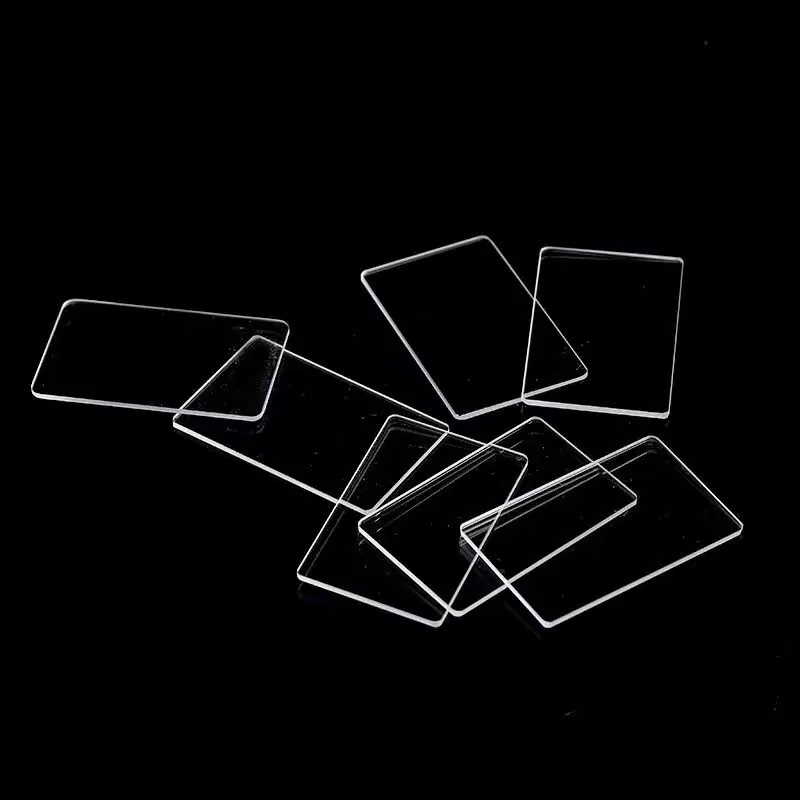
Optical Glass Cold Processing in UV Curing and Adhesive Optics
A UV-curing system focuses or floods deep-UV or near-UV light through a window onto an adhesive or coating, and a bonding process needs the two glass faces it joins to sit parallel so the glue line is even. The glass parts set how much UV reaches the chemistry and whether the bond is uniform, so a wave of surface form or a fraction of a degree of wedge is not cosmetic but a cure-or-bond error. Cold processing here means grinding and polishing the substrate to that figure, edge-finishing it, stress-relieving it, and finishing it clean, because the part's job is to pass UV evenly and to seat flat, not to form an image.
Design rules that reduce cost
Symmetric designs cost less than asymmetric ones, because a part that can be processed from both faces in one setup holds figure more easily. Relax the tolerances that do not move the cure, such as cosmetic scratch-dig on a non-critical face, and hold tight only the numbers that do, such as window flatness and parallelism. Batch processing identical parts spreads the first-article cost, and a standard UV-grade substrate avoids a special melt. The saving is in putting the tight numbers where they change the dose or the bond and leaving the rest at commercial grade.
Coating and deposition considerations
The window may carry a UV-grade anti-reflective stack, and the choice matters because a coating that fluoresces or absorbs in the working UV band steals dose silently. Low-stress dielectric layers are preferred so the coating does not induce birefringence or warp a thin bonded part, and the top surface should survive the cleaning the bonding step demands. Where the part is bonded, state on the drawing which face carries each layer, and require a spectral curve at first article covering the lamp's emission band.
How optical glass cold processing works in practice
The substrate is ground to near-figure, polished to the required peak-to-valley, and edge-finished so it seats without chipping. For a UV window, flatness and parallelism are the critical pair: flatness sets wavefront and dose uniformity, parallelism sets the glue-line thickness and the beam path, and both are checked interferometrically. A stress-relief step between rough and fine processing removes the figure error that grinding locks in, because polishing alone will not remove subsurface damage that later relaxes. The part leaves the process clean and measured, with the as-figured values recorded against the lot.
The tolerances that actually matter
Flatness and parallelism, usually stated in waves and arc-seconds, dominate because they act directly on the UV dose and the bond line. Surface form peak-to-valley sets the dose uniformity, and scratch-dig matters where a defect scatters UV into the wrong place or seeds a bond void. Coating uniformity keeps transmission where designed, and thermal-expansion match to the housing keeps the window seating flat across temperature. These are the values written on the drawing, with the rest left at commercial grade.
Handling, cleaning and packaging
UV and bond optics are handled in a clean environment and kept particle-free, because a contaminant on a window scatters UV into the wrong location and a particle under a bond becomes a void. Edges are chamfered and protected so a knock does not start a crack at the rim, and the part is packed so the optical face never touches a surface, with the orientation marked where the coating is face-specific. The handling discipline is part of the lot record, because a part that arrives clean but is wiped with the wrong cloth can fail the figure or the bond it was qualified for.
Requirements specific to UV Curing and Adhesive Optics
The duty is uniform UV dose and a parallel, clean bond face, so every number on the drawing serves that. Flatness and parallelism are specified to wave and arc-second levels, surface form to a tight peak-to-valley, and the UV-grade AR coating is specified for transmission at the lamp band and for low fluorescence. The substrate's thermal expansion is matched to its housing so the window stays seated across temperature, and the part is cleaned, handled and traced as a lot with a first-article spectral curve over the UV emission band. Dose uniformity, not image quality, is the specification.
- Flatness and parallelism (wedge) per UV window specification
- UV-band transmission with low fluorescence from coating
- Surface form PV and scratch-dig per ISO 10110
- Thermal-expansion match and lot traceability
- Clean handling for uniform cure and void-free bonds
Framework references: surface form and flatness per ISO 10110-5, scratch-dig per ISO 10110-7, and a first-article and lot certificate covering figure, parallelism and UV-band transmission. UV-lamp emission bands and adhesive cure schedules follow the process specification; confirm against the current official text rather than a single value.
Selection data at a glance
| Parameter | Typical capability | Notes |
|---|---|---|
| Flatness | lambda/10 to lambda/20 typical | UV window |
| Parallelism | arcsec grade | Bond line |
| Surface form | PV 0.1 um | Per ISO 10110-5 |
| Scratch-dig | 20-10 typical | Per ISO 10110-7 |
| Substrate | fused silica, UV grade | Per transmission |
| UV transmission | >= 90 % typical | Lamp band |
| Traceability | batch ID, cert | Lot record |
Frequently asked questions
Why does parallelism matter for a UV-curing window?
A wedge tilts the window and makes the UV dose vary across the adhesive, so one edge cures while the other stays soft. The bond line thickness tracks the same parallelism, so holding wedge is what makes the cure and the glue line uniform rather than graded across the part.
Does the AR coating affect curing dose?
Yes, silently. A coating that absorbs or fluoresces in the lamp's band steals dose or adds stray light, and the loss does not show up until the adhesive under-cures. Specify transmission and low fluorescence at the lamp band and verify it on the first-article spectral curve.
Why is cleanliness part of the optical spec?
A particle on a UV window scatters light into the wrong place and a particle under a bond becomes a void that weakens the joint. The part is qualified clean, so the handling and packaging discipline is what preserves the figure and the bond it was accepted for.
Need a quotation for optical glass cold processing?
Send your drawing, target specification or coating requirement and an optical engineer will reply within 24 hours with a price and a lead time.
Request a Quote Email an engineer