Coated Color Filters covers a wider range of options than most drawings imply, and the differences between them decide both performance and price. This article compares the practical choices available for architectural and appliance glass - substrate, coating process, thickness and tolerance - and shows where each trade-off pays off and where it does not.
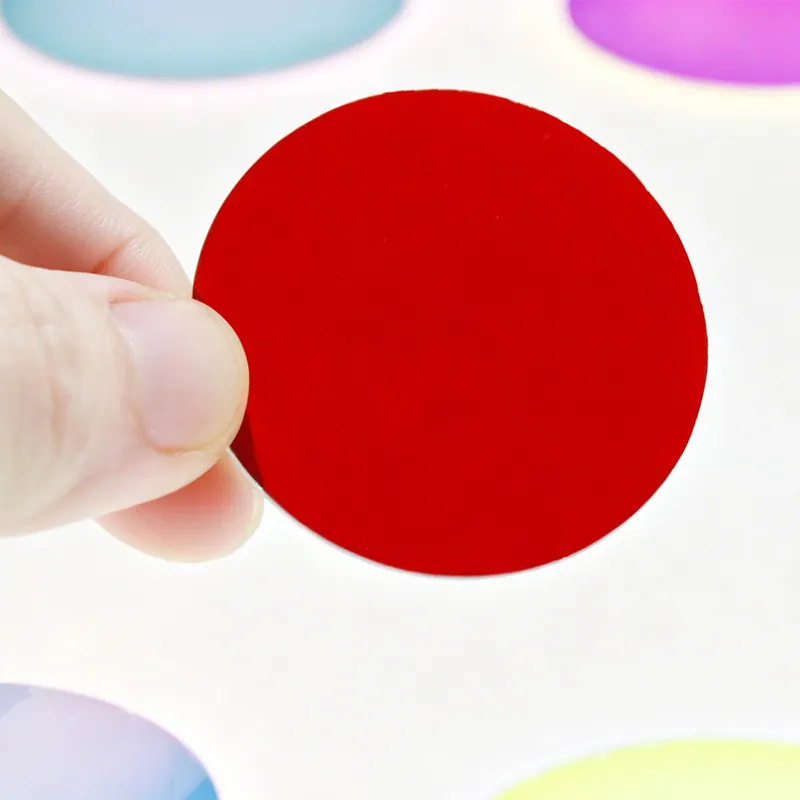
Coated Color Filters in Architectural and Appliance Glass
In architectural and appliance glass, that translates into a specific set of requirements rather than a general preference for quality. Architectural and appliance applications bring optical coatings into contact with the general public, which changes the requirements: coatings must be hard enough for daily cleaning, color neutral when the customer is looking through them, and large enough to coat uniformly. Cost per square meter dominates, and service life is measured in decades.
Coating and deposition considerations
The coating design is where the color is actually made. Interference stacks are built from alternating layers of materials such as Nb2O5, Ta2O5 or TiO2 against SiO2, and the layer count and thickness ratio tune the reflection band, the transition steepness and the ripple in the passband. IAD or another ion-assisted process is preferred because it produces dense, hard oxide layers with little moisture shift, so the color does not move when humidity changes. Because the shift with angle is intrinsic, multi-zone filters are designed so that each zone has its own stack and its own angular window. For Architectural and Appliance Glass, decide early whether the part needs a hard coat on both faces (scratch resistance and second-surface reflection control) or a single coated face, and whether any area must remain uncoated for a sensor or a bond line.
What drives cost and lead time
The price of a coated color filter is mostly a function of the number of layers, the size of the substrate and the yield of the coating run. A 20-layer color coating is routine; a 60-layer edge filter with a 2 nm transition costs several times more because the chamber time and the sensitivity to thickness error both rise sharply. Patterned parts add a lithography or screen-printing step whose cost is dominated by the mask or screen, so the first piece is expensive and the hundredth is not. Substrate grade and thickness contribute less than most buyers expect; the real cost jumps come from tight spectral tolerances, from parts larger than the chamber's uniform zone, and from low volumes that force a chamber to be run for a handful of plates. Consolidating colors that can share one run is the single most effective cost reduction in Architectural and Appliance Glass.
Substrate and material selection
The substrate sets the ceiling on what the coating can survive. B270 and ultra-clear float glass are the workhorses for moderate flux and offer the best price-to-clarity ratio. When the part sits close to a lamp, borosilicate or a specifically heat-resistant glass is used because it tolerates the thermal gradient without cracking; low-expansion substrates such as fused silica or Eagle XG go further and hold their figure through repeated thermal cycling. Thickness matters as much as grade: a 0.5 mm plate heats and cools faster than a 3 mm plate, so thinner is safer under flash or shutter conditions, but more fragile during assembly. For Architectural and Appliance Glass the usual failure is not a material that is too weak, it is a material that was never specified, so the shop defaults to soda-lime and the first high-flux test cracks the plate.
How it compares with the alternatives
Coated interference plates compete with dyed or absorption glass, printed gels and, in some designs, with a plain uncoated colored substrate. Absorption glass is cheaper and completely insensitive to angle, which makes it attractive for wide-cone systems, but it cannot reach a sharp edge, it fades under high flux and it cannot produce arbitrary colors. Gels are the cheapest option and are consumed in service, which suits temporary installations rather than fixtures designed for a decade. A coated hard oxide plate costs more up front, holds its color for the life of the fixture, and can be patterned or multi-zoned in ways the other two cannot match. In Architectural and Appliance Glass, the decision normally turns on flux and service life: below a few hundred milliwatts per square centimeter the cheaper options are viable, above that coated glass is the only answer that survives.
Design rules that reduce cost
Designing with coated color filters is mostly about angle, heat and mounting. Decide the acceptance cone first: a narrow cone buys a steeper edge and purer color, a wide cone buys luminous efficiency at the cost of color saturation. Then decide how the part is retained - a ring, clips, adhesive or a frame - and leave a margin of at least 1 mm that carries no coating so the retention never touches an optical surface. Keep patterned areas at least 0.3 mm from the edge for the same reason. If the part sits behind a condenser or a lens, model the angular spread rather than assuming collimated light, because the effective spectrum will be a weighted average over that spread. For Architectural and Appliance Glass, a short note on the drawing stating the acceptance angle, the mounting method and the maximum flux prevents most of the arguments that otherwise surface at first article.
Requirements specific to Architectural and Appliance Glass
In architectural and appliance glass, that translates into a specific set of requirements rather than a general preference for quality. Architectural and appliance applications bring optical coatings into contact with the general public, which changes the requirements: coatings must be hard enough for daily cleaning, color neutral when the customer is looking through them, and large enough to coat uniformly. Cost per square meter dominates, and service life is measured in decades.
- Large-area coating uniformity
- Neutral residual color for architectural appearance
- Hard, cleanable surface for public environments
- Decade-scale humidity and UV stability
EN 1096 context for coated architectural glass, safety glazing considerations, and RoHS and REACH declarations.
Selection data at a glance
| Parameter | Typical value | Notes |
|---|---|---|
| Dominant wavelength | 450-660 nm, custom to ±5 nm | Per color chip |
| Transmission in band | >= 85 % (T>= 90 % on tuned designs) | At normal incidence |
| Out-of-band blocking | OD2 - OD4 | Visible to NIR |
| Coating type | IAD multilayer hard oxide | Color-by-interference |
| Substrate | B270, borosilicate, ultra-clear, quartz | Heat-resistant grades for high flux |
| Thickness | 0.3-3 mm | 1.1 mm typical for gobos |
| Size tolerance | ±0.1 mm, ±0.05 mm on request | Round, square, custom outline |
| Pattern tolerance | ±0.05 mm registration | Screen print, lithography or mask |
| Operating temperature | up to 400 °C substrate dependent | Thermal shock is the real limit |
Frequently asked questions
Will the color fade over time?
No. Interference coatings are inorganic hard oxide layers; there is no dye to bleach. Color changes in the field almost always come from a humid coating deposited without ion assistance, or from a design that was specified for a lower operating temperature than the application reached.
What substrate should I use for a high-power lighting fixture?
Borosilicate or a dedicated heat-resistant glass for most fixtures, and fused silica or a low-expansion substrate when the part experiences rapid thermal cycling. Thin substrates survive thermal shock better than thick ones because the gradient across the plate is smaller.
Do the filters come with a measured transmission curve?
Yes, every shipment can include a spectrophotometric trace measured at the specified angle of incidence, plus CIE coordinates if a color target was given. Laser and high-flux parts can additionally be supplied with damage threshold data.
Need a quotation for coated color filters?
Send your drawing, target specification or coating requirement and an optical engineer will reply within 24 hours with a price and a lead time.
Request a Quote Email an engineer