A drone gimbal or a fixed sensor payload looks through a protection window that shields the lens from wind, dust, rain and the occasional impact, and that window has to do its job without stealing contrast or adding a ghost. The window is the first optical surface the scene meets, so its flatness, coating and seal decide both durability and image quality. This guide sets out the tolerances and coating rules to put on the drawing for drone and payload windows.
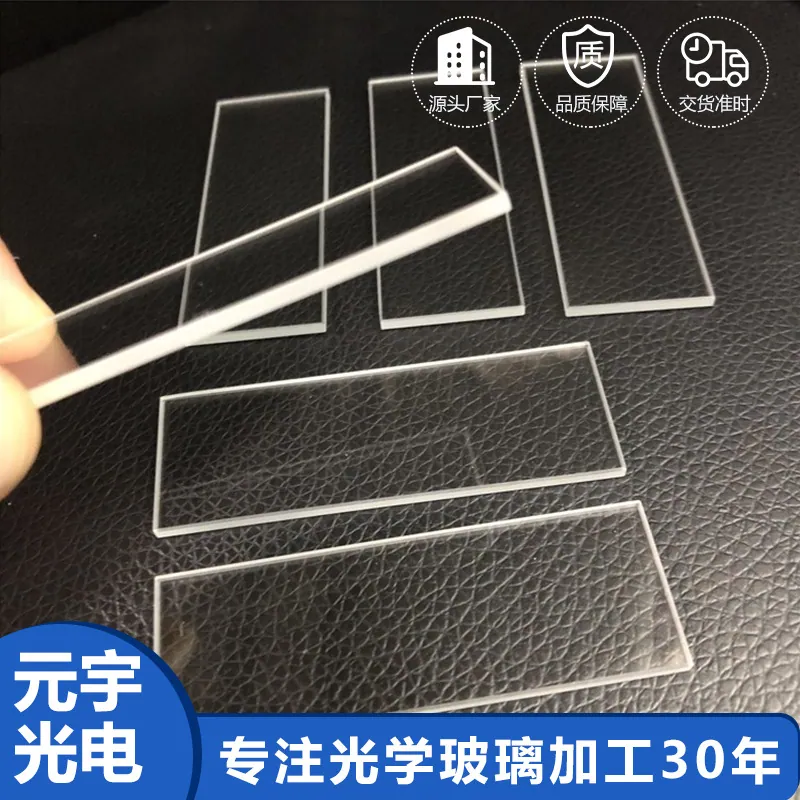
Lens Protection Windows in Drone Gimbal and Payload Windows
On a drone the window is the barrier between a costly lens and the outside air, and it must survive speed, particulate and weather while staying optically quiet. The glass has to be hard enough to resist scratch from dust at airspeed and flat enough not to add aberration or ghost in front of the lens, because the window sits in the convergent beam where errors are magnified. Its role is protection that the image does not pay for, which is a tighter spec than a display cover.
How lens protection windows works in practice
The window passes the scene to the lens while its AR coating suppresses front-surface reflection that would otherwise ghost or lower contrast, and its seal keeps dust and moisture out of the optical cavity. In use the part is judged by what the lens behind it sees: a good window is nearly invisible to the image, a bad one adds flare, softness or a doubled reflection. The window is specified so the lens, not the cover, remains the limiting optical element.
The tolerances that actually matter
For a window in a convergent beam the surface form and wedge control aberration and ghost, and the AR residual reflection controls contrast loss and flare. Edge chips are controlled because they scatter into the lens, and thickness is held so the window does not act as a weak lens of its own. The tolerances that matter are the ones the lens behind will see, not a generic flatness call-out copied from a cover-glass part.
Design rules that reduce cost
Cost drops when the aperture matches the lens field and the coating is specified to the sensor bands rather than a broadband AR that the camera never uses, because a narrower stack is a shorter deposition. A standard thickness and a documented hard glass avoid custom tooling, and calling out the seal requirement up front lets the supplier choose a bond that survives the environment rather than over-engineering. The cheap window is the one whose spec was written for the payload, not for a phone.
Coating and deposition considerations
The window carries an AR stack on both faces, and on a drone it is a hard, abrasion-resistant type because dust at airspeed is a continuous scratch load. The coating is tuned to the sensor bands and the window angle, and where the payload sees both visible and near-IR the stack covers both rather than one. State the environment the coating was qualified for, because a decorative AR that looks fine on a bench hazes under flight dust.
Substrate and material selection
The substrate is chosen for hardness and transmission across the payload's bands, with a grade that resists scratch and impact without adding weight the airframe pays for. A chemically strengthened or a hard mineral glass is typical where scratch dominates, and the thickness is set by the impact the window must survive versus the weight the gimbal can carry. The trade is protection and weight against transmission, decided by the mission.
Requirements specific to Drone Gimbal and Payload Windows
Flight duty adds airspeed dust, weather and impact to the usual optical constraints, so hardness and AR contrast lead the specification. Choose a hard, transmissive substrate, tune the AR stack to the sensor bands and the window angle, and seal the cavity against dust and moisture. Control surface form and wedge for the convergent beam, and qualify the coating against flight dust, because a drone window is judged by the image the lens behind it keeps.
- Hard, transmissive substrate
- AR tuned to sensor bands and angle
- Surface form and wedge for beam
- Seal against dust and moisture
- Coating qualified for flight dust
- Thickness vs gimbal weight
Framework references: surface form, wedge and edge-chip limits per ISO 10110, with AR residual reflection and coating hardness qualified for the flight environment. Environmental declarations such as RoHS are the supplier's to state against the current official text; sealing and ingress protection follow the payload equipment rule set.
Selection data at a glance
| Parameter | Typical value | Notes |
|---|---|---|
| Substrate | Hard, transmissive | Mission |
| AR | Sensor bands, angle | Contrast |
| Form | For convergent beam | No aberration |
| Seal | Dust, moisture | Cavity |
| Coating | Flight-dust rated | No haze |
| Weight | Thickness vs gimbal | Airframe |
Frequently asked questions
Why not just use a phone cover-glass spec?
Because a drone window sits in the convergent beam in front of a lens, where its flatness and wedge add aberration and ghost that a flat cover in air does not, and it meets dust at airspeed rather than a pocket. The spec has to be written for the beam and the environment, not copied from a consumer cover.
What tolerance actually protects the image?
Surface form and wedge, because both add aberration or a doubled reflection that the lens behind magnifies, and AR residual reflection, because that is the contrast and flare the camera loses. Edge chips matter too, as scatter into the lens. Those are the numbers the lens will see.
Does the coating need to survive dust?
Yes. At airspeed, dust is a continuous scratch load, and a soft or decorative AR hazes and loses transmission, which reads as a softer, lower-contrast image. A hard, dense coating qualified against flight dust is what keeps the window optically quiet over a campaign.
Need a quotation for lens protection windows?
Send your drawing, target specification or coating requirement and an optical engineer will reply within 24 hours with a price and a lead time.
Request a Quote Email an engineer