An explosion-proof industrial camera lives inside a pressurised or flame-path housing, and the window in front of the lens is the one optical part that meets the hazardous world. It has to keep the image clear, survive impact and abrasion, and still satisfy the Ex certification of the enclosure. These notes track the window material and sourcing trends optical engineers should watch for hazardous-area camera duty.
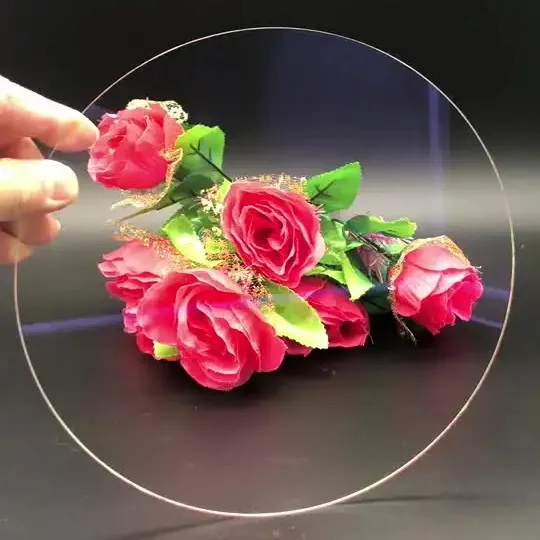
Lens Protection Windows in Lens Protection for Explosion-Proof Industrial Cameras
In a hazardous-area camera the window is the optical boundary of an Ex-rated enclosure, so it must transmit a clean image while the rest of the housing carries the certification burden. The glass has to resist the impact, abrasion and chemical spray of the plant while staying optically clear, because a scratched or hazed window degrades every frame. The material is chosen for the hazard class and the abuse, then the figure and coating keep the image honest.
How lens protection windows works in practice
In use the window passes the scene to the lens while shielding it from the environment, and any scratch, coating wear or internal haze shows up directly as lost contrast or flare in the image. A hard, well-coated pane shrugs off routine wiping and spray, while a soft one mars after a few cleanings. A window that meets the duty is invisible to the footage; one that was under-specified fogs the camera within a season.
Design rules that reduce cost
Cost falls when the window material and coating are drawn from a standard hardened-glass family and only the shape or mount is customised to the Ex housing, rather than specifying an exotic pane for a duty a toughened glass covers. A simple wiper or wash path is cheaper than over-specifying the coating, and qualifying to the real abrasion and spray class avoids paying for a margin the plant never sees. The economical window is the one whose rating was written for the hazard, not a worst case.
Standards, documentation and traceability
For an Ex-rated window the optical and mechanical ratings should be documented and traceable, and the window's interface with the enclosure's certification noted, because the housing's Ex marking rests on every boundary including the glass. The relevant explosive-atmosphere equipment documentation framework is where the rating and the material certificate belong. Material and rating records stay with the camera file rather than the supplier.
What drives cost and lead time
Cost and lead time are set by whether a standard hardened window fits the Ex housing or a custom shape and mount must be made, and by any specialised anti-abrasion or anti-reflection coating. A catalogue pane cut and coated ships quickly, while a large or oddly mounted window with a special coating is a longer cycle. Specifying the abrasion and spray class the duty actually needs keeps both down.
How it compares with the alternatives
Compared with an unprotected lens in a sealed box, a rated window adds certified-boundary assurance and survives the plant; compared with a sapphire pane, hardened glass is cheaper and easier to coat but less scratch-proof. The right pick is the cheapest window whose hardness, coating and shape meet the Ex housing and the abuse. When the hazard is mild, toughened glass wins; when abrasion is severe, the grade steps up.
Requirements specific to Explosion-Proof Industrial Cameras
Hazardous duty puts the window on the Ex boundary and the image path at once, so hardness, coating and the housing interface lead the specification. Choose a hardened family for the abrasion and spray class, coat for clear wipable optics, and keep the rating traceable to the enclosure's certification. Treat the window as part of the Ex boundary, not a plain lens cap.
- Hardened family for hazard class
- Coating for clear wipable optics
- Shape to Ex housing interface
- Rating documented and traceable
- Wiper path cheaper than exotic
- Cheapest window meeting Ex and abuse
Framework references: optical, hardness and interface ratings should be stated against the relevant explosive-atmosphere equipment documentation framework, framed as design targets verified per batch. Environmental declarations such as RoHS are the supplier's to state against the current official text, not to be assumed for a boundary component.
Selection data at a glance
| Parameter | Typical value | Notes |
|---|---|---|
| Material | Hardened for hazard | Class |
| Coating | Clear, wipable | Optics |
| Shape | To Ex housing | Interface |
| Rating | Documented, traceable | Cert |
| Clean | Wiper path | Economy |
| Pick | Cheapest valid | Coverage |
Frequently asked questions
Is a hardened glass window enough inside an Ex housing?
For many hazardous-area cameras it is, provided the hardness and coating cover the abrasion and spray the window sees and the shape matches the enclosure's certified boundary. When scratching is severe, a sapphire or harder grade is the step up, at higher cost.
Why keep the window rating with the enclosure certification?
Because the Ex marking of the housing rests on every boundary including the glass; if the window's rating or interface changes, the certification can be invalidated. A traceable record ties the installed pane to the certified enclosure.
Can a wiper path replace a harder coating?
Often it helps, by keeping a standard pane clear through routine abuse instead of paying for an exotic scratch-proof grade. The wiper is usually the cheaper lever; over-specifying the coating is the expensive habit to avoid for mild hazards.
Need a quotation for lens protection windows?
Send your drawing, target specification or coating requirement and an optical engineer will reply within 24 hours with a price and a lead time.
Request a Quote Email an engineer