A lens protection window in a food plant is specified by two audiences who rarely talk to each other. Process engineering wants it to survive a washdown with hot caustic and keep the line running. Quality assurance wants nothing in the food-contact zone that can harbour residue. Optical engineering wants the image. Those three requirements together decide the material, the edge finish and the mount, and the direction of travel in hygienic optics is toward parts that can be cleaned rather than parts that need cleaning less often. This note covers what has changed and how to specify for it.
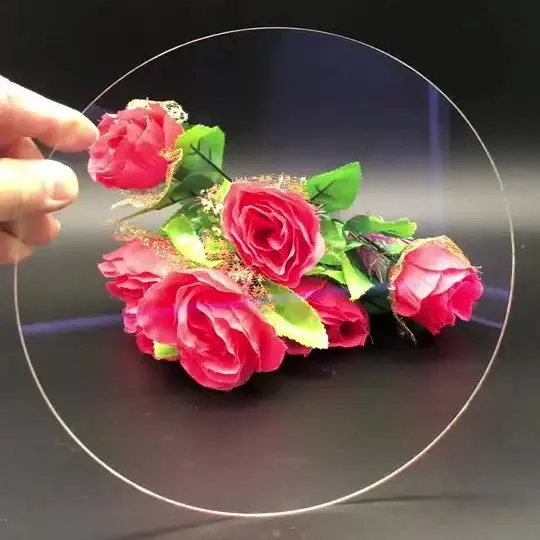
Lens Protection Windows in Food Processing and Hygienic Optics
Hygienic optics are the windows, viewports and camera windows through which a food or beverage process is observed or inspected, and they sit in an environment defined by cleaning. The parts involved span three very different demands. Sight ports in tanks and pipelines are pressure-bearing and see product directly. Camera windows over fillers, sealers and inspection stations see the product indirectly, through air, in a zone that is washed down many times a day with hot water or caustic. And inspection optics, which use illumination and filters to judge fill level, cap presence, label presence or product colour, are mounted near the product path rather than in it. Only the first group is in the food-contact zone in the regulatory sense, but all three have to survive the same cleaning regime, and it is the cleaning that determines the cost of the optical part long before any coating or substrate decision is made.
How lens protection windows works in practice
The part does not fail optically in most cases; it fails as a surface. Clean-in-place systems use fixed nozzles and fixed trajectories, so the window sees a concentrated alkaline or acidic jet at temperature rather than a gentle rinse, and it is hit repeatedly on the same arc. What degrades is the surface chemistry: an uncoated glass in an alkaline wash develops a faint etching that scatters, a coated surface loses its coating in the arc the nozzle sweeps, and a window whose coating has a roughness that holds residue fails a swab test even when the image still looks acceptable. A recessed or shadow-line mount prevents the nozzle from dwelling at the sealing edge, and a mount that drains rather than pools prevents the last rinse from evaporating a residue on the glass. Once residue has become a biofilm, no amount of polishing recovers the surface, and the part has to be replaced. So the practical design target is not scratch resistance or transmission; it is a surface that a fixed nozzle can clean predictably every cycle, which is why edge finish and mount geometry matter more here than in almost any other optical application.
Design rules that reduce cost
Four rules reduce total cost substantially in this application. Separate the sacrificial from the functional: put a thin, replaceable protective window in the wash zone and the optical element behind it, so a cleaning casualty does not destroy a precision optic and the daily replacement is cheap. Specify the cleaning regime as a number, meaning temperature, concentration, chemistry and cycle count, because the same part is qualified differently for a low-temperature rinse and for hot caustic. Design the mount so the cleaning jet cannot dwell on a sealing edge, and so residue drains rather than dries, which usually costs more in the drawing and less in the field than any material upgrade. And choose a surface for cleanability rather than for hardness: a smooth, low-roughness glass that has been through the correct cleaning validation is easier to keep clean than a harder coating that the chemistry attacks faster. Finally, keep the optical element behind an air gap where possible, so the coating that matters is not the one being washed.
Standards, documentation and traceability
Documentation in hygienic optics has two halves that are often conflated. Food-contact compliance applies to the part in the food-contact zone and depends on the jurisdiction, the material and the intended contact conditions; it is not satisfied by any optical property. Cleaning validation is a plant-side process, and a supplier's role is to declare what the material and any coating have actually been qualified against, with the chemistry and conditions named. On the optical side, the records that matter are the coating identity and thickness, the evidence of bond strength or durability for the specified cleaning regime, the surface roughness specification on the cleaning face, and a batch record that ties the delivered window to those data. A supplier who can state that a specific coating was soaked for a stated number of hours at a stated concentration and temperature has given you something useful; one who states that the part is food grade has not. Where restricted-material declarations are required for equipment in the plant, request them against the current official text for the actual material and coating stack.
What drives cost and lead time
The dominant cost driver is the cleaning qualification on the coating, not the substrate. A stock uncoated window in a simple stainless retainer is inexpensive and available; a coated window that has been validated for hot caustic is a special part with a process and a record behind it, and that is where the schedule lives. The second driver is the coating itself, since a coating that must survive caustic at temperature needs a dense oxide stack with a hard top layer and typically a bond layer underneath, which is several deposition runs rather than one. The third is size and shape. Sight ports and camera windows in hygienic equipment are often large, sometimes thick, and frequently drilled or notched to reach the product line of sight, so the blank becomes a custom piece and the coating area grows. The fourth is certification and documentation effort, which on a food plant can exceed the part price. Lead time therefore follows the coating queue and the certification queue, not the glass. Cost control comes from standardising window sizes across the plant so spares share a coating and a qualification, from keeping the sacrificial window as large and simple as the geometry allows, and from avoiding a coating at all where the optical function can be met with an etch.
How it compares with the alternatives
Borosilicate is the default for sight ports because it is chemically durable, thermally tolerant and cheap, and it is the correct answer until something specific rules it out. Fused silica appears where ultraviolet transmission or thermal shock matters, at a material and coating cost premium. Sapphire is the answer when abrasion and impact dominate, and it is more than a price step up from borosilicate: it is harder to coat, harder to cut and requires careful mounting to avoid edge stress. Acrylic and polycarbonate windows cost little and are easy to change, and they fail in a wash zone by hazing, scratching and eventually crazing, which is why they are usually restricted to non-wash or enclosed positions. Polycarbonate with a hard coating extends their life considerably at the cost of edge quality and chemical resistance. The pragmatic rule in hygienic optics is that the sacrificial window should be the cheap replaceable one, the optical element behind it should be chosen for imaging, and the coating between them should only exist if the optical function genuinely requires it.
Requirements specific to Food Processing and Hygienic Optics
Food and beverage lines combine high-frequency washdown, hot caustic or acid chemistry, food-contact constraints in some zones and an optical image that has to survive both. Specify the cleaning regime as temperature, concentration, chemistry and cycle count, and require coating durability to be declared against that stated regime rather than against a generic test. Keep the sacrificial protective window separate from the optical element so a cleaning casualty is cheap to replace, and design the mount so the cleaning jet cannot dwell on a sealing edge and so residue drains instead of drying. State food-contact applicability separately from cleanability, with the jurisdiction named, and request restricted-material declarations for the actual substrate and coating stack against the current official texts. Batch records should tie the delivered window to its coating identity, thickness and surface roughness.
- Cleaning regime specified as temperature, concentration, chemistry and cycle count
- Coating durability declared against that regime, not a generic qualification
- Sacrificial protective window separated from the optical element for cheap replacement
- Mount geometry designed so the cleaning jet cannot dwell on a sealing edge and residue drains
- Food-contact applicability and cleanability stated separately, with jurisdiction named
Framework references: ISO 10110 for surface figure, surface quality and edge-chip limits on the finished window. Food-contact material requirements, cleanability and cleaning validation follow the jurisdiction's current official rules and the plant's own quality documentation and HACCP plan, and should be confirmed against those rather than assumed. RoHS, REACH and any declaration of conformity are the supplier's to make for the actual material and coating stack.
Selection data at a glance
| Parameter | Typical value | Notes |
|---|---|---|
| Cleaning regime | Stated temperature and chemistry | Cycle count |
| Coating | Dense oxide with hard top | Caustic qualified |
| Surface roughness | Stated on cleaning face | Cleanability |
| Material | Borosilicate default | Silica if UV |
| Edge / mount | Draining, no dwell | Residue control |
| Traceability | Batch plus coating record | Per delivered part |
Frequently asked questions
Why does a window keep hazing even though it looks clean?
Because the haze is a surface chemistry change, not dirt. Hot caustic in an optical window can etch the surface or attack the coating in the arc the fixed nozzle sweeps, and the resulting roughness scatters. Once that has happened polishing does not recover it reliably and the part has to be replaced, which is why the cleaning regime belongs on the drawing.
Is a hard coating worth it in a washdown zone?
It is worth it only if it has been qualified against the actual chemistry and temperature. Hardness alone is not the property the wash attacks; adhesion and chemistry resistance are. Ask what the coating was soaked in, at what temperature and for how long, and treat a vague durability answer as no qualification.
Should the protective window touch the food-contact zone?
That is a regulatory question determined by the jurisdiction, the material and the contact conditions, not an optical one. Where a part is in the food-contact zone, ask specifically for that declaration; where the window is outside it and views the product through air, the requirement is cleanability and durability only.
Need a quotation for lens protection windows?
Send your drawing, target specification or coating requirement and an optical engineer will reply within 24 hours with a price and a lead time.
Request a Quote Email an engineer