Cameras that inspect rail, catenary, bridges and tunnels sit on trains, drones and fixed gantries, exposed to weather, vibration, grit and the occasional impact, and they must keep imaging through all of it. The lens protection window is a ruggedised consumable in front of an expensive optic, and its design trend is toward sapphire or hardened glass with hydrophobic and heated options. This note covers the design choices and the sourcing discipline that keep such windows on the route.
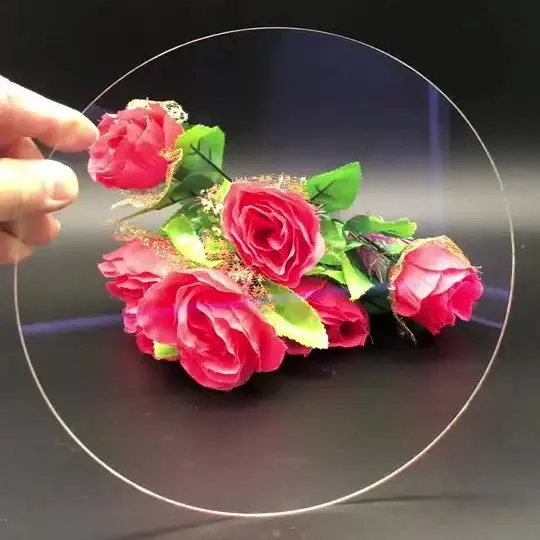
Lens Protection Windows in Rail and Infrastructure Inspection
An inspection camera views its target through a window that takes the abuse the lens never should. On a moving train the window sees grit, rain and insect strikes; on a gantry it sees pollution and thermal swing; on a drone it sees launch dust and landing scuffs. The window must stay optically clear, resist scratch and impact, and not fog or ice over, while being cheap enough to swap on a maintenance interval. The specification is therefore about survival and swap, more than about a perfect surface.
How lens protection windows works in practice
A protection window sits in the optical path as a flat, parallel plate, so its main optical sins are wedge, which shifts the image, and surface defect, which scatters light toward the sensor. A good window adds negligible aberration while taking scratches that would otherwise ruin the lens. In practice the window is the planned failure point: when it clouds or cracks, the lens underneath is untouched, and the camera returns by swapping the plate rather than rebuilding the optic. That is why its cost and lead time matter as much as its clarity.
Design rules that reduce cost
Specify the cheapest window that survives the route, not the hardest available. Borosilicate or hardened glass covers most stationary and low-impact stations; sapphire earns its cost only where impact or abrasion is constant. A hydrophobic coating cuts cleaning stops in rain and grime, and a heated window removes the fog-and-ice failure that a passive one cannot. Standardise the window shape across a fleet so one spare fits many cameras, and keep the coated face marked so a swap is done right the first time.
Standards, documentation and traceability
For a safety-relevant inspection system the window should carry a lot record that links it to its substrate and coating, and the purchase order should name the abrasion, impact and thermal-cycle it must survive. State the optical limit the image can tolerate, such as a scratch-dig and wedge budget, and require a certificate that the coating (hydrophobic or heated) meets the environmental spec. Keep the swap interval in the maintenance file so a clouded window is a scheduled change, not a surprise failure on a run.
What drives cost and lead time
Cost is driven by substrate class and by any heated or coated option, not by grinding a flat plate. Sapphire and a heated element cost more than hardened glass, and a custom shape costs more than a standard disc. Lead time is set by the coating and the heated-element build, not by the glass. The practical lever is consolidating on one or two window types across the fleet and holding a buffer sized to the swap interval, so a failed window is a spare from stock rather than a wait for a custom run.
How it compares with the alternatives
Against an uncoated hardened-glass window, a sapphire or hydrophobic-coated window costs more but lasts longer in abrasion and rain, cutting cleaning and swap stops. Against a bare lens with no window, any window wins by sacrificing itself instead of the optic, which is why a window is standard on exposed inspection cameras. A heated window beats a passive one in fog and ice but adds power and a lead-time element. The trend is to match the window to the worst condition on the route and to standardise the type across the fleet.
Requirements specific to Rail and Infrastructure Inspection
Rail and infrastructure inspection adds a weather, vibration and impact axis that studio or lab windows never meet. The window must survive grit, rain, thermal swing and the odd strike while staying clear and unfogged, and it must be swappable on a maintenance interval, so the specification names the abrasion, impact and thermal-cycle it survives, the heated or hydrophobic option the route needs, and a lot record tied to substrate and coating. Standardise the type across the fleet and hold a buffer sized to the swap interval.
- Substrate matched to the worst route condition, not the hardest available
- Heated or hydrophobic option specified by climate
- Scratch-dig and wedge budget the image can tolerate
- Fleet-standard shape with a swap-interval buffer
Framework references: surface-figure and scratch-dig limits per ISO 10110; abrasion and environmental cycles follow the equipment maker's incoming-inspection procedure. Impact and thermal limits are route-specific and should be confirmed against the inspection system's duty rather than a generic rugged claim.
Selection data at a glance
| Parameter | Typical value | Notes |
|---|---|---|
| Substrate | hardened glass or sapphire | By impact duty |
| Coating | hydrophobic or heated | By climate |
| Surface | scratch-dig budget | Per ISO 10110-7 |
| Wedge | image-shift limited | Keeps aim |
| Environment | abrasion, thermal cycle | Route qualified |
| Spares | fleet-standard shape | Swap buffer |
Frequently asked questions
Should every rail camera window be sapphire?
Not usually. Sapphire earns its cost only where impact and abrasion are constant; most stationary and low-impact stations are fine with hardened glass plus a hydrophobic coating. Specifying sapphire everywhere inflates the spares bill without improving the image.
Why use a heated window instead of a passive one?
Because fog and ice are a passive window's hard failure: it stays optically clear until condensation or frost blanks the view, with no recovery. A heated window removes that failure mode but adds power and a build lead time, so it is specified by climate rather than by default.
How should spares be sized for a fleet?
By the swap interval at the harshest route, not by a round number. Standardising one or two window types across the fleet lets a single spare fit many cameras, and a buffer sized to the interval turns a failed window into a stock swap instead of a custom-run wait.
Need a quotation for lens protection windows?
Send your drawing, target specification or coating requirement and an optical engineer will reply within 24 hours with a price and a lead time.
Request a Quote Email an engineer