Ruggedized outdoor cameras put a flat window in front of the lens to survive weather, abrasion and impact while keeping the image clean, and as deployments move to harsher sites the window is being specified for more than just transparency. A wrong window scratches, fogs or cracks and the camera is effectively blind. This note covers the window trends and the sourcing checks worth putting on the drawing for ruggedized outdoor cameras.
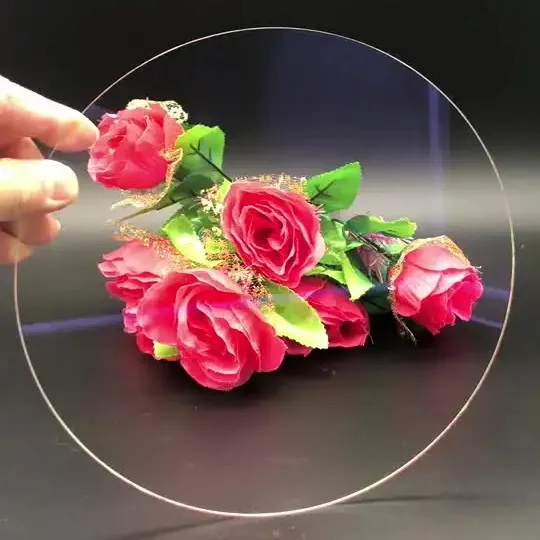
Lens Protection Windows in Ruggedized Outdoor Cameras
In a rugged camera the window is the only optic the environment touches, so it carries the abrasion, the rain and the impact that would otherwise ruin the lens behind it. The part is a flat, coated substrate sealed into the housing, and its job is to protect without adding distortion, reflection or haze to the image. The trend is toward harder coatings and better seals so the window stays optically clean through years outside rather than months.
How lens protection windows works in practice
In use the window passes the scene to the lens while an AR coating on its inner and outer faces keeps reflection from ghosting the image and a hard coating on the outer face resists scratch and impact. A well-specified window is invisible to the image and survives the site; an under-specified one scratches into the field of view or lets moisture behind the seal and fogs. The part is judged by how little it changes the image and how long it stays that way.
Design rules that reduce cost
Cost drops when the aperture is no larger than the lens needs and the coating is specified only as hard and anti-reflective as the site requires, because an over-rated coating pays for durability the application does not see. Choosing a standard thickness that seals into a standard housing ring avoids custom machining, and specifying the AR band to the camera's pass rather than the whole visible keeps the deposition short. The cheap window is the one whose spec was written for the actual outdoor duty.
Standards, documentation and traceability
The optical and dimensional limits are stated against the part's own specification, and for an outdoor instrument the seal and coating hardness are documented as part of the acceptance rather than assumed. Any environmental or regulatory documentation such as RoHS is taken from the supplier's current official text. Keeping the coating and seal specification on file is what lets a camera model hold its field performance across a production run.
What drives cost and lead time
Cost is driven by the coating hardness grade and by whether the window is a standard size or a custom shape, because a diamond-like or sapphire-grade hard coat costs more layers and a bespoke geometry costs a housing change. Lead time tracks the coating runs and any custom sealing, which is longer than for a plain glass disc. Specifying the hardness and shape only as far as the site needs keeps both price and schedule realistic.
How it compares with the alternatives
Against a bare lens a window adds a sealed, replaceable sacrifice surface that protects an expensive optic, while against a sapphire window a hardened glass one is cheaper but less scratch-proof. A polymer window is light and impact-tolerant but scratches and yellows faster. The right choice is the window whose hardness, seal and cost match the deployment, not the hardest material on the shelf.
Requirements specific to Ruggedized Outdoor Cameras
Outdoor duty adds weather, abrasion and impact to the usual optical constraints, so coating hardness, seal integrity and AR uniformity lead the specification. Choose a substrate and hard coat matched to the site, keep the aperture to the lens, and specify the seal as part of the acceptance rather than assuming it. Require a documented coating-hardness and seal check rather than a transparency pass, because a rugged camera is blind the moment its window scratches or fogs.
- Hard coat matched to site
- AR uniform, low ghost
- Seal specified, checked
- Aperture kept to lens
- Standard size, shape
- RoHS per current text
Framework references: surface, wedge and edge limits per ISO 10110; seal and coating-hardness acceptance stated against the camera's own environmental specification. Environmental declarations such as RoHS are the supplier's to state against the current official text.
Selection data at a glance
| Parameter | Typical value | Notes |
|---|---|---|
| Substrate | Hard-coated glass | Per site |
| AR | Uniform, low ghost | Image |
| Seal | Specified, checked | Weather |
| Aperture | Kept to lens | Cost |
| Hardness | Matched to duty | Abrasion |
| Shape | Standard ring | Housing |
Frequently asked questions
Why put a window in front of the lens at all?
Because the window is a cheap, sealed, replaceable surface that absorbs the abrasion, rain and impact the environment throws at the camera, protecting an expensive lens behind it. A scratched window is a field swap; a scratched lens is a returned camera.
Why not just use sapphire for every outdoor window?
Because sapphire is the hardest but also the most expensive, and many sites do not need that scratch resistance. A hardened glass window matched to the duty gives most of the protection at a fraction of the cost, which is why the choice should follow the deployment, not the material shelf.
What is the cheapest way to specify this window?
Keep the aperture to the lens, specify the hard coat and AR band only as far as the site and the camera need, and use a standard size that seals into a standard housing ring instead of a custom geometry.
Need a quotation for lens protection windows?
Send your drawing, target specification or coating requirement and an optical engineer will reply within 24 hours with a price and a lead time.
Request a Quote Email an engineer