A veterinary practice or an animal health imaging suite is not a factory floor. The camera sees hair, feathers, saliva and cleaning agents, the cleaning is done by staff who are Usually busy, and the same housing may be wiped with a hospital disinfectant one hour and a stable bleach the next. The protection window in front of that lens is what decides whether the image stays usable between service intervals. This note covers how the window is designed and sourced for that environment, and where the practice is currently heading.
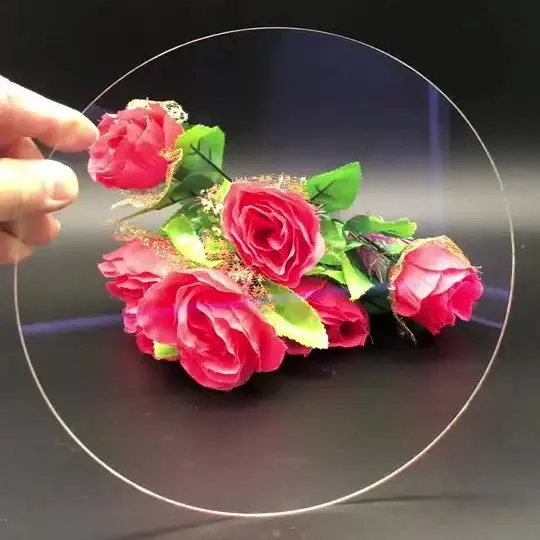
Lens Protection Windows in Veterinary and Animal Health Imaging
On an animal health imaging head the window is the only optical surface most staff ever touch, and its condition is what determines whether the machine still produces a diagnostically useful image. The environment combines the abrasive and contaminating load of a biological setting with the chemical load of a clinical one: organic matter that dries and bonds to the surface, and cleaning agents that are selected for their effect on pathogens rather than for their compatibility with an optical coating. Unlike an industrial window, the window here is often replaced on clinical rather than optical grounds, because a contaminated cover glass is a hygiene problem before it is an imaging problem. That single fact shapes the whole design: the part must be disposable or easily replaceable, cheap enough that nobody replaces it reluctantly, and robust enough to survive being cleaned with something it was not specified for.
How lens protection windows works in practice
The window is a flat cover held in front of the objective, usually sealed to the housing so that it also keeps the interior clean. Its optical job is only to avoid adding ghost reflection and to stay flat enough not to degrade the image, while its practical job is to be the sacrificial layer that absorbs everything the environment throws at the lens. In practice a bare glass cover is easier to keep clean than a coated one, because a soft anti-reflective layer dulls faster under wiping, so many clinical designs accept a modest reflection and gain a surface that survives the cleaning regime. The trend in sourcing has been towards harder, chemically resistant substrates with a single durable layer rather than toward maximum anti-reflection performance, which is the opposite of the direction the consumer optics market moved.
Design rules that reduce cost
The main rule is to design the window as a disposable consumable with a known replacement interval rather than as a long-life optical component. A slightly cheaper substrate with a hard surface, fitted inhouse and swapped on a schedule, will cost less over two years than an expensive coated part that staff clean badly and then blame for a poor image. The second rule is to make the geometry simple and standard, because a shaped or deeply seated window is more expensive to pack, to fit and to replace, and adds no optical value on a cover. Third, choose an edge finish that tolerates being gripped by a technician with a gloved hand, which rules out fine chamfers that chip on removal. Fourth, keep the window geometrically identical across the equipment range so that spares are interchangeable and no one is hunting for the right part at the worst moment.
Standards, documentation and traceability
Sourcing for a clinical environment needs the optical tolerances stated in the usual way under the optical drawing standard, but the documents that really constrain the part are the hygiene ones. The window and its fitting should be assessed against the cleaning agent list the site actually uses, since a material compatible with one disinfectant can fail against the next, and the compatibility should be recorded rather than assumed. Where the equipment is sold into a regulated market, the material declarations for the window assembly may also be required, and any statement about compliance of the coating materials should be verified against the current text of the relevant chemical regulation rather than accepted from a summary. Traceability in practice means a single part number with a documented replacement interval, so that a practice knows exactly what it is fitting and when the fitted window is due to be changed.
What drives cost and lead time
For this sector the cost drivers are the substrate, the size, and whether any coating is applied at all. A plain chemically resistant glass is the cheapest sensible option and the easiest to clean; adding a durable single layer raises the price modestly and lowers the cleaning rate. A custom shape or a large panel raises it further, because both the yield and the packing change. There is also an often overlooked cost: the replacement labour. A window that requires a technician to remove a bezel, clean the seat and refit a seal may be cheaper to buy and far more expensive per year than one that can be swapped in seconds, so the sourcing decision should be made on the total annual cost of the window including the fitting time, not on the price of the part.
How it compares with the alternatives
Against an unprotected lens, a cover glass sacrifices a little reflection and buys a lens that does not have to be cleaned in the middle of a clinic session. Against a full enclosure or an iris shutter, the cover is much cheaper and gives continuous visibility, at the cost of being exposed. A polymer cover is cheap, light and impact resistant, and it survives a knock from a curious animal better than glass, but it scratches readily, holds static that collects hair and dust, and dulls quickly underwiping with disinfectant. A hardened glass cover with a durable single layer is the option that most often fits this environment, because it takes the cleaning chemicals and the accidental knocks while still being straightforward to replace; the main thing to avoid is a soft multi-layer anti-reflection stack that looks excellent on delivery and is gone within a few months of clinical wiping.
Requirements specific to Veterinary and Animal Health Imaging
Specify the window as a scheduled consumable rather than a long-life optical component, and choose a chemically resistant substrate with at most a single durable layer, since a soft anti-reflection stack dulls quickly under clinical disinfectants. Confirm compatibility with the site's actual cleaning agent list and record it, keep the geometry standard so spares are interchangeable, and judge the sourcing decision on the total annual cost including fitting time rather than the price of the part.
- Window specified as a scheduled consumable with a known interval
- Chemically resistant substrate, single durable layer at most
- Compatibility recorded against the site cleaning agent list
- Standard geometry so spares are interchangeable without hunting
- Edge finish tolerant of gloved handling and removal
- Sourcing judged on total annual cost including fitting time
Framework references: surface quality, flatness and dimensional tolerances for optical elements are conventionally stated in ISO 10110, and the current issue should be consulted. Cleaning-agent compatibility, material declarations and any chemical compliance statement for the coating are governed by the regulations and hygiene standards applicable to the market and the facility, and those should be verified against the current text of the relevant documents rather than taken from a supplier datasheet.
Selection data at a glance
| Parameter | Typical value | Notes |
|---|---|---|
| Design choice | Practical effect | Trend in this sector |
| Substrate | Chemical and scratch resistance | Hard glass over polymer for cleaning life |
| Coating | Reflection vs cleaning life | One durable layer instead of soft broadband arc |
| Geometry | Cost of packing and fitting | Standard shape, interchangeable spares |
| Role in service | Replacement behaviour | Scheduled consumable, not a long-life part |
| Edge finish | Survives gloved removal | Relieved edge over fine chamfer |
| Decision basis | Annual cost not part price | Includes technician fitting time |
Frequently asked questions
Why is a soft anti-reflection coating a poor choice here?
Because it dulls under wiping. A multi-layer anti-reflection stack gives a beautiful surface on delivery and degrades with the disinfectant and the cloth used in a clinic, so the machine loses contrast not as a fault but gradually. A single hard layer or a bare resistant surface ages far more slowly.
Is a polymer cover better for a practice?
Polymer survives knocks and is cheap, which matters with curious animals, but it scratches easily, holds static that gathers hair and dust, and dulls under disinfectant wiping. The compromise most practices land on is a hardened glass cover that can be swapped in seconds and replaced on a schedule.
What should be documented when the window is reordered?
The part number with its stated tolerances, the cleaning-agent compatibility record, and the agreed replacement interval. Those three make a reorder a like-for-like replacement rather than an opportunity to fit a different part and lose the comparison with previous images.
Need a quotation for lens protection windows?
Send your drawing, target specification or coating requirement and an optical engineer will reply within 24 hours with a price and a lead time.
Request a Quote Email an engineer