



How to specify an optical component with us
Most of what leaves our facility is built to a customer drawing rather than picked from a catalogue. That changes what a good enquiry looks like. Instead of a model number, the fastest route to a firm quotation is five pieces of information: the substrate material, the outside dimensions and thickness, the optical function together with its wavelength band, the surface quality and flatness you need, and the environment the part will operate in. With those five we can return a manufacturable design, a unit price and a lead time — normally within one working day.
If you only have a target performance and no drawing yet, that is a normal starting point for us. Send the optical requirement and we will propose substrate, coating stack and mechanical outline, then iterate with you before anything is cut.
The product families at a glance
| Family | What it covers | Typical specification window |
|---|---|---|
| Glass materials & substrates | Bulk optical glass, fused silica and quartz, borosilicate, sapphire, ultra-thin glass, glass wafers, ITO-coated substrates | Thickness 0.05–25 mm, cut tolerance to ±0.01 mm, flatness to λ/10 |
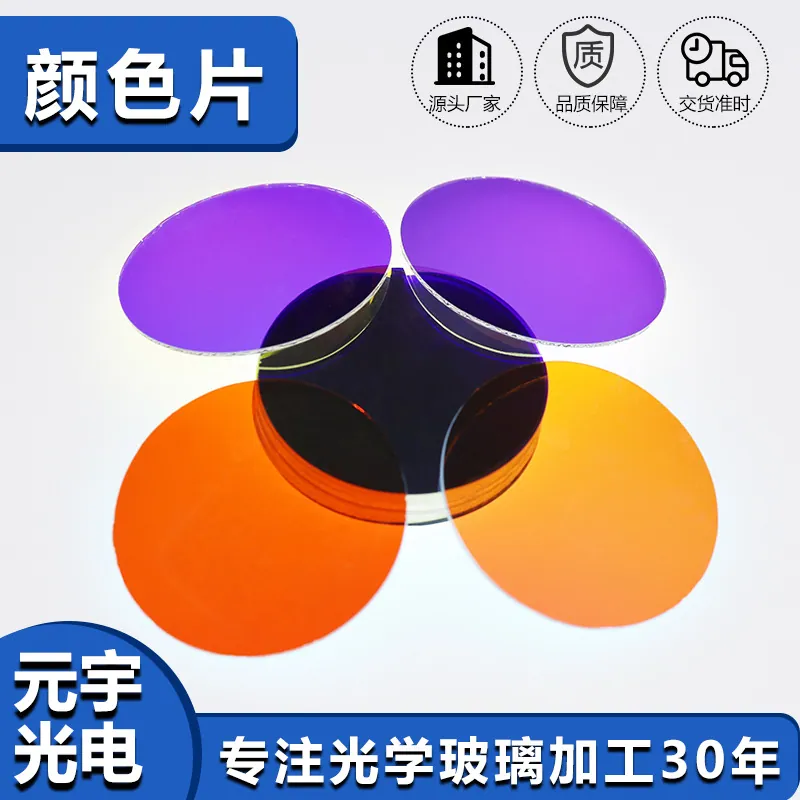
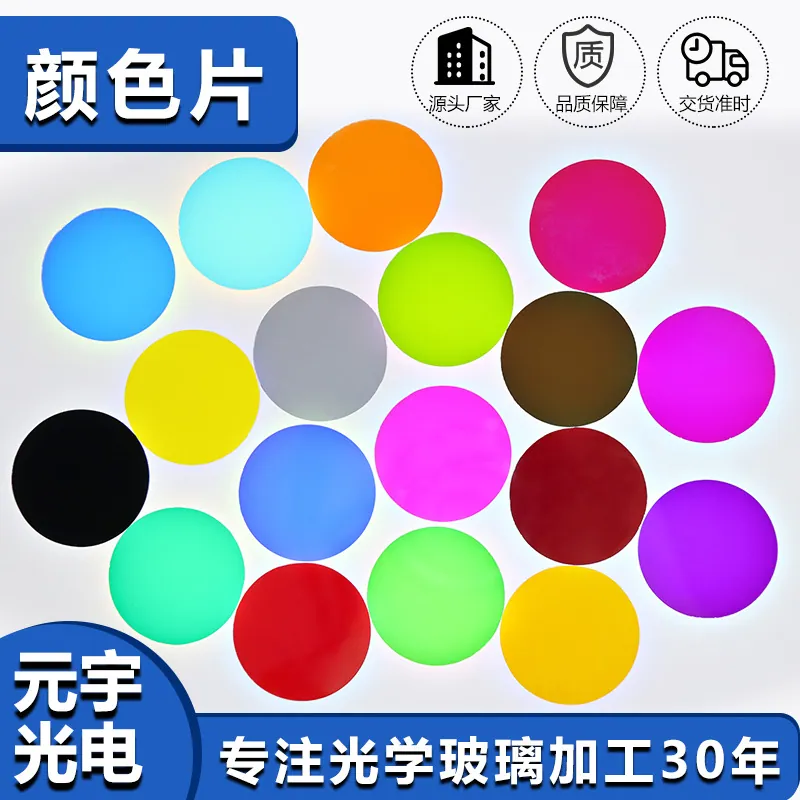
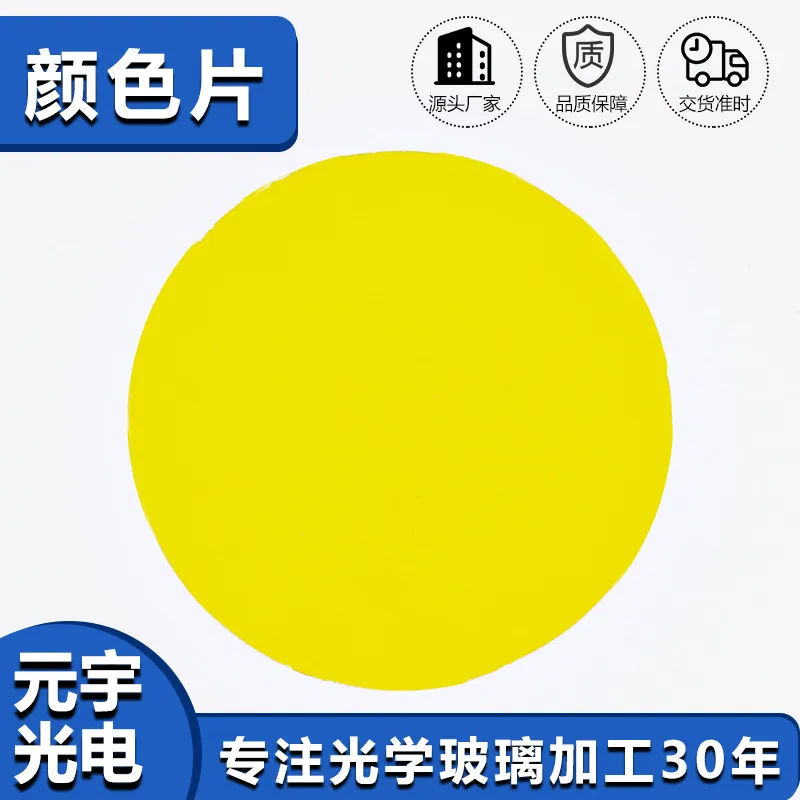
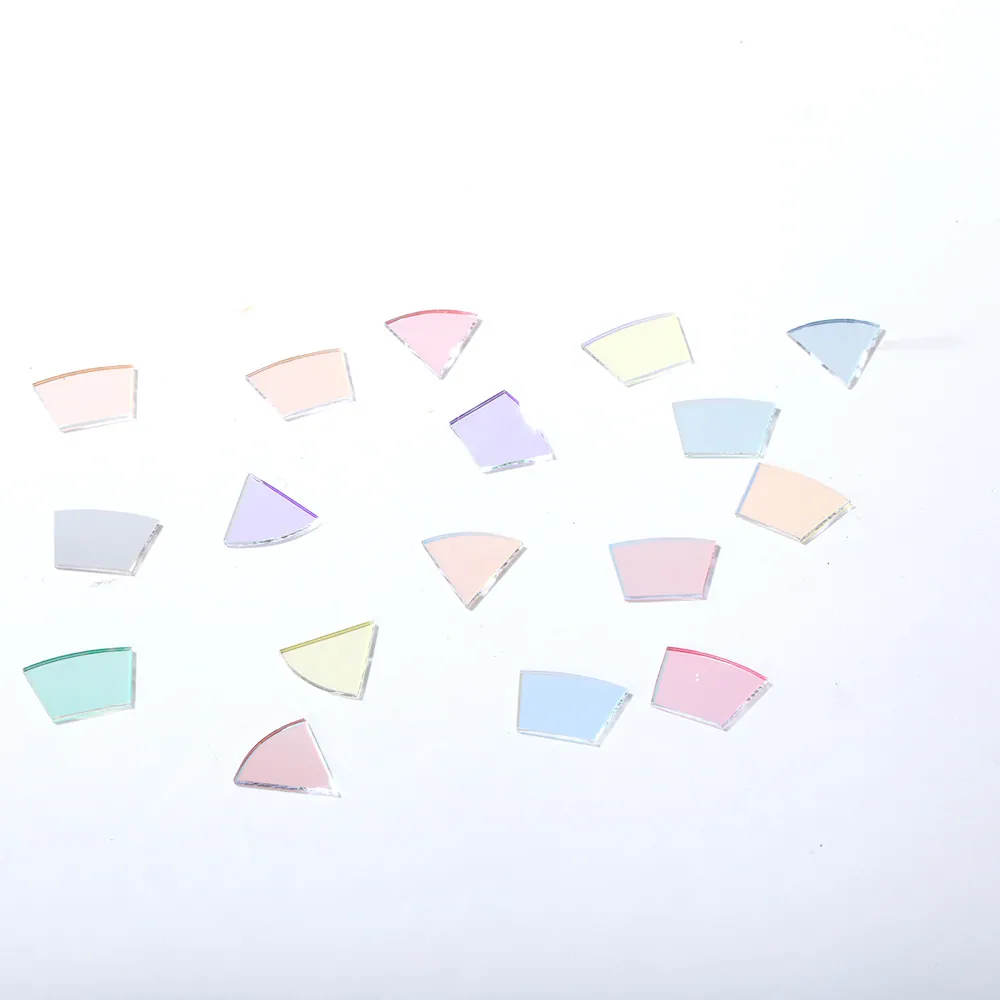
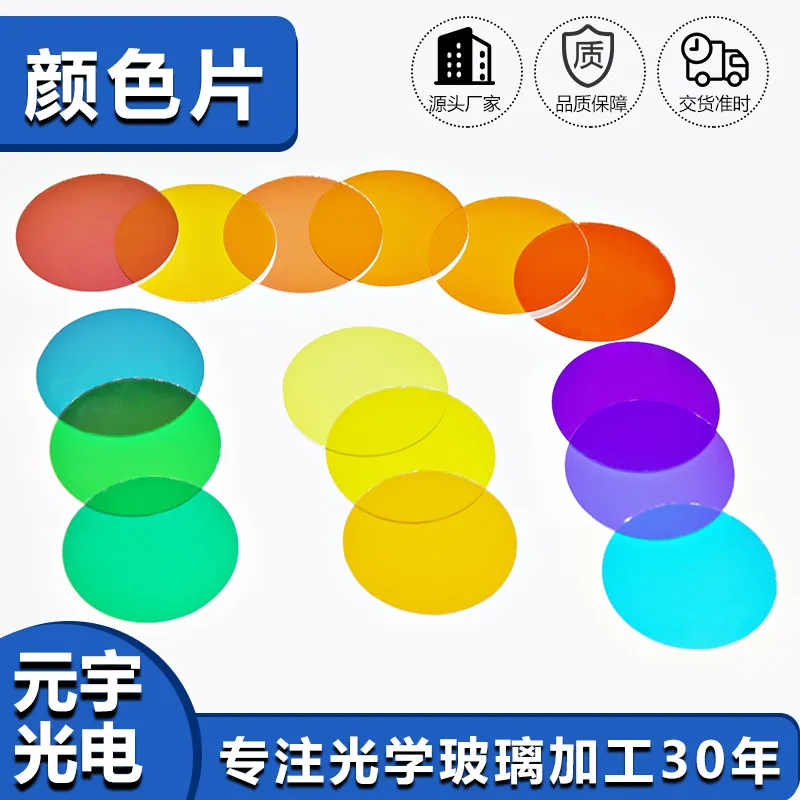
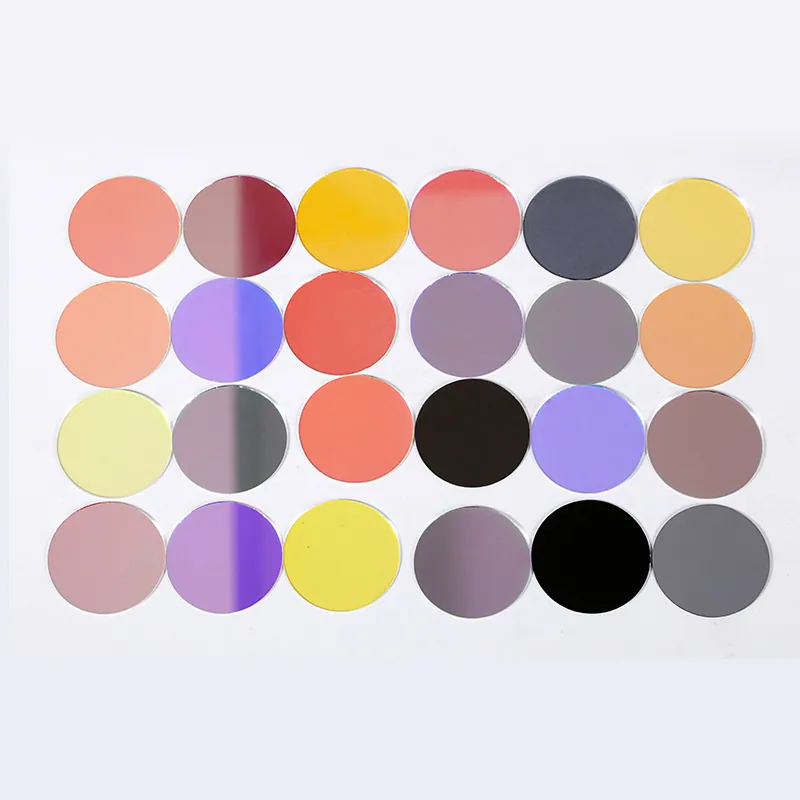
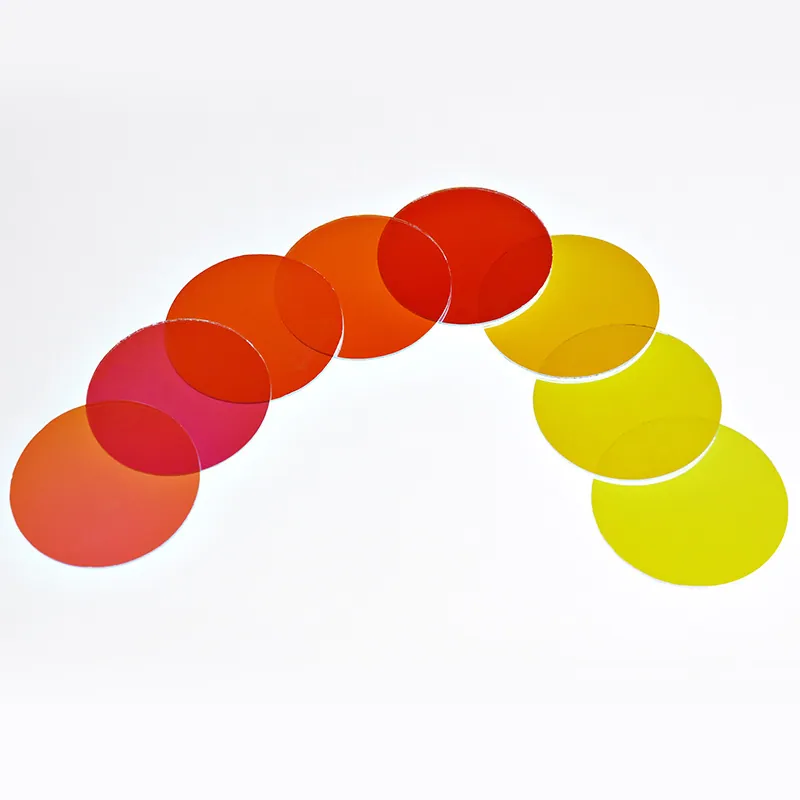
| Thin-film coatings & filters | AR and HR coatings, band-pass and edge filters, dichroic and beam-splitter coatings, IR cut-off and colour filters | 200–3000 nm, single-point reflectance below 0.2 % available |
| Custom glass fabrication | Cutting, CNC machining, drilling, grinding, polishing, edge finishing, ultrasonic cleaning, screen printing | Prototype quantities through serial production, DFM review included |
| Quartz & crystal components | Fused quartz windows, plates and tubes for high-temperature, UV and semiconductor duty | UV-grade JGS1 and JGS2 equivalents, low OH and high OH grades |
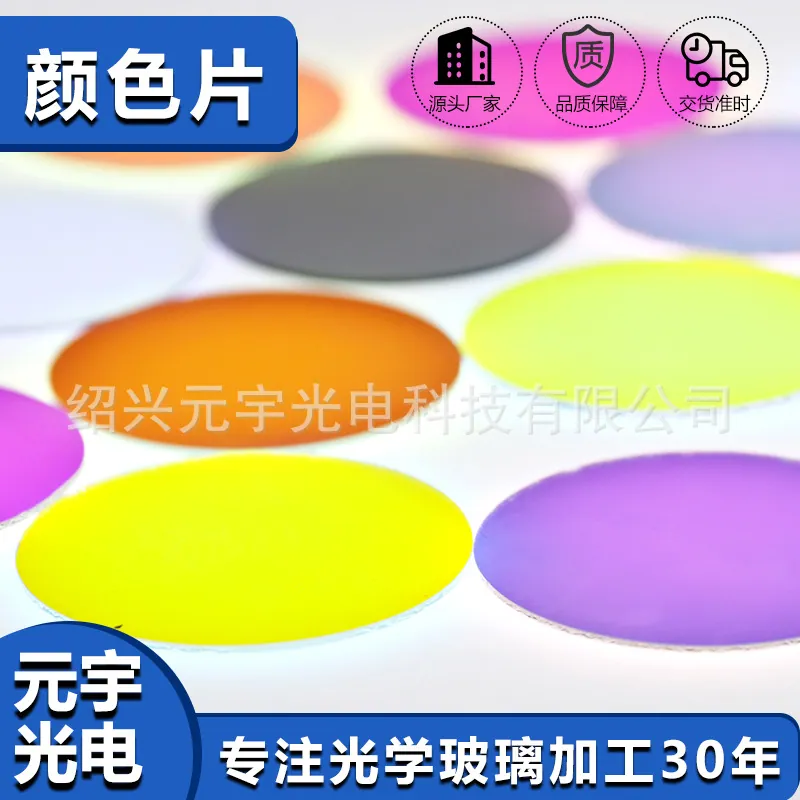
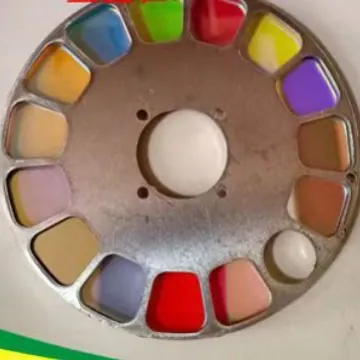
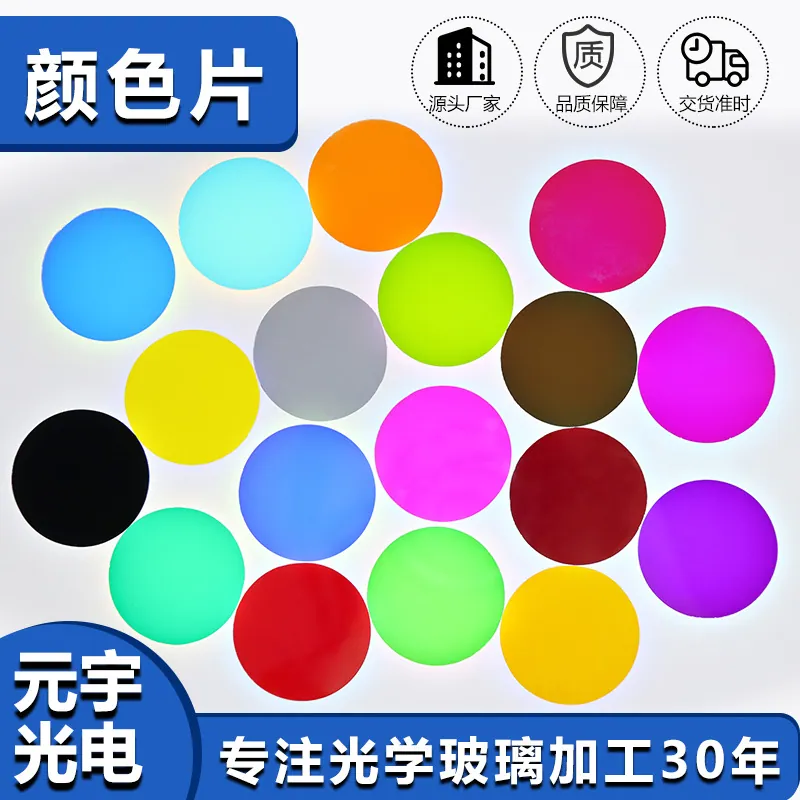
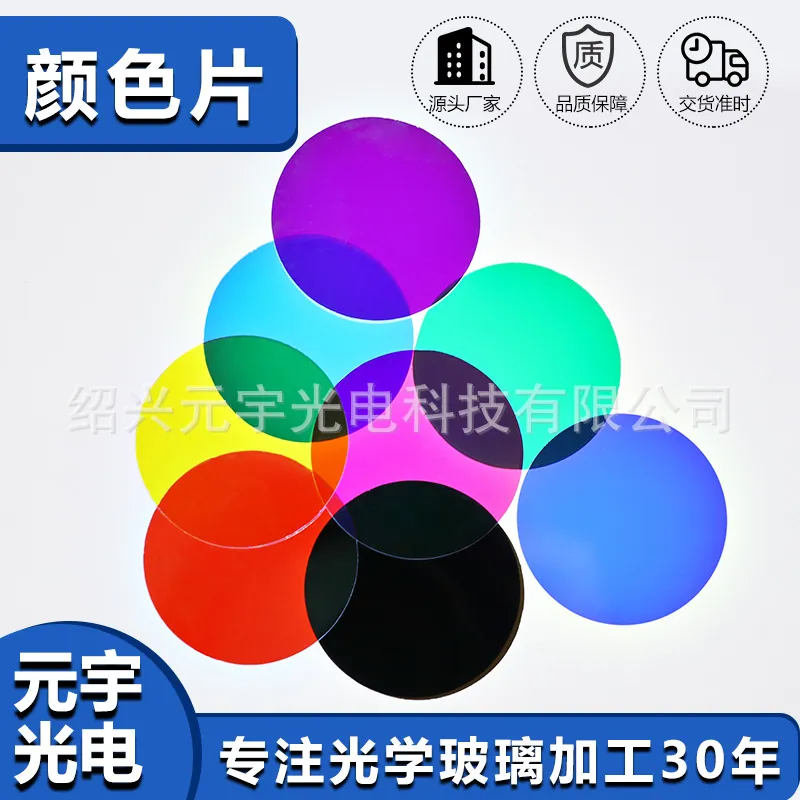
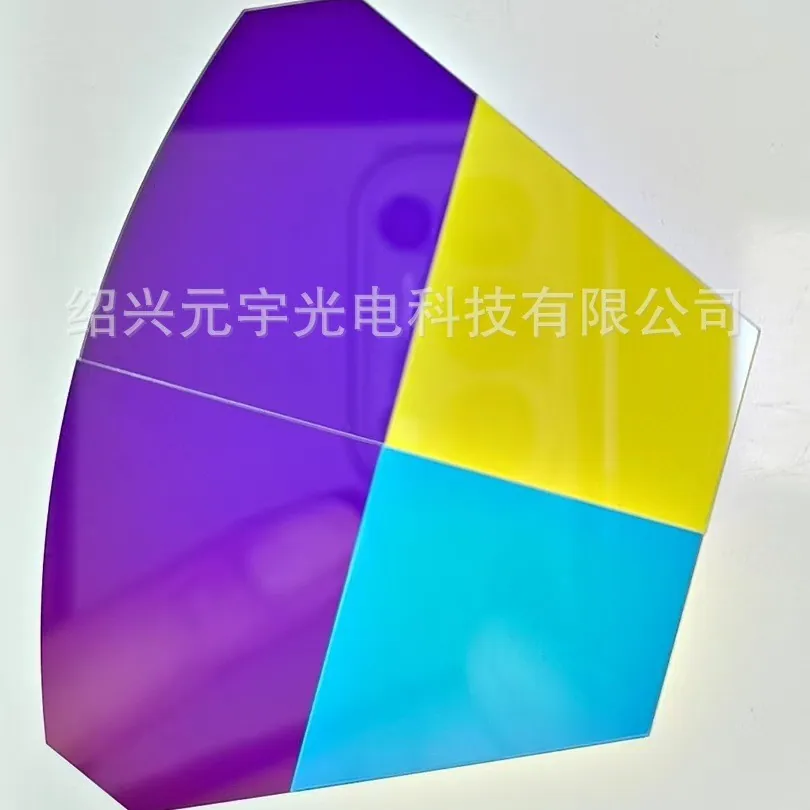
| Stage-lighting optics | Dichroic colour plates, GOBO and pattern plates, cold mirrors, heat-control filters | Colour-card matched, heat resistant, cut to fixture geometry |
From drawing to delivered part
Substrate, coating and fabrication sit in the same building, which is the single biggest reason we can hold tolerances that would otherwise be lost between suppliers. A typical order moves through five stages:
- Engineering review. We check the drawing for manufacturability, flag anything that will drive cost without adding performance, and confirm the coating design against your transmission or reflection target.
- Material selection and inspection. The incoming blank is verified for thickness, flatness and internal quality before it enters the process.
- Forming and finishing. Cutting, machining and grinding bring the part to size; polishing establishes flatness and surface quality.
- Coating. Deposition is monitored by in-chamber optical measurement rather than by time alone, so the run is corrected while it is still in the chamber.
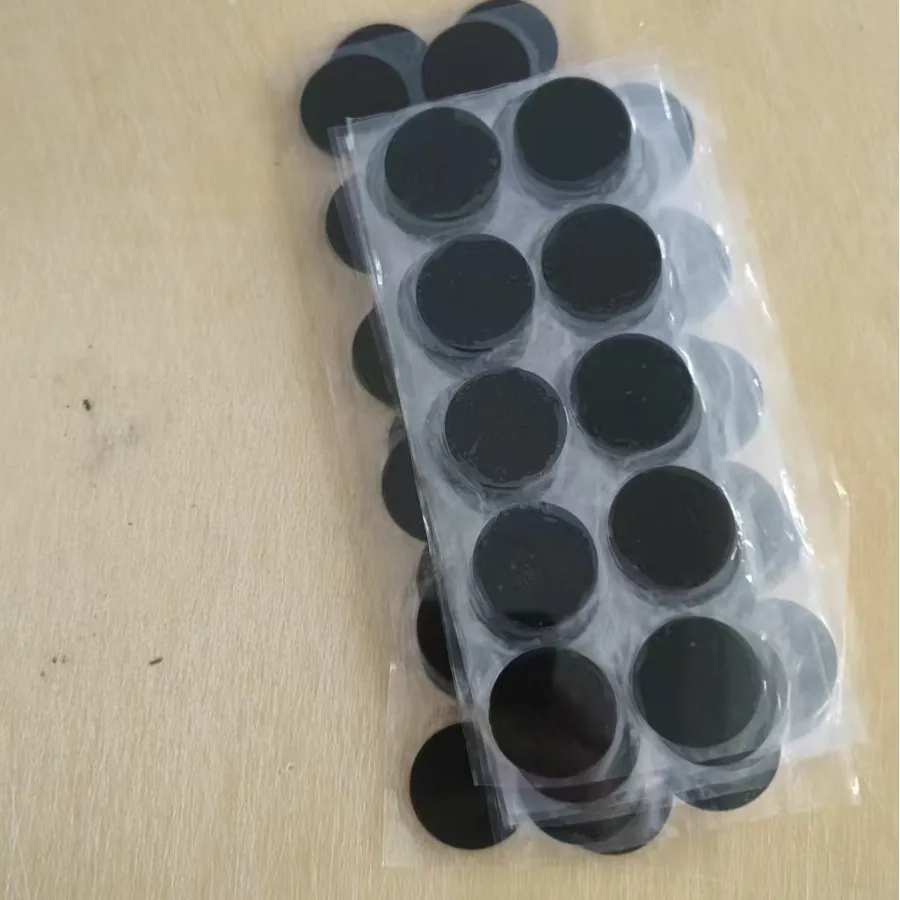
- Final inspection and packing. Parts are measured on the finished geometry, cleaned, and packed for export with the inspection record attached.
Quality control, inspection and traceability
Inspection is done on the finished part, not on the blank, because coating and polishing both move the geometry. Depending on the product we measure centre thickness and parallelism, surface quality against the scratch–dig scale, flatness by interferometer, transmission or reflection curves by spectrophotometer, and coating adhesion by tape and abrasion testing. Each shipment carries a lot number that ties back to the substrate batch and the coating run, so a question six months later can still be answered.
Lead time, minimum order and samples
Prototype quantities are welcome; most projects start with one to ten pieces before a production release. Because material is held in stock and coating runs are scheduled continuously, standard substrates with a routine coating typically move through in a fraction of the lead time of a fully custom stack. Samples of existing materials and coatings can be supplied before you commit to volume — useful when the decision depends on measured transmission rather than a datasheet.
Frequently asked questions
Can you work from a sample instead of a drawing?
Yes. Send the physical part and we will reverse the geometry, measure the coating curve and quote against what we find. For optical coatings a measured transmission or reflection curve is often more useful than a nominal specification, because it shows the real tolerance you can accept.
Do you supply single pieces, or only production volumes?
Both. There is no minimum that forces a production order — prototype quantities are a normal part of how projects start here.
How do you handle confidentiality?
Drawings and specifications are treated as customer confidential. If you need an NDA in place before sending files, we will sign yours or provide ours.