A vacuum viewport is an optical window that has to stay flat under atmosphere-to-vacuum pressure, seal without leaking, and still pass the light or image the chamber needs. Optical glass is a common choice, but the cold-processing route that gets it there varies by flatness, edge and coating need. This comparison weighs the practical options so an engineer can pick the route that fits the chamber rather than the catalogue.
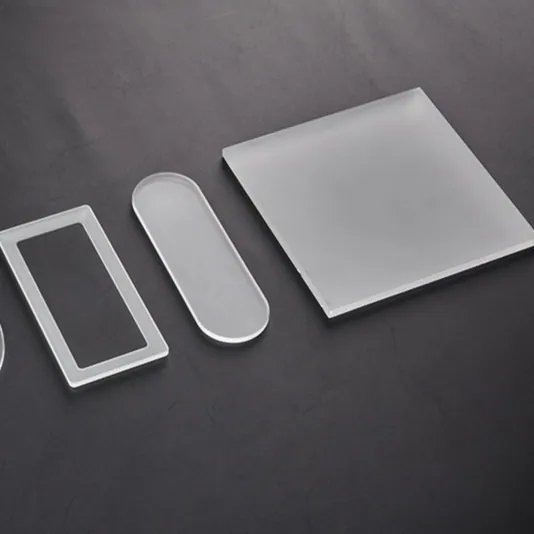
Optical Glass Cold Processing in Cold Processing for Vacuum Viewports and Feedthroughs
In a viewport the glass carries the full pressure load across its clear aperture while presenting an optical surface on both sides, so the cold-processing plan has to deliver flatness and surface quality without introducing edge or subsurface damage that later leaks or fractures. The window also has to meet a metal flange, which means the edge and any bevel are part of the optical job, not an afterthought. The processing choice is set by how tight the flatness and the seal really are.
Substrate and material selection
The starting point is a glass whose thermal expansion and chemical resistance suit the chamber, because a viewport sees bake-out cycles and process gases the optic was not designed for. A low-expansion or borosilicate-type glass is common where the flange sees temperature swings, while a higher-transmission crown is chosen when the light path matters more than the thermal budget. Pick the substrate for the duty, then let the flatness drive the process.
What drives cost and lead time
Cost and lead time are dominated by flatness and surface-figure effort: a viewport that merely seals is cheap to grind, while one held to a fraction of a wave over a large aperture is a long, iterative polish. Coatings add a cycle but are usually shorter than the figure work, and special edge bevels or a finished seat add setup rather than runtime. Specifying the flatness the optical path actually needs, not a round-number catalogue value, is the biggest cost lever.
The tolerances that actually matter
For a viewport the flatness over the clear aperture and the edge condition at the seal dominate: too much bow and the sealline or the image suffers, too little edge control and the weld or braze leaks. Surface scratch-dig matters where the beam passes, and wedge is controlled so the window does not act as a weak prism in the optical path. The tolerances that matter are the ones at the seal and across the aperture, not the generic finish limits.
How it compares with the alternatives
Compared with a sapphire or fused-silica viewport, optical glass is usually cheaper and easier to figure but narrower in transmission and less resistant to harsh chemistry; compared with a simple ground-and-sealed porthole, an optically polished glass window adds figure work for the sake of the light path. The right choice is the cheapest route that still meets the seal, the flatness and the transmission the chamber demands. When the path is forgiving, a coarse grind is enough; when it is not, the polish and the coating earn their place.
Requirements specific to Cold Processing for Vacuum Viewports and Feedthroughs
Vacuum duty puts the seal and the flatness on the critical path, so the edge at the flange and the figure across the aperture lead the specification. Choose the substrate for the thermal and chemical duty, specify flatness to the optical need, and treat the edge bevel as part of the optical job. The economical viewport is the one whose figure was written for the chamber, not copied from a porthole catalogue.
- Substrate chosen for thermal and chemical duty
- Flatness specified to optical need, not catalogue
- Edge bevel treated as optical job
- Surface figure balanced against seal
- Coating added only when path needs it
- Cheapest route that still meets seal and transmission
Framework references: surface form, wedge, edge-chip and scratch-dig limits per ISO 10110, and sealing-face geometry verified against the flange drawing. Environmental declarations such as RoHS are the supplier's to state against the current official text, not to be assumed for a vacuum component.
Selection data at a glance
| Parameter | Typical capability | Notes |
|---|---|---|
| Substrate | Thermal and chemical fit | Chamber |
| Flatness | To optical need | Aperture |
| Edge | Bevel as optical job | Seal |
| Figure | Balance vs seal | Path |
| Coating | Only if path needs | Transmission |
| Cost | Cheapest valid route | Duty |
Frequently asked questions
Is optical glass good enough for a vacuum viewport, or do I need sapphire?
For many chambers optical glass is enough and far cheaper, provided its transmission and chemistry suit the process and the flatness meets the optical path. Sapphire earns its cost when the process is abrasive or the window must survive harsh chemistry; otherwise the glass figure and the seal, not the material, are what matter.
Why is the edge treated as an optical job?
Because the window meets a metal flange under pressure, and a poorly controlled edge chips, leaks or concentrates stress that later fractures. The bevel and the seal line are where the part fails, so they are specified and inspected like the optical surfaces.
How tight should I specify flatness?
Only as tight as the light path requires. A viewport that merely needs to seal tolerates far more bow than one used for imaging through the chamber, and over-specifying flatness is the fastest way to inflate cost and lead time without improving the device.
Need a quotation for optical glass cold processing?
Send your drawing, target specification or coating requirement and an optical engineer will reply within 24 hours with a price and a lead time.
Request a Quote Email an engineer