Water treatment and desalination plants use optical glass in places that are easy to overlook: sight glasses on the process line, sample cells in analysers, flow cells in turbidity and dissolved-solids instruments, and windows on ultraviolet reactors. These parts are specified against chemistry and against a shutdown schedule, and the two together determine cost far more than the precision does. This note sets out what actually drives price and lead time on these components, and where a design change pays for itself.
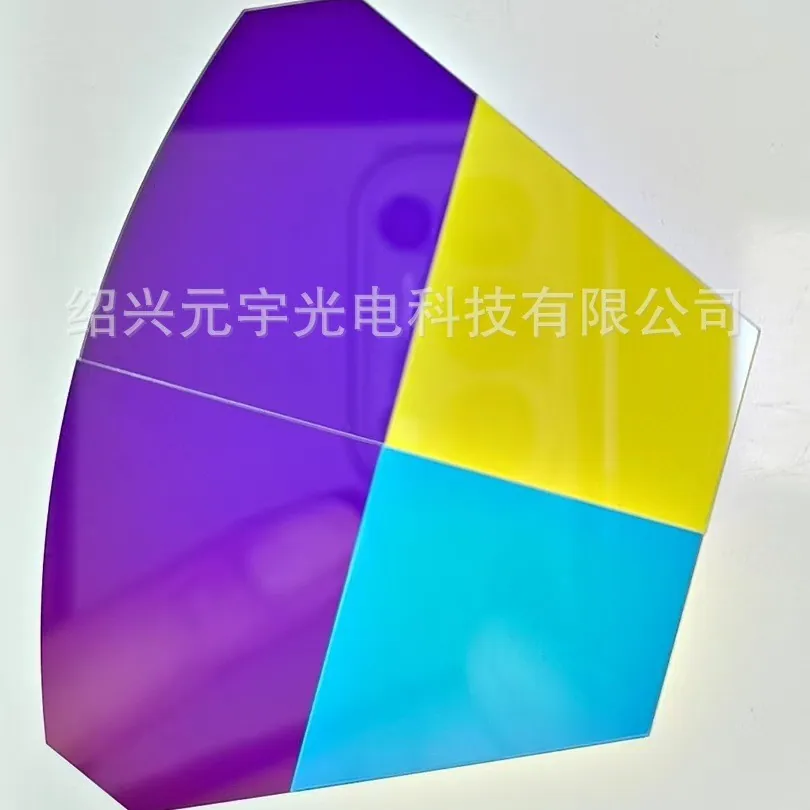
Optical Glass Cold Processing in Water Treatment and Desalination
The optical parts in a treatment plant fall into three groups, and they have different economics. Process and equipment windows, including sight glasses, level windows and the protective windows on the ultraviolet reactor housings, are bought by mechanical and process engineers and are usually pressed into a stainless or PVDF frame with a gasket, so they compete on chemistry, dimension and delivery. Instrument cells, including flow cells, cuvette-style sample windows and analyser chambers, are bought by the instrument supplier rather than the plant, and they are usually cold-processed to close tolerances because a leak or a curvature fault is an instrument fault. Measurement windows in turbidity, chlorine, pH and conductivity probes are the smallest and the most specialised, often tiny, thick, drilled and coated parts where unit price is high but consumption is low. Treating all three as one procurement category is why quotations are hard to compare: the schedule for each is driven by different things.
Substrate and material selection
Material selection here starts from the medium, and the medium is rarely the clean one. Raw water carries suspended solids and organic matter; clarified and filtered water still carries trace oxidants; backwash and chemical cleaning introduce caustic, acid or hypochlorite on a schedule; and desalination concentrate is a different chemical environment again. Borosilicate handles most of these in a wetted optical part and remains the economical default, because it is chemically durable and available in standard sizes. Fused silica becomes necessary where ultraviolet transmission is functional rather than incidental, as in a reactor window or an analyser measuring in the UV, and it is also the answer where thermal shock from a hot clean-in-place cycle would break a thin borosilicate part. Quartz and high-purity variants appear where trace ion leaching matters or where the optics are inside a high-purity loop. One caution for designers: chemical resistance to the operating medium does not imply resistance to the cleaning chemistry, and most field failures on these parts come from the cleaning cycle rather than the process.
Handling, cleaning and packaging
Plant handling is a real cost that never appears in a quotation. Optical parts are fragile at the edge and get handled by technicians in the same way as a gasket, so specifying a lifting and handling instruction, a frame that protects the seat, and an individual crate rather than a carton has a measurable effect on the number of parts that arrive usable. Cleaning between manufacture and installation should be defined, because a part that arrives with process residue or fingerprint oils will show them on the first wet inspection and can be rejected for the wrong reason. For wetted optical parts, packaging that maintains cleanliness and prevents contact with absorbing or hygroscopic materials matters more than for a dry instrument optic. Incoming inspection on site should be on the seat and the edge, against the same chip limit used at the factory, so an acceptance decision reflects the part rather than the transport.
The tolerances that actually matter
Tolerances on these parts are usually overspecified, which is a cost problem rather than a quality one. For a pressed-in window the controlling dimensions are the outside diameter, the thickness, the seat geometry and the chamfer, because those decide whether the part seals and whether it survives being clamped; optical figure is secondary unless the window is part of a viewing path. For instrument cells, surface figure and wedge matter because the instrument's optics are designed around them, and flatness of the sensing face is a functional requirement rather than a quality aspiration, since curvature changes the measurement geometry. Wedge matters wherever a cell sits in a collimated or focused path. Surface quality matters on any wetted face that will be inspected wet, because it is what makes a leak visible and a window readable. The practical recommendation is to state which of the three groups the part belongs to and apply the tolerance set accordingly, which on most of these parts removes specification effort and reduces cost without touching the function.
What drives cost and lead time
Five items drive cost in this category. Material grade comes first where a specific chemistry or a fused silica requirement applies, because those are different production routes and the choice cannot be changed late. Thickness comes second, since most optical glass is drawn or cast in a limited size range and anything thicker means a longer lead time, often with a lapped blank. Size and machining third: ports, notches and drilled holes move a part from standard to custom tooling, and each added feature is a feature that can leak. Coating is fourth where a UV or protective stack is required, and on fused silica the coating queue is usually the longest single item in the schedule. Certification and documentation are fifth, and on a plant framework with its own quality requirements the paperwork effort can rival the part price. Lead time therefore follows material and thickness first, coating second, and precision last. Cost control comes from standardising diameters and thicknesses across the plant so spares and repeat orders share a route, from leaving the machining allowance to the supplier, from specifying the chemical medium explicitly so the wrong material is never quoted, and from keeping visible precision on the parts where it is optically functional.
Requirements specific to Water Treatment and Desalination
Water treatment and desalination specify optical glass against two separate exposures, the process medium and the cleaning chemistry, and the second is usually the harder one. State both explicitly on the drawing, including the cleaning cycle's temperature, concentration and frequency, and confirm that the material and any coating have been qualified against the cleaning rather than only against the process. For pressed-in parts, treat the seat and chamfer as controlled items and let optical figure be secondary unless the window is in a viewing path; for instrument cells, specify surface figure and wedge on the sensing face because those are functional. Where ultraviolet transmission is functional, specify it rather than implying it. Standardise diameters and thicknesses across the plant to protect repeat-order lead time, require individual packaging and a site acceptance inspection against the same edge chip limit used at the factory, and ask for batch traceability tied to the material and coating records.
- Process medium and cleaning chemistry specified separately, with temperature and concentration
- Material and coating qualified against the cleaning cycle, not only the process medium
- Seat and chamfer treated as controlled items on pressed-in windows; optical figure secondary unless functional
- Surface figure and wedge specified on the sensing face of instrument cells as functional requirements
- Standardised diameters and thicknesses plus individual packaging to protect repeat-order lead time
Framework references: ISO 10110 for surface figure, surface quality and edge-chip limits on finished parts. Pressure-retaining requirements for any part in a pressure boundary depend on the jurisdiction, the fluid classification and the equipment category, and must be taken from the current official pressure equipment text and the plant's engineering standards. Water-contact and drinking-water material approvals are jurisdiction-specific and should be confirmed against the current official text where applicable. RoHS and REACH declarations are the supplier's to state for the actual material and coating stack.
Selection data at a glance
| Parameter | Typical capability | Notes |
|---|---|---|
| Material | Borosilicate default, silica if UV | Against process and cleaning |
| Thickness | Prefer standard stock size | Lead-time driver |
| Seat / chamfer | Controlled items | Seal integrity |
| Figure | Functional on cell sensing face | Measurement geometry |
| Wedge | Where in a collimated path | Optical stability |
| Traceability | Batch plus coating record | Repeat-order match |
Frequently asked questions
Why does a window fail on a cleaning cycle rather than in service?
Because the chemistry that sees the part periodically is often more aggressive than the process medium, and it arrives at temperature. Specify the cleaning regime as temperature, concentration, chemistry and frequency, and require the material and coating to be qualified against that rather than against the process medium alone.
Do we need fused silica everywhere in a desalination plant?
No. Borosilicate is chemically durable against most treated water, backwash and cleaning chemistries and is far more economical. Fused silica earns its cost where ultraviolet transmission is functional, such as reactor windows and UV analysers, or where thermal shock from hot cleaning would break a thin part.
How do we cut cost on repeated plant spares?
Standardise diameters and thicknesses so spares share a material, a blank and a coating route, and leave machining allowance to the supplier. Most of the schedule on these parts sits in material thickness and coating, not in precision, so tightening optical tolerances on a pressed-in window raises cost without improving the function.
Need a quotation for optical glass cold processing?
Send your drawing, target specification or coating requirement and an optical engineer will reply within 24 hours with a price and a lead time.
Request a Quote Email an engineer