There is always more than one way to solve the optical problem in biometric and fingerprint recognition, and the options are not equally good at everything. This article compares coated color filter glass against the materials, processes and design approaches it competes with, on the criteria that matter commercially: performance, durability, unit cost and lead time.
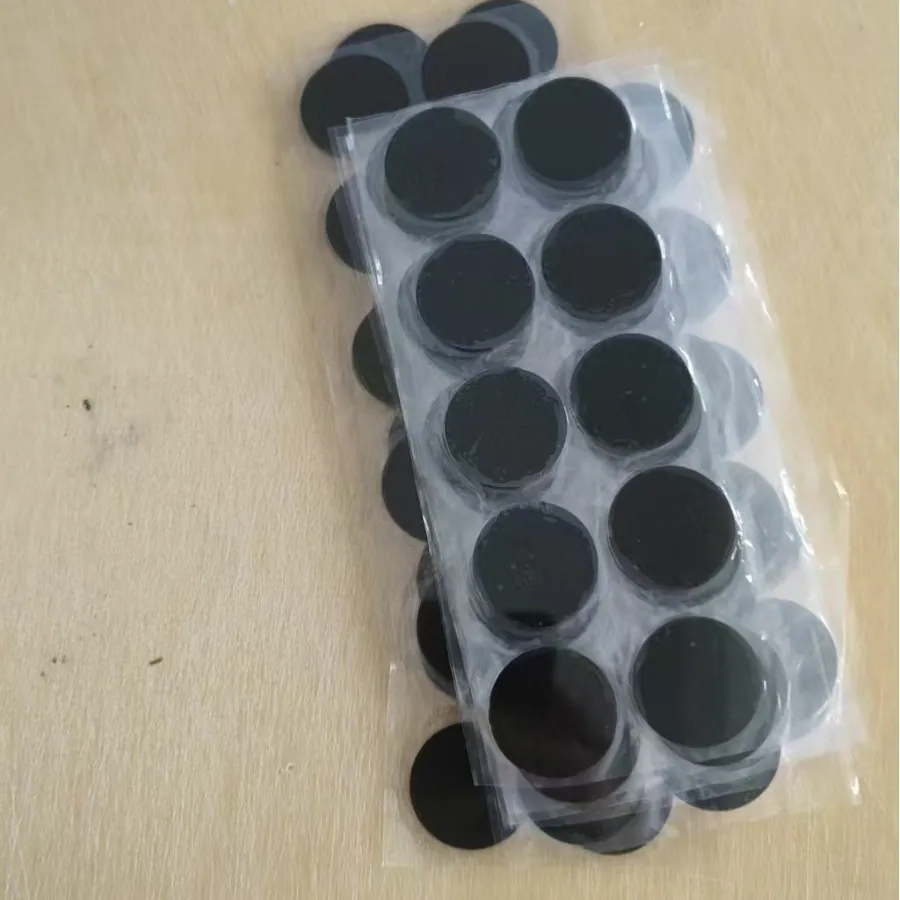
Coated Color Filters in Biometric and Fingerprint Recognition
In biometric and fingerprint recognition, that translates into a specific set of requirements rather than a general preference for quality. Biometric systems must separate the live signal from everything else in the scene, which makes spectral filtering the primary function of the optics. Fingerprint and iris systems work at defined wavelengths, often under near-infrared illumination, and a filter that leaks the wrong band will compromise recognition as surely as a dirty sensor.
What drives cost and lead time
The price of a coated color filter is mostly a function of the number of layers, the size of the substrate and the yield of the coating run. A 20-layer color coating is routine; a 60-layer edge filter with a 2 nm transition costs several times more because the chamber time and the sensitivity to thickness error both rise sharply. Patterned parts add a lithography or screen-printing step whose cost is dominated by the mask or screen, so the first piece is expensive and the hundredth is not. Substrate grade and thickness contribute less than most buyers expect; the real cost jumps come from tight spectral tolerances, from parts larger than the chamber's uniform zone, and from low volumes that force a chamber to be run for a handful of plates. Consolidating colors that can share one run is the single most effective cost reduction in Biometric and Fingerprint Recognition.
The tolerances that actually matter
Color work has two tolerance systems that must be quoted together. The spectral tolerance defines how far the transition or the dominant wavelength may sit from nominal - typically ±5 nm for a color chip and ±2 nm for an interference edge used in a measurement path. The geometric tolerance defines where the color sits on the plate, which matters for gobos, patterned filters and multi-zone parts. Add a photometric tolerance for transmission: a filter quoted at 90 % transmission that ships at 82 % is a different color to the eye. In Biometric and Fingerprint Recognition, also fix the angle of incidence at which the numbers are valid, because a coating designed for 0 degrees and measured at 15 degrees will read several nanometers short of nominal and the customer will call it off-spec even though nothing is wrong.
How it compares with the alternatives
Coated interference plates compete with dyed or absorption glass, printed gels and, in some designs, with a plain uncoated colored substrate. Absorption glass is cheaper and completely insensitive to angle, which makes it attractive for wide-cone systems, but it cannot reach a sharp edge, it fades under high flux and it cannot produce arbitrary colors. Gels are the cheapest option and are consumed in service, which suits temporary installations rather than fixtures designed for a decade. A coated hard oxide plate costs more up front, holds its color for the life of the fixture, and can be patterned or multi-zoned in ways the other two cannot match. In Biometric and Fingerprint Recognition, the decision normally turns on flux and service life: below a few hundred milliwatts per square centimeter the cheaper options are viable, above that coated glass is the only answer that survives.
Substrate and material selection
The substrate sets the ceiling on what the coating can survive. B270 and ultra-clear float glass are the workhorses for moderate flux and offer the best price-to-clarity ratio. When the part sits close to a lamp, borosilicate or a specifically heat-resistant glass is used because it tolerates the thermal gradient without cracking; low-expansion substrates such as fused silica or Eagle XG go further and hold their figure through repeated thermal cycling. Thickness matters as much as grade: a 0.5 mm plate heats and cools faster than a 3 mm plate, so thinner is safer under flash or shutter conditions, but more fragile during assembly. For Biometric and Fingerprint Recognition the usual failure is not a material that is too weak, it is a material that was never specified, so the shop defaults to soda-lime and the first high-flux test cracks the plate.
Inspection and measurement
Every color filter should ship with a measured curve, not a nominal one. Spectrophotometry from 350 to 1050 nm at the specified angle of incidence is the baseline; for parts used in laser or high-flux systems, laser damage threshold data and a transmission map across the aperture are worth requesting. Color coordinates, where the customer specifies them, need a defined illuminant and observer, and they must be measured on the actual part rather than predicted from the design. In Biometric and Fingerprint Recognition, the incoming inspection that catches the most escapes is a physical check of the patterned areas and the edge quality, because a coating can be spectrally perfect and still be rejected for a chip or a registration error that a bench measurement never sees.
Requirements specific to Biometric and Fingerprint Recognition
In biometric and fingerprint recognition, that translates into a specific set of requirements rather than a general preference for quality. Biometric systems must separate the live signal from everything else in the scene, which makes spectral filtering the primary function of the optics. Fingerprint and iris systems work at defined wavelengths, often under near-infrared illumination, and a filter that leaks the wrong band will compromise recognition as surely as a dirty sensor.
- Tight band-pass or IR-cut definition at the operating wavelength
- Scratch-resistant user-facing surface
- Stable behavior across a wide angle of incidence
- High transmission for low-power illumination
ISO/IEC 19794 context for biometric data quality, ISO 10110 drawings, and RoHS and REACH declarations.
Selection data at a glance
| Parameter | Typical value | Notes |
|---|---|---|
| Dominant wavelength | 450-660 nm, custom to ±5 nm | Per color chip |
| Transmission in band | >= 85 % (T>= 90 % on tuned designs) | At normal incidence |
| Out-of-band blocking | OD2 - OD4 | Visible to NIR |
| Coating type | IAD multilayer hard oxide | Color-by-interference |
| Substrate | B270, borosilicate, ultra-clear, quartz | Heat-resistant grades for high flux |
| Thickness | 0.3-3 mm | 1.1 mm typical for gobos |
| Size tolerance | ±0.1 mm, ±0.05 mm on request | Round, square, custom outline |
| Pattern tolerance | ±0.05 mm registration | Screen print, lithography or mask |
| Operating temperature | up to 400 °C substrate dependent | Thermal shock is the real limit |
Frequently asked questions
How much does a coated color filter shift with angle?
A typical visible-band stack shifts toward shorter wavelengths by roughly 1 % of the wavelength for every 10 degrees of incidence. A design specified for 0 degrees and used in a 30 degree cone will therefore read noticeably bluer than the nominal curve, which is why the acceptance angle belongs on the drawing.
Can you print a logo or pattern in a specific color?
Yes. Patterns are produced by masking or lithography before coating, or by screen printing a patterned layer, with registration typically held to ±0.05 mm. Keep features at least 0.3 mm from the edge and provide artwork as vector data.
Will the color fade over time?
No. Interference coatings are inorganic hard oxide layers; there is no dye to bleach. Color changes in the field almost always come from a humid coating deposited without ion assistance, or from a design that was specified for a lower operating temperature than the application reached.
Need a quotation for coated color filters?
Send your drawing, target specification or coating requirement and an optical engineer will reply within 24 hours with a price and a lead time.
Request a Quote Email an engineer