A part that measures correctly in the lab and fails in service is almost always a qualification gap rather than a manufacturing defect. This article sets out how coated color filter glass is inspected and qualified for smartphone camera modules, which standards apply, which tests reveal real weaknesses, and what documentation should travel with a shipment.
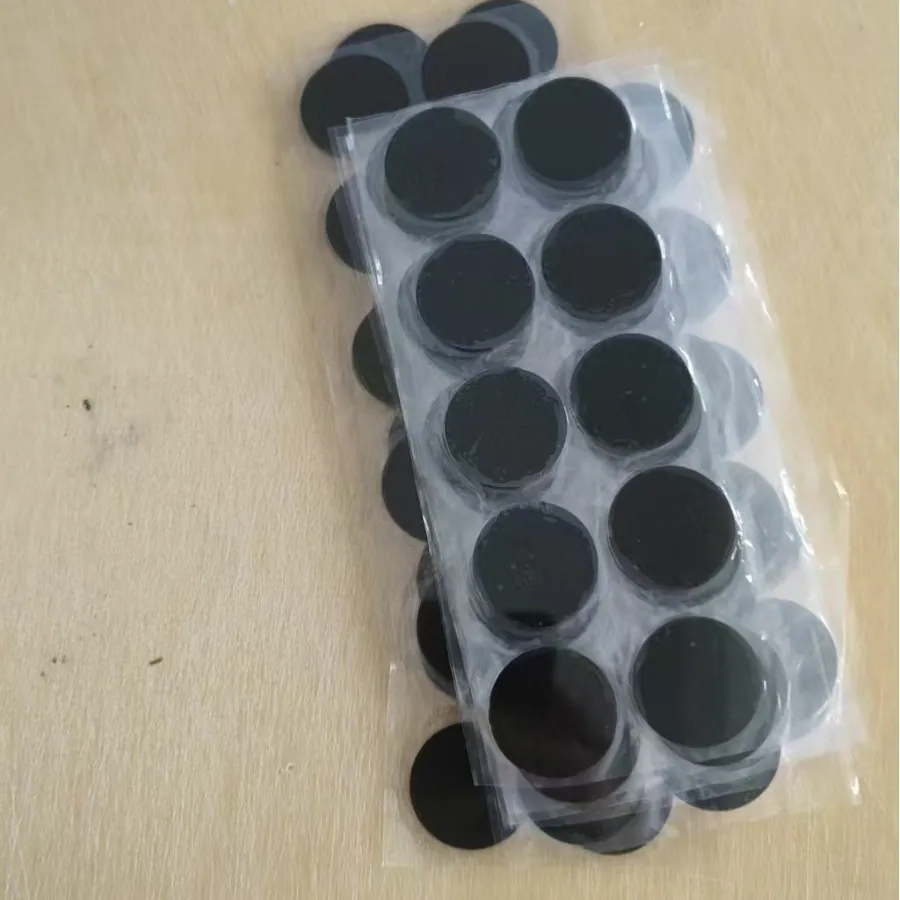
Coated Color Filters in Smartphone Camera Modules
In smartphone camera modules, that translates into a specific set of requirements rather than a general preference for quality. Phone camera modules are the most space-constrained optical assemblies in mass production. Every component is measured in fractions of a millimeter, the stack is bonded and reflow-adjacent, and the module must survive drop testing, temperature cycling and years of pocket abrasion. Optical requirements center on color fidelity across a wide field of view, low flare from internal reflections, and stable performance after the adhesive cure.
Common failure modes and how they show up
The classic field failures are color shift with age, delamination at the edge, and cracking from thermal shock. Color shift almost always traces to moisture uptake in a coating deposited without ion assistance, or to a design that assumed a lower operating temperature than the application delivers. Delamination starts at a chamfer or an uncoated edge and spreads inward, and it is accelerated by any cleaning solvent that reaches the interface. Thermal shock cracks appear when the center of the plate and its mounting ring heat at different rates, which is a design problem rather than a coating problem. In Smartphone Camera Modules, the fastest way to prevent all three is to specify the maximum flux, the mounting method and the cleaning chemicals at the quotation stage, then let the coating design be built around those three numbers instead of discovering them in the field.
Handling, cleaning and packaging
Coated color plates are handled by the edge, never by the face, and the edge is usually chamfered for exactly that reason. A fingerprint on a dichroic surface is not a cosmetic issue: skin oils etch the outer layer over time and leave a permanent transmission dip. Cleaning uses neutral detergent, cascaded DI rinses and a nitrogen dry, never a dry wipe on a hard oxide stack. Storage and shipping use interleaved, particle-free separators so that two coated faces never touch. For high-value patterned parts going into Smartphone Camera Modules, individual pockets with a printed label are worth the packaging cost, because a mixed batch of colored plates that has to be re-identified by measuring each one costs far more than the trays.
Inspection and measurement
Every color filter should ship with a measured curve, not a nominal one. Spectrophotometry from 350 to 1050 nm at the specified angle of incidence is the baseline; for parts used in laser or high-flux systems, laser damage threshold data and a transmission map across the aperture are worth requesting. Color coordinates, where the customer specifies them, need a defined illuminant and observer, and they must be measured on the actual part rather than predicted from the design. In Smartphone Camera Modules, the incoming inspection that catches the most escapes is a physical check of the patterned areas and the edge quality, because a coating can be spectrally perfect and still be rejected for a chip or a registration error that a bench measurement never sees.
Standards, documentation and traceability
Color filters are governed by a mix of optical, safety and environmental requirements. Drawings follow ISO 10110 for surface form and imperfections; transmissions are reported against CIE color coordinates when the customer specifies a color target rather than a spectrum. Environmental compliance means RoHS and REACH declarations, and for stage and entertainment products there are additional considerations around fire behavior and photobiological safety of the light source itself. In Smartphone Camera Modules, the documents that hold up a shipment are typically the photometric report, the material declaration and, increasingly, a substance report confirming the absence of restricted dyes. Because a coated filter contains no organic colorant, this is straightforward - but the paperwork still has to exist before the goods clear.
How coated color filter glass works in practice
A coated color filter produces its color by interference rather than by absorbing dyes, and that distinction decides everything else about the part. A stack of alternating high- and low-index layers, usually a few dozen layers thick, reflects the wavelengths it must suppress and transmits the band the design calls for. Because nothing is bleached or burned out, the color does not fade with lamp hours, which is why coated color plates dominate in Smartphone Camera Modules where the filter sits in front of a high-intensity source. The same physics allows a single coating run to place different colors on different zones of one plate, print a logo in a defined color, or produce a dichroic edge that reflects one band while passing another. The limiting factor is angular sensitivity: the passband shifts toward shorter wavelengths as the angle of incidence increases, so a design is only as good as the acceptance angle it was specified for.
Requirements specific to Smartphone Camera Modules
In smartphone camera modules, that translates into a specific set of requirements rather than a general preference for quality. Phone camera modules are the most space-constrained optical assemblies in mass production. Every component is measured in fractions of a millimeter, the stack is bonded and reflow-adjacent, and the module must survive drop testing, temperature cycling and years of pocket abrasion. Optical requirements center on color fidelity across a wide field of view, low flare from internal reflections, and stable performance after the adhesive cure.
- Thickness typically 0.21 - 0.55 mm
- Transmission above 90 percent in the visible band
- No visible color shading across a wide field of view
- Survives reflow-adjacent temperatures and drop testing
Suppliers usually work to module-maker internal standards covering particle cleanliness, outgassing and bond-line quality, alongside RoHS and REACH declarations.
Selection data at a glance
| Parameter | Typical value | Notes |
|---|---|---|
| Dominant wavelength | 450-660 nm, custom to ±5 nm | Per color chip |
| Transmission in band | >= 85 % (T>= 90 % on tuned designs) | At normal incidence |
| Out-of-band blocking | OD2 - OD4 | Visible to NIR |
| Coating type | IAD multilayer hard oxide | Color-by-interference |
| Substrate | B270, borosilicate, ultra-clear, quartz | Heat-resistant grades for high flux |
| Thickness | 0.3-3 mm | 1.1 mm typical for gobos |
| Size tolerance | ±0.1 mm, ±0.05 mm on request | Round, square, custom outline |
| Pattern tolerance | ±0.05 mm registration | Screen print, lithography or mask |
| Operating temperature | up to 400 °C substrate dependent | Thermal shock is the real limit |
Frequently asked questions
How much does a coated color filter shift with angle?
A typical visible-band stack shifts toward shorter wavelengths by roughly 1 % of the wavelength for every 10 degrees of incidence. A design specified for 0 degrees and used in a 30 degree cone will therefore read noticeably bluer than the nominal curve, which is why the acceptance angle belongs on the drawing.
Can you print a logo or pattern in a specific color?
Yes. Patterns are produced by masking or lithography before coating, or by screen printing a patterned layer, with registration typically held to ±0.05 mm. Keep features at least 0.3 mm from the edge and provide artwork as vector data.
Will the color fade over time?
No. Interference coatings are inorganic hard oxide layers; there is no dye to bleach. Color changes in the field almost always come from a humid coating deposited without ion assistance, or from a design that was specified for a lower operating temperature than the application reached.
Need a quotation for coated color filters?
Send your drawing, target specification or coating requirement and an optical engineer will reply within 24 hours with a price and a lead time.
Request a Quote Email an engineer