A wrist wearable measures heart rate and blood-oxygen by shining green, red and infrared light into the skin and reading the return through color filters tuned to each channel. The filter has to pass its channel and block the others and ambient light, while sitting at a steep angle inside a thin watch. This comparison looks at dyed-glass, thin-film and all-dielectric filters and where each one actually belongs.
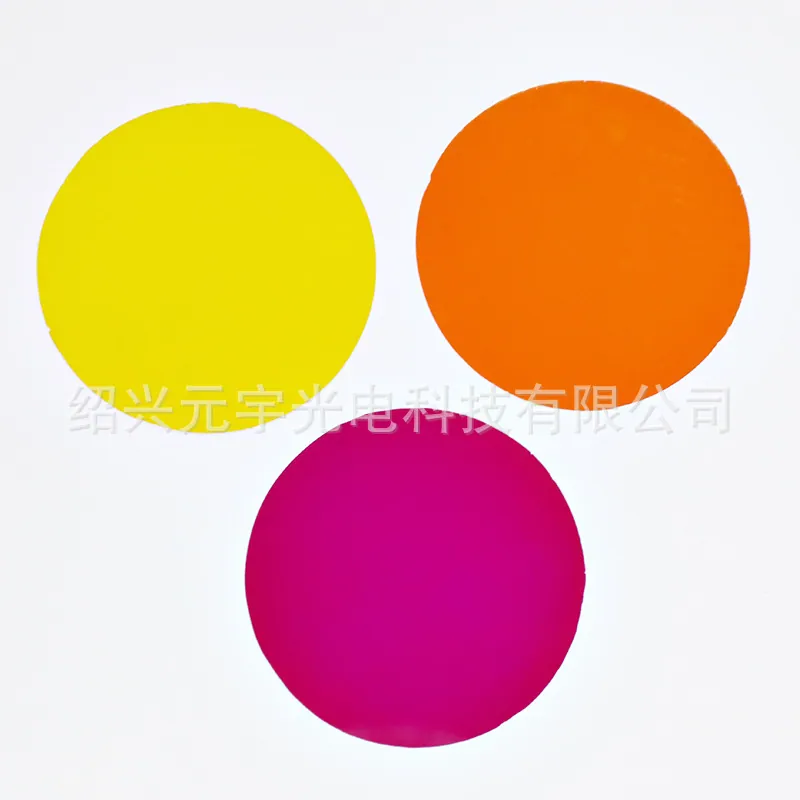
Coated Color Filters in Wearable Health Sensing
Photoplethysmography (PPG) uses a green LED near 530 nm for heart rate and red plus infrared near 660 and 940 nm for SpO2, with a photodiode behind a filter that selects the return channel. In a watch the filter is close to the skin, illuminated at a wide cone, and expected to survive sweat and daily knocks. The optical job is a narrow pass at the channel wavelength with deep blocking of the adjacent LEDs and of sunlight, because ambient light is the dominant noise source in outdoor use.
Substrate and material selection
Dyed-glass filters are cheap and rugged and block well across the visible, but their edge is fixed by the dye and their angle shift is large, which limits them where the cone is wide. Thin-film interference filters on glass give a sharper, recentrable pass and better infrared behaviour, at higher cost. All-dielectric stacks avoid the soft substrate entirely and pack a defined edge, but they are sensitive to incident angle and to handling. For a multi-channel wearable the usual mix is dyed glass for the green channel and a thin-film or dielectric stack for the red and IR channels where blocking matters most.
What drives cost and lead time
Cost is driven by how many separate filter elements the build needs and whether they share a wafer. A discrete filter per channel is simple but adds pick-and-place steps; a patterned or stacked filter that serves several channels in one piece costs more to tool and less to assemble. Lead time is set by the coating run and by any custom pattern, not by the glass. The practical lever is designing the optical stack so one coating serves the channel set, then letting assembly be a single placement rather than three.
The tolerances that actually matter
For PPG the numbers that change the signal are centre-wavelength stability against temperature, bandwidth, and the centre-wavelength shift with incident angle. A filter that drifts off the LED as the watch warms, or that shifts with the wide cone of a close LED, leaks adjacent channels and erodes SpO2 accuracy. State the cone half-angle on the drawing and specify the wavelength shift across that cone, not just on axis, because the on-axis number never occurs in a worn device.
How it compares with the alternatives
Against a bare photodiode with no filter, any of these filters wins by rejecting ambient light, which is why filtering is non-negotiable outdoors. Against software ambient rejection alone, a real optical filter removes the light before it saturates the diode, which holds dynamic range. Dyed glass is the lowest-cost entry where angle is gentle; thin-film and dielectric stacks earn their cost where blocking, IR behaviour and a defined edge decide accuracy. The choice is therefore per-channel, not per-device.
Requirements specific to Wearable Health Sensing
Wearables add a steep-angle and a sweat-and-knock axis that bench optics ignore. The filter sits at a wide cone, close to skin, and is expected to last years, so the specification must state the cone half-angle and the wavelength shift across it, the blocking of adjacent LEDs and sunlight, and a rugged build the assembly line can place reliably. Design the channel set so one coating serves it, and treat centre-wavelength stability with temperature as a first-article item rather than a datasheet hope.
- Per-channel choice: dyed glass for green, thin-film or dielectric for red and IR
- Centre-wavelength shift specified across the actual cone, not on axis
- Deep blocking of adjacent LEDs and of sunlight as the noise floor
- One coating serving the channel set to cut assembly steps
Framework references: optical-filter specifications per ISO 10110 where applicable; LED channel wavelengths (green near 530 nm, red near 660 nm, IR near 940 nm) follow the component selection. Confirm against the device maker's optical stack rather than assuming a single filter type serves every channel.
Selection data at a glance
| Parameter | Typical value | Notes |
|---|---|---|
| Channel | green / red / IR | 530 / 660 / 940 nm |
| Filter type | dyed glass or thin-film | Per channel |
| Bandwidth | 10-30 nm typical | By accuracy need |
| Angle shift | stated across cone | Not on axis only |
| Blocking | adjacent LED + sunlight | Ambient is the noise |
| Build | rugged, placeable | Sweat and knock rated |
Frequently asked questions
Can one filter serve all PPG channels?
Not usually. Green, red and infrared channels sit far apart, and a single filter cannot pass all three while blocking the others. The normal approach is a per-channel filter, with dyed glass often used for green and a sharper stack for the red and IR channels where blocking decides accuracy.
Why specify the angle shift instead of the on-axis wavelength?
Because in a worn watch the LED illuminates the filter at a wide cone, and the pass wavelength shifts off axis. The on-axis number never occurs in use; the shift across the actual cone is what leaks adjacent channels and erodes SpO2 accuracy.
Is software ambient rejection enough without a filter?
Outdoors, no. Sunlight can saturate the photodiode before software acts, so an optical filter that rejects ambient light before it reaches the diode protects dynamic range. Filtering is the first line of defence, not a substitute for it.
Need a quotation for coated color filters?
Send your drawing, target specification or coating requirement and an optical engineer will reply within 24 hours with a price and a lead time.
Request a Quote Email an engineer